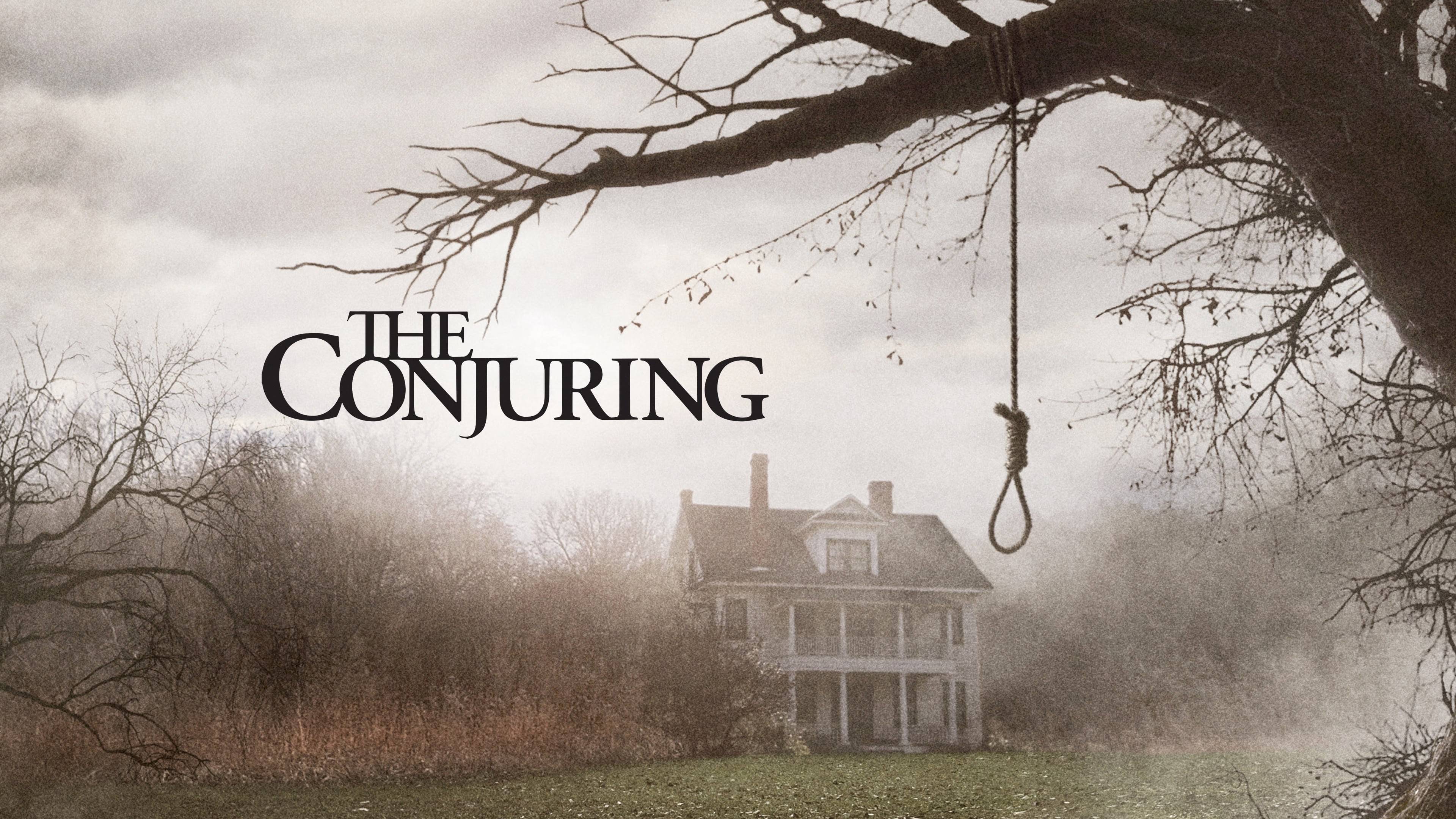
James Wan didn't just make a movie in 2013. He basically resurrected a genre that was dying a slow, painful death by "found footage" fatigue. You remember how it felt sitting in that theater? That specific, cold dread when the "clapping game" started? Honestly, most horror movies today try way too hard with CGI monsters and jump scares that you can see coming from a mile away. But The Conjuring was different. It felt heavy. It felt real.
The story follows Ed and Lorraine Warren. They were real-life paranormal investigators—Ed was a self-taught demonologist and Lorraine was a clairvoyant. They get called to a drafty, depressing farmhouse in Harrisville, Rhode Island, in 1971. The Perron family is falling apart. Smells of rotting meat, clocks stopping at 3:07 AM, and bruises appearing on the mother, Carolyn. It’s classic haunted house stuff, but Wan directs it with this surgical precision that makes you want to watch through your fingers.
The Perron Case: What Actually Happened in Harrisville?
Most people think the movie is 100% Hollywood fiction. It’s not. Well, okay, the basement exorcism at the end? That was a bit much. But the core of the story is based on the experiences of the Perron family, who lived in that house for a full decade. Andrea Perron, the eldest daughter, has spent years writing books about it. She’s gone on record saying the film is actually "lighter" than what they lived through. Think about that for a second.
The real "Bathsheba" was a woman named Bathsheba Sherman. In the movie, she’s a terrifying witch who hung herself from a tree and cursed the land. Local legend in the 1800s suggested she was involved in the death of an infant, but historians have struggled to find hard evidence of her being some satanic priestess. Still, the Perrons were convinced something malicious was there. They didn't just have one ghost; they supposedly had dozens. Some were harmless, like the spirit that used to sweep the kitchen. Others, like the one that targeted Carolyn, were downright demonic.
The Warrens didn't just show up for a weekend, either. They were in and out of that house for years. However, here's a bit of tea that the movie skips over: the Perrons eventually kicked the Warrens out. Roger Perron, the father, grew increasingly skeptical and frustrated. He felt like the Warrens were making things worse, especially after a botched séance that allegedly left Carolyn possessed and speaking in tongues. It wasn't the heroic, tidy ending you see on screen. It was messy, traumatic, and left the family scarred for life.
Why the "Clap" Jump Scare is a Masterclass in Filming
We have to talk about that basement scene. You know the one. Carolyn is trapped in the dark, she hears a voice, and then clap-clap.
It works because of the silence.
Modern horror usually fills the air with "stinger" noises—loud violins or bass drops to tell you when to be scared. Wan does the opposite. He lets the silence stretch out until it's uncomfortable. He uses long takes. Instead of cutting every two seconds, the camera lingers on a dark corner. You start seeing shapes that aren't there. Your brain does the work for him. It’s a psychological trick that makes The Conjuring feel much more sophisticated than your average slasher flick.
The Warrens: Experts or Grifters?
This is where things get controversial. If you look at the history of Ed and Lorraine Warren, you’ll find a massive divide. Fans see them as pioneers of the paranormal. Skeptics, like those from the New England Skeptical Society, argue they were "charming storytellers" who exploited vulnerable families for fame.
- They kept a "Museum of the Occult" in their basement in Monroe, Connecticut.
- The Annabelle doll is real, though it's actually a Raggedy Ann doll, not the creepy porcelain nightmare from the movie.
- They were involved in the Amityville case, which remains one of the most debated hauntings in history.
The movie paints them as a devoted, pious couple fighting the forces of evil. While their love for each other was reportedly very real, their "evidence" was often just grainy photos and tape recordings of bumps in the night. Does that matter? For the movie, not really. But for the "based on a true story" claim, it adds a layer of skepticism that makes the whole phenomenon even more fascinating to dissect. You’ve got to wonder if they truly believed it or if they were just really good at branding.
The Casting that Made it Click
Let’s be honest: without Vera Farmiga and Patrick Wilson, this movie might have flopped. They grounded the supernatural craziness in human emotion. Farmiga plays Lorraine with this sort of fragile intensity. You can see the toll that "seeing things" takes on her. When she looks into a dark room and her eyes well up with tears, you believe she’s seeing something horrible.
And Patrick Wilson? He’s the ultimate 70s dad. Stoic, sideburns, slightly overwhelmed but trying to hold it together. Their chemistry is the secret sauce. You care about the Warrens as much as you care about the Perrons. That’s rare. Usually, in horror, the "experts" are just there to explain the plot and then die. Here, they are the heart of the franchise.
The Legacy of the Conjuring Universe
Before this, "cinematic universes" were for Marvel superheroes. The Conjuring changed that. It spawned Annabelle, The Nun, The Curse of La Llorona, and a handful of sequels.
It’s a bit of a mixed bag, right? The Nun was a massive box office hit but felt like a cartoon compared to the original. Annabelle Comes Home was basically a spooky "Night at the Museum." But none of them have quite captured the lightning in a bottle that the first film did. There’s a texture to the original Conjuring—the wood grain of the house, the muted 70s color palette, the practical effects—that feels tactile.
The movie also revitalized the "religious horror" subgenre. It brought back the idea that the devil is real, and he's hiding in your laundry room. It didn't rely on gore. There’s almost no blood in the first movie. It got an R-rating simply because it was "too scary," which is a legendary flex from the MPAA.
What Most People Get Wrong About the Ending
If you re-watch the finale, it’s not just about an exorcism. It’s about memory and motherhood. Carolyn is saved because she remembers a moment at the beach with her family. It’s a bit cheesy, sure, but it’s a thematic payoff. The "evil" in the movie thrives on isolation and despair. The "good" is literally just the bonds of the family.
Interestingly, the real Perron family didn't leave the house after the events shown in the movie. They couldn't afford to. They stayed in that house for another eight years. They learned to live with the spirits. They eventually moved to Georgia, but they claim the house still holds a piece of them.
How to experience the real history behind the film:
If you’re a fan who wants to go deeper than the movie, there are a few things you can actually do. Just... maybe don't bring any cursed items home with you.
- Read Andrea Perron's Trilogy: It’s called House of Darkness House of Light. It is way more detailed (and weirder) than the movie. She goes into the history of the land and the various spirits they encountered over ten years.
- Visit the House (Carefully): The actual house in Burrillville, Rhode Island, is now a tourist attraction. The current owners allow paranormal investigators to book overnight stays. It’s not the house from the movie—that was a set in North Carolina—but the real property has a vibe that’s supposedly very unsettling.
- Watch the Documentary 'The Devil Made Me Do It': While it focuses more on a later Warren case (the one from the third movie), it gives you a lot of insight into how Ed and Lorraine operated and how the legal system dealt with claims of demonic possession.
- Listen to the 'Perron Family' Interviews: There are several long-form interviews on YouTube where the sisters (now adults) talk about their experiences. Their consistency is either proof that they’re telling the truth or that they’ve been telling the same story for so long it’s become their truth.
The best way to appreciate The Conjuring now is to watch it with a focus on the sound design. Turn the lights off, put on some decent headphones, and pay attention to where the creaks and whispers are coming from. It’s a masterclass in building tension through audio. Once you've finished the film, look into the 1970s paranormal boom to see how the Warrens fit into the cultural zeitgeist of the era. It explains a lot about why the public was so ready to believe their stories.