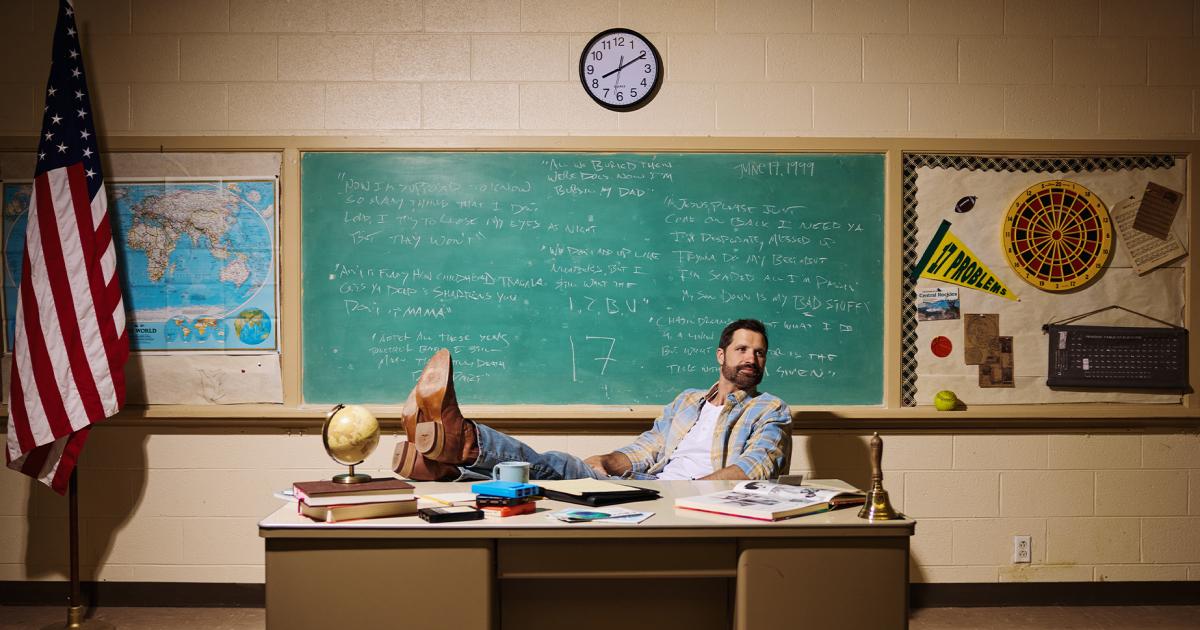
Walker Hayes is a polarizing guy in Nashville. You either love the "Applebee’s on a date night" vibe or you think he’s the reason traditional country is dying. But then he dropped "90's Country" and things got weirdly specific. It wasn't just a song. It was a literal puzzle of song titles stitched together.
He didn't just mention the era. He lived in it.
The track is basically a three-minute long Easter egg hunt for anyone who grew up on a steady diet of Garth Brooks and Jo Dee Messina. Honestly, if you don't know who "Strawberry Wine" belongs to, the hook might just sound like a grocery list. But for those of us who remember when hats were huge and the production was crisp, Walker Hayes 90's Country felt like a fever dream of radio hits. It’s a bold move to write a song that relies entirely on other people's legacies to make sense.
Some people called it lazy. Others called it genius.
The reality? It’s a snapshot of a very specific moment in the music industry where the "Fancy Like" singer tried to bridge the gap between his snap-track pop-country style and the legends who paved the way.
The Anatomy of Walker Hayes 90's Country
Let’s talk about the structure. It’s chaos.
Most songs have a narrative arc—boy meets girl, boy loses girl, boy gets a truck. This song has a checklist. Hayes manages to cram 22 different song titles or references into a single track. We’re talking about "Check Yes or No," "Friends in Low Places," and "Shut Up and Drive." It’s a lyrical Frankenstein.
You’ve got to admire the math involved in making those lines rhyme.
He starts off with a nod to George Strait. It makes sense because George is the undisputed king. But then he pivots to Alan Jackson’s "Chattahoochee." It’s rhythmic. It’s bouncy. It’s exactly what Walker Hayes does best, even if the "traditionalists" hate to admit it. The song was produced by Shane McAnally, a guy who knows exactly how to polish a hook until it shines like a new dime.
But here’s the thing: Does it actually sound like the 90s?
Not really.
The production is 100% modern. It’s got that signature Walker Hayes "stutter-talk" vocal delivery. It’s got the digital drums. The irony is thick—a song celebrating the era of steel guitars and organic fiddle playing is delivered through a filter of 2018 pop production. It’s a meta-commentary on how we consume nostalgia. We want the memory of the old stuff, but we want it to sound like the new stuff.
Why the References Matter (And Why They Distract)
When you look at the lyrics, it’s a trip down memory lane.
"Strawberry Wine" gets a shoutout. Deana Carter’s 1996 smash is the gold standard for country nostalgia, so it had to be there. Then he moves to "Dust on the Bottle" by David Lee Murphy. These aren't just deep cuts; they are the pillars of the format.
- "Cowboy Take Me Away" (The Chicks)
- "She Don't Know She's Beautiful" (Sammy Kershaw)
- "Sold (The Grundy County Auction Incident)" (John Michael Montgomery)
The problem? Sometimes it feels like he’s just reading a tracklist from a "Big Shiny Country" compilation CD. When he sings "Workin' on my 'Achy Breaky Heart'," it feels a bit on the nose.
However, there is a certain skill in the phrasing. He weaves the titles into a story about a girl, which is the oldest trick in the book. It’s the "country-fied" version of what hip-hop artists have been doing for decades—interpolating and referencing the greats to build credibility. For Walker, who was struggling to find his footing before the "Fancy Like" explosion, this was a way to say, "Hey, I belong here. I know the words too."
The Backlash and the Fanbase
Not everyone was buying it.
Critics like those over at Saving Country Music have long been skeptical of Hayes. They saw "90's Country" as a gimmick. They argued that if you really loved the 90s, you’d make music that sounded like it, rather than just name-dropping the hits. It’s a valid point. If you’re wearing a Nirvana shirt but you’ve never heard Nevermind, are you a fan or are you just wearing a brand?
But the fans didn't care.
On Spotify, the song racked up millions of streams. Why? Because it’s catchy. And because the 90s are currently the most profitable decade in existence. From fashion to film reboots, we are obsessed with that ten-year span. Hayes tapped into a vein of collective memory that is incredibly powerful. When people hear those titles, they aren't thinking about Walker Hayes; they’re thinking about their first car, their high school prom, or the summer they spent at the lake.
He’s a smart songwriter. He knows he’s a conduit for your own memories.
Breaking Down the Production Choices
If you strip away the lyrics, you’re left with a very clean, very sparse track.
This is the McAnally influence. It’s built on a loop. It doesn't have the "wall of sound" that characterized 90s radio—no massive chorus of background singers or soaring electric guitar solos. Instead, it’s tight. It’s percussive. It’s almost minimalist.
This creates a weird contrast.
The 90s were often over-produced in a "big studio" kind of way. Think Shania Twain and Mutt Lange. Massive, expensive, glossy. Walker Hayes' version of the 90s is filtered through a bedroom-pop lens. It’s intimate. It’s quirky. It’s arguably more "authentic" to his personal brand than it is to the era he’s singing about.
He also mentions "The Thunder Rolls."
Garth Brooks is notoriously protective of his catalog. You can’t even find his original stuff on most streaming platforms. By referencing Garth, Hayes is nodding to the one guy who defined the decade but remains a bit of a ghost in the digital world. It’s a clever way to bring Garth into the 21st-century conversation without needing a licensing deal for a sample.
The Legacy of the Song in Walker's Career
"90's Country" came out in 2018.
At that point, Walker was still trying to prove he wasn't a one-hit wonder with "You Broke Up with Me." This song was a bridge. It didn't reach the heights of his later viral success, but it established his "brand."
What is that brand?
It’s the "Country Dad." It’s the guy who loves his wife, his kids, and his memories. It’s relatable. It’s safe. It’s the kind of music that plays in the background of a suburban cookout. And honestly? There is a massive market for that. Not every song needs to be a soulful outlaw ballad. Sometimes, you just want to hear someone mention "Neon Moon" while you’re driving to the grocery store.
It’s about comfort.
The song proved that Walker could handle a gimmick and make it feel somewhat sincere. It also showed that he had a deep knowledge of the genre’s history, even if his own music pushes the boundaries of what "country" actually means.
Actionable Takeaways for the Country Fan
If you're looking to dive deeper into the world that Walker Hayes 90's Country references, don't just stop at his track. Use it as a roadmap.
- Build a "Source Material" Playlist: Go through the lyrics and find every song mentioned. Listen to the original versions by John Michael Montgomery, Lonestar, and Pam Tillis. You’ll notice the difference in "swing" and instrumentation immediately.
- Watch the Music Video: The video for "90's Country" is a literal homage to the era's aesthetic. It features Hayes on a lake, recreating iconic vibes from old CMT videos. It’s a fun visual companion that shows he was in on the joke.
- Explore the "Snap-Track" Evolution: Compare this song to his later hits like "AA" or "U Gurl." You can see how he refined the formula he started using here. He moved away from name-dropping and started focusing more on his own life, which is ultimately what led to his massive breakout.
- Check out the Songwriters: Look into Shane McAnally and Josh Jenkins. These guys are the architects of modern Nashville. Understanding their style helps you understand why Walker Hayes sounds the way he does.
The song might not be a "timeless classic" in the traditional sense. It’s a product of its time—a 2018 pop-country track about 1994. But it serves as a perfect entry point for younger fans to discover the legends, and a fun trivia game for the older crowd who can name every artist he references before the chorus hits. It’s clever, it’s divisive, and it’s unapologetically Walker Hayes.
Whatever you think of his style, you can't argue with the fact that he knows how to get a song stuck in your head. Whether you’re "Widowed by the 90s" or just a casual listener, that track is a masterclass in how to weaponize nostalgia for the modern era. Just don't expect a fiddle solo anytime soon.