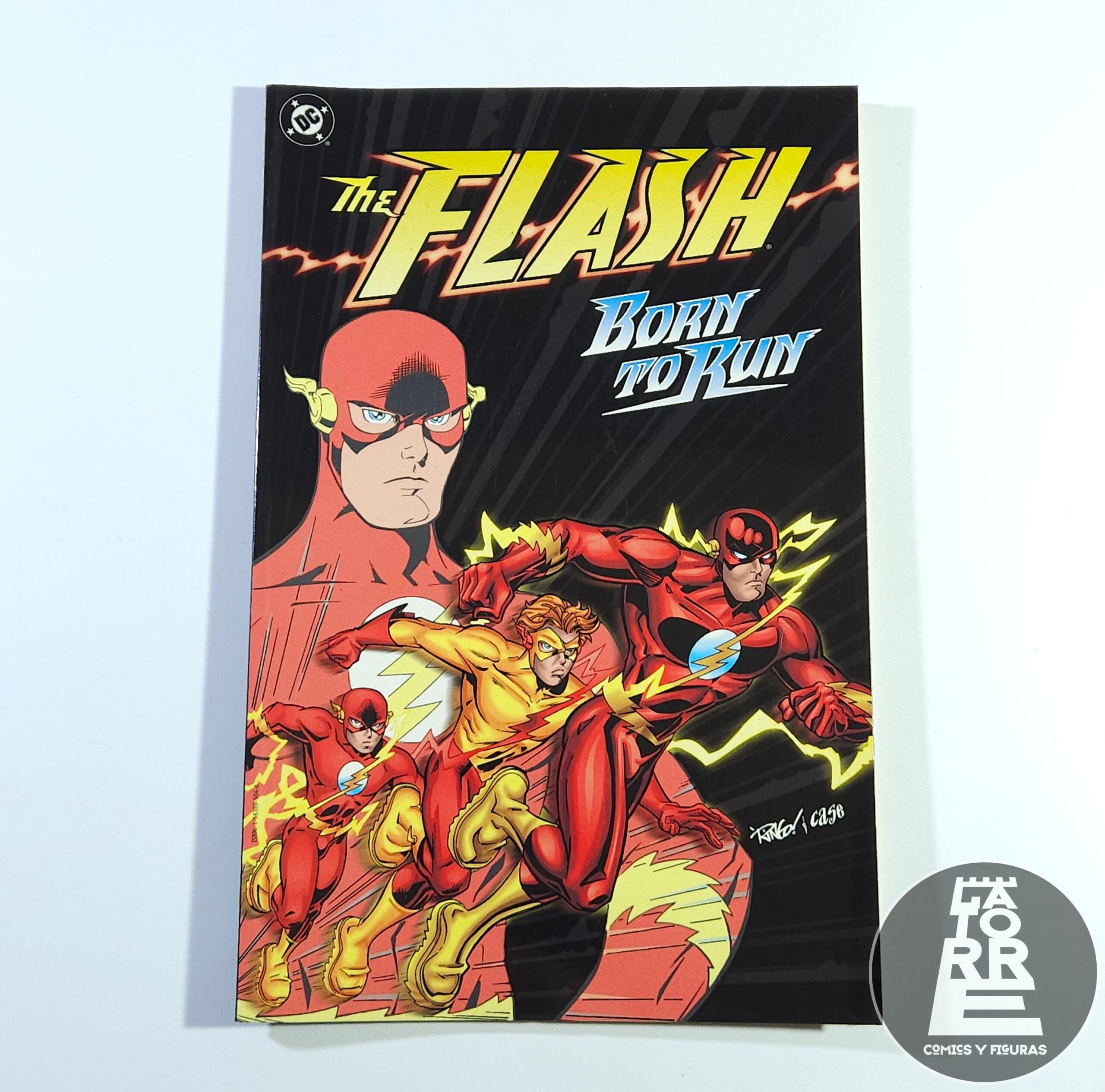
Wally West was always the sidekick. For decades, he lived in the shadow of Barry Allen, the silver-age icon who defined what it meant to be a hero in Central City. When Barry died in Crisis on Infinite Earths, Wally took the mantle, but he didn't really own it. He was nerfed. He was insecure. He was just a guy in a hand-me-down suit trying not to mess up. Then came 1992. Mark Waid took over the writing duties with The Flash #62, and everything shifted. Flash Born to Run wasn't just another origin retelling; it was the moment the modern Flash mythos actually began.
It’s personal. Honestly, if you look back at the early 90s, most superhero comics were obsessed with being "extreme." They wanted bigger guns and more pouches. Waid went the other way. He went inward. By revisiting Wally’s first summer in Central City as a ten-year-old kid, he grounded the super-speed spectacle in something we all understand: the desperate need to belong.
The Story Most People Get Wrong About Flash Born to Run
People often think this is just a reboot. It isn’t. In the post-Crisis landscape, DC needed to solidify why Wally deserved the seat at the table. Waid uses a framing device where a modern-day Wally is dealing with a crisis of confidence, looking back at his younger self.
Young Wally West was a lonely kid from Blue Valley. His parents didn't get him. He was obsessed with the Flash. When he goes to visit his Aunt Iris in Central City, he meets his hero. And then, in a "one-in-a-billion" freak accident that mirrors Barry’s own origin exactly, he gets doused in chemicals and struck by lightning.
It sounds trope-heavy. But the magic is in the relationship. Barry Allen isn't a distant god here; he’s a mentor who sees a kindred spirit. Greg LaRocque’s pencils during this era captured a certain softness in these moments that made the high-speed action feel earned. You see the joy of a kid realizing he can finally run away from the mediocrity of his old life.
Why the Speed Force Starts Here
Technically, the term "Speed Force" wasn't fully coined and expanded upon until a bit later in Waid’s run, specifically during the Terminal Velocity arc. However, Flash Born to Run is the thematic bedrock for that concept. Before this story, the Flash’s powers were just... science. Hard water, chemicals, vibrating molecules.
Waid began planting the seeds that being a speedster was something deeper. It was a legacy. By connecting Wally’s past to his present, the story established that the energy moving through these characters was a living thing. This narrative choice saved the character. Without the depth added in this arc, Wally West likely would have remained a B-list replacement until DC inevitably brought Barry back sooner. Instead, this story kicked off a decade-long golden age for the title.
It's about the fear of replacement. Wally struggles with the idea that he’s an impostor. We see his first costume—the small-scale version of Barry’s—and the eventual transition to the iconic yellow and red Kid Flash suit. It’s a visual representation of finding one's own identity while still respecting the past.
Breaking Down the Art and Impact
Greg LaRocque and colorist Glenn Whitmore did something special here. The 90s were often cluttered, but their work on this arc is remarkably clean. They used motion blurs in a way that felt kinetic without being messy.
You’ve gotta realize that back then, comics didn't have the digital tools we have now. Every speed line was hand-drawn. Every perspective shift was calculated to show just how fast a ten-year-old would feel moving at Mach 1. The contrast between the bright, sunny days of Wally's childhood and the more somber, rain-slicked present-day sequences helps tell the story without needing a single word of dialogue.
The Realism of a Kid Hero
One thing Waid got right was the physical toll. Wally gets hungry. He gets tired. His bones hurt. He’s a growing boy whose metabolism is essentially a nuclear reactor. It made the Flash feel more "human" than Superman or Batman. He was just a kid who needed a snack and a nap after saving the day. That relatability is why fans latched onto him.
The Legacy of the Mid-90s Flash
This arc changed the trajectory of DC Comics. It proved that legacy characters could work. You didn't need the "original" guy if the writing was strong enough to make the successor more interesting. This story paved the way for other legacy heroes like Kyle Rayner’s Green Lantern or Jack Knight’s Starman.
If you’re looking to collect this, it's been reprinted several times. You can find it in The Flash by Mark Waid Book One or the standalone Flash: Born to Run trade paperback. It usually includes The Flash #62–65, along with some supplemental material from Annual #8 and Special #1.
How to Get the Most Out of Reading It Today
Don't just breeze through the pages. Look at how Waid writes the internal monologue. It’s some of the best character work in the history of the medium.
- Look for the foreshadowing: Waid hints at the Speed Force long before it becomes a plot point.
- Study the layouts: Notice how the panels stretch and distort when Wally is at top speed.
- Compare to the TV show: Fans of the CW's The Flash will see where a lot of the show's heart came from, though the show mixes and matches these elements with Barry Allen's life.
Basically, if you want to understand why people were so upset when Wally West was erased during the New 52 era, you have to read this. It’s the reason he became a fan favorite. It’s the reason he is, for many, the "true" Flash.
Actionable Steps for New Readers
If you're ready to jump into the world of the fastest man alive, start here:
- Track down the Mark Waid Book 1 TPB. It’s the most cost-effective way to get the full story plus the immediate aftermath.
- Read the "Return of Barry Allen" arc immediately after. It’s the natural progression of the themes established in Born to Run and is widely considered one of the greatest superhero stories ever told.
- Check out the 1990s Flash Annuals. These often contain short stories that flesh out the era's supporting cast, like Max Mercury and Johnny Quick, who add layers to the Speed Force lore.
- Ignore the "Post-Crisis" confusion. You don't need a PhD in DC history to enjoy this. Waid writes it so that a total newcomer can pick it up and understand exactly what's at stake.
The story holds up because it isn't about the powers. It’s about a boy who finally found a place where he didn't have to slow down for anyone. That’s a universal feeling. Whether you're a hardcore collector or someone who just likes a good coming-of-age story, this is essential reading. It defines the character. It defines the genre. It’s just good storytelling.