F. Scott Fitzgerald was kinda obsessed with the idea that we’re all just chasing ghosts. You’ve probably seen the The Great Gatsby quotes plastered all over Instagram, usually over a photo of a sunset or a glass of overpriced champagne. But honestly? Most of the time, we use them completely out of context. We treat the book like a motivational poster when it’s actually a 200-page car crash of ego and delusion.
Take the "green light." It’s the ultimate symbol of the American Dream, right? Gatsby stares at it across the water, reaching out like it’s the holy grail. But by the time he actually gets Daisy in his house, Nick notices something chilling. He says, “Possibly it had occurred to him that the colossal significance of that light had now vanished forever.”
The dream was better than the reality. Once he could touch the dock, the magic died.
The Most Famous The Great Gatsby Quotes (and What They Actually Mean)
If you’re looking for a quick list of the heavy hitters, you have to start with the opening. Nick Carraway, our supposedly "honest" narrator, kicks things off with some advice from his father. For another angle on this development, refer to the latest coverage from Vanity Fair.
“In my younger and more vulnerable years my father gave me some advice that I've been turning over in my mind ever since. 'Whenever you feel like criticizing anyone,' he told me, 'just remember that all the people in this world haven't had the advantages that you've had.'”
It sounds noble. It sounds like Nick is this incredibly empathetic guy. But if you keep reading, you realize Nick is actually one of the most judgmental people in West Egg. He spends the whole book criticizing every single person he meets. He calls Tom and Daisy "careless people" who "smashed up things and creatures." He’s not following his dad’s advice; he’s using it as a shield to feel superior.
The "Beautiful Little Fool" Misconception
One of the most heartbreaking The Great Gatsby quotes comes from Daisy Buchanan. She’s talking about her newborn daughter and says:
“I hope she'll be a fool—that's the best thing a girl can be in this world, a beautiful little fool.”
People often think Daisy is just being vapid here. Like she’s a "dumb blonde" stereotype of the 1920s. Nope. It’s actually the opposite. Daisy is incredibly cynical. She knows exactly how much of a "rotten crowd" she lives in. She knows Tom is cheating. She knows her life is a gilded cage. By wishing her daughter is a fool, she’s wishing her daughter is ignorant enough to be happy. Because in Daisy’s world, being smart just means you’re aware of how miserable you are.
Why "Old Sport" is Actually Kind of Pathetic
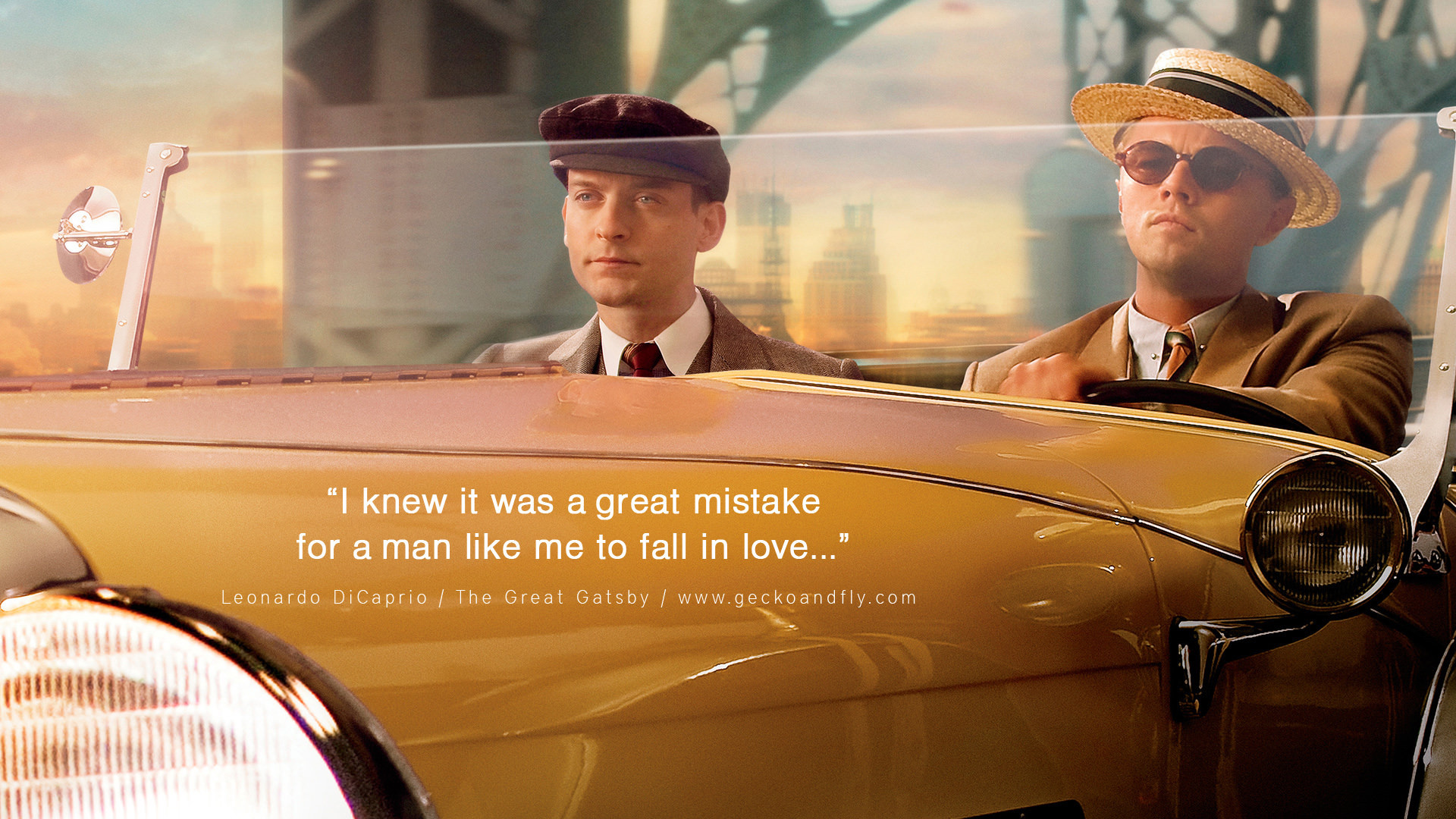
We love to say "old sport." It sounds classy, right? Leonardo DiCaprio makes it look cool in the movie, toast in hand. But in the book, it’s a desperate attempt at "faking it 'til you make it."
Gatsby isn’t an Oxford man. Not really. He spent a few months there after the war because the military offered a program. He uses "old sport" to sound like British royalty, but to people like Tom Buchanan—who was born into actual wealth—it sounds fake. It’s a "linguistic relic," a phrase Gatsby picked up to hide his "shiftless and unsuccessful" farm-boy roots.
Every time he says it, he’s trying to bridge the gap between Jay Gatz (the poor kid) and Jay Gatsby (the tycoon). It’s not a term of endearment; it’s a costume made of words.
The Brutal Truth of the Ending
The final line of the book is arguably the most famous sentence in American literature. You know the one.
“So we beat on, boats against the current, borne back ceaselessly into the past.”
It’s not a hopeful quote. It’s about the futility of trying to recreate the past. Gatsby thought he could buy his way back to 1917. He thought if he had enough shirts, enough parties, and enough money, he could erase the five years Daisy spent with Tom.
But the "current" is time. You can’t row against it forever. Eventually, it pulls you back. The "orgastic future" Gatsby believed in was actually already behind him, buried in the "vast obscurity beyond the city."
Other Quotes You Might Have Missed
- On Loneliness: “I felt a haunting loneliness sometimes, and felt it in others—young clerks in the dusk, wasting the most poignant moments of night and life.”
- On Identity: “The truth was that Jay Gatsby... sprang from his Platonic conception of himself.” Basically, he invented himself out of thin air.
- On Modern Life: “I was within and without, simultaneously enchanted and repelled by the inexhaustible variety of life.” This is basically how everyone feels on social media today.
Applying Gatsby’s Lessons (Without the Car Crashes)
Look, Fitzgerald wasn't just trying to write a sad story about a guy who liked a girl. He was warning us. The reason these The Great Gatsby quotes still matter in 2026 is that we’re still doing the same stuff. We’re still curation-obsessed. We’re still trying to "repeat the past" through nostalgia cycles.
If you want to take something away from these quotes, let it be this:
- Check your "Green Lights." Are you chasing something because you want it, or because you like the idea of wanting it? Don't let the pursuit of an "enchanted object" ruin your actual life.
- Watch out for "Careless People." Jordan Baker says, "It takes two to make an accident." She likes Nick because he’s careful. But she’s wrong—careful people get wrecked by careless people all the time. Surround yourself with people who actually clean up their own messes.
- Be honest about your "Advantages." Nick’s dad was right about one thing—we aren't all starting from the same place. Acknowledging that doesn't make you soft; it makes you realistic.
The Great Gatsby is a tragedy because Gatsby never realized he couldn't win. He thought he was special enough to break the rules of time and class. He wasn't. None of us are. But hey, at least we got some great lines out of it.
If you want to see how these themes play out in modern storytelling, you should look into how contemporary screenwriters use unreliable narrators to flip the script on the audience, much like Nick does to us.