Honestly, if you grew up in the 2010s, you probably remember when flash mobs were basically the coolest thing on the planet. Everyone was doing them—at train stations, weddings, even grocery stores. It was a weird, rhythmic time to be alive. Right in the middle of that frenzy, we got Step Up 4 Revolution (or just Step Up Revolution if you're a purist).
Most people dismiss these movies as just "the dance ones," but this installment was actually a massive shift for the franchise. It swapped the gritty Baltimore streets and New York arts schools for the neon-soaked, humid backdrop of Miami. And instead of just "winning a trophy," the stakes felt weirdly real.
What Most People Get Wrong About the Plot
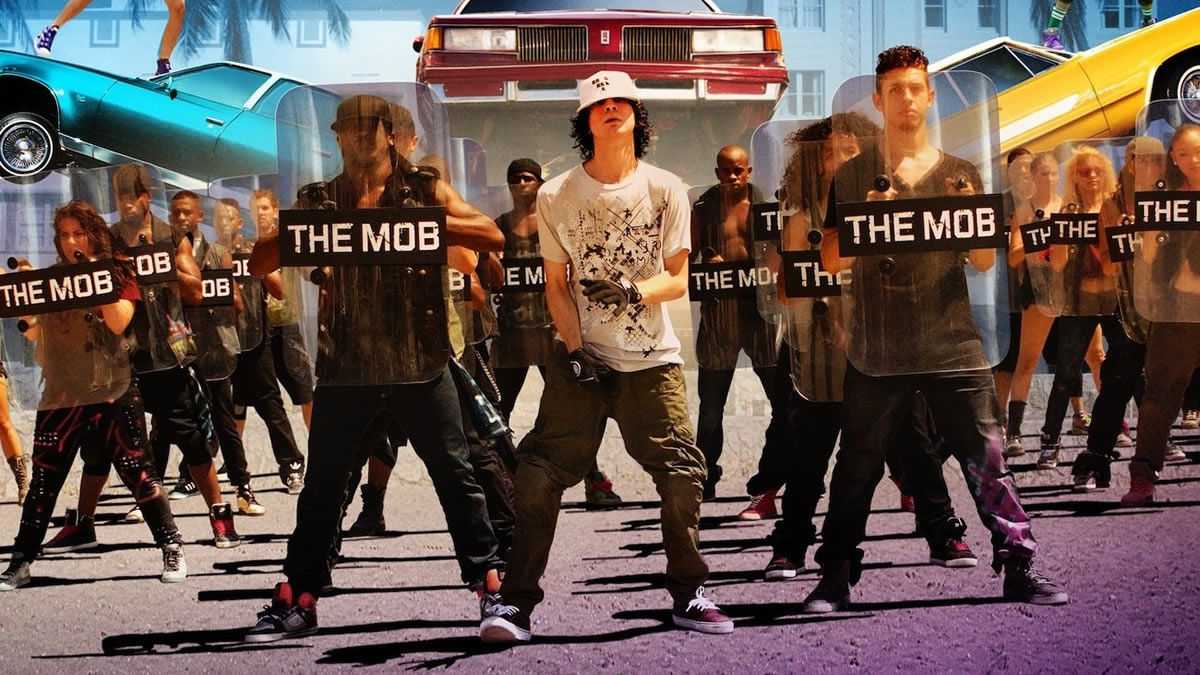
Look, no one is winning an Oscar for the screenplay here. It’s a classic Romeo and Juliet setup. You’ve got Sean (Ryan Guzman), a waiter who leads an underground dance crew called "The Mob," and Emily (Kathryn McCormick), the daughter of a wealthy real estate tycoon played by Peter Gallagher.
The twist?
Emily’s dad wants to bulldoze the historic neighborhood where Sean and his friends live to build a massive luxury hotel complex.
It’s easy to call it cheesy, but for a dance flick, it actually tried to say something about gentrification. They didn't just dance for fun; they used their routines as a form of protest art. It was sort of like Occupy Wall Street meets So You Think You Can Dance. The Mob sets out to win a YouTube contest—first to 10 million hits gets a $100,000 prize—but the goal shifts from fame to saving their community.
The Choreography Was Next Level
You can’t talk about Step Up 4 Revolution without mentioning the "Museum Mob."
Seriously.
It’s probably one of the most creative sequences in the entire series. The dancers blend into the art gallery, disguised as statues and paintings, before "coming to life" in a synchronized, surreal performance. They used these expanding spheres (Hoberman spheres) and glowing costumes that made it feel more like a high-concept art installation than a street dance.
The choreographers—Jamal Sims, Christopher Scott, and Travis Wall—really leaned into the environment. They used the actual architecture of Miami.
One scene has the crew blocking traffic on Ocean Drive with low-riders and dancing on the roofs of cars. Another has them storming a corporate office building in suits, raining down "protest" flyers like confetti. It was loud, it was aggressive, and it was visually stunning.
Why the Casting Felt Different
This was Ryan Guzman’s first big role. Fun fact: he wasn't even a professional dancer when he got cast. He was an MMA fighter. The producers saw his audition tape and basically said, "He looks like Channing Tatum, we can teach him to move."
It worked.
Kathryn McCormick, on the other hand, was already a legend in the dance world after placing third on So You Think You Can Dance. The chemistry was a bit hit-or-miss for some critics, but the physical skill on display was undeniable. Plus, we got cameos from franchise favorites like "Moose" (Adam Sevani), which is basically a requirement for any Step Up movie to be legitimate.
The Real-World Impact of the Miami Heat
The film grossed over $140 million worldwide on a $33 million budget. That’s a huge win. But more than the money, it solidified a specific "Miami" aesthetic for dance films—lots of slow-motion shots, vibrant colors, and heavy bass.
The soundtrack was everywhere.
- "Goin' In" by Jennifer Lopez
- "Hands in the Air" by Timbaland
- "Feel Alive" by Fergie
These tracks weren't just background noise; they were specifically remixed to match the "Stomp the Yard" style percussion that defined the movie’s sound.
Is It Actually a Good Movie?
Critics weren't kind. Some called it "an exercise in cinematic futility." But if you’re watching a Step Up movie for the dialogue, you’re doing it wrong.
The "revolution" part of the title is a bit of a stretch—the movie ends with a big corporate buyout by Nike, which is pretty ironic for a film about fighting "The Man." But as a time capsule of 2012 dance culture, it’s unbeatable. It captured that specific moment when YouTube was the ultimate goal and flash mobs were a legitimate way to get your voice heard.
How to Experience the "Revolution" Today
If you’re looking to revisit the film or get into the franchise for the first time, here is how you should actually approach it.
Watch the "Museum" and "Office" Mobs first. Don't worry about the plot. Just search for those specific clips on YouTube. They represent the peak of the film's creativity and show why Christopher Scott is considered a genius in the industry.
Pay attention to the 3D elements.
This was one of the few dance movies actually shot in "true 3D" rather than being converted in post-production. Even if you're watching it on a standard screen now, you can see how the dancers move toward the camera to exploit that depth.
Look for the SYTYCD alumni.
Half the fun is spotting the professional dancers in the background who went on to become huge stars in the commercial world.
If you want to see where the franchise went next, Step Up 4 Revolution is the bridge that leads directly into Step Up: All In, which brought back almost everyone for a "greatest hits" finale.
The best way to appreciate this movie is to see it as a high-budget music video with a heart. It’s about the energy of Miami and the idea that even if you’re just a waiter or a "nobody," you can make people stop and look at you if your movement is loud enough.
Your Next Step: Look up the "Step Up Revolution" behind-the-scenes featurette on YouTube. Seeing how they coordinated 60 dancers to shut down a real Miami street in one take will give you a whole new respect for the production team.