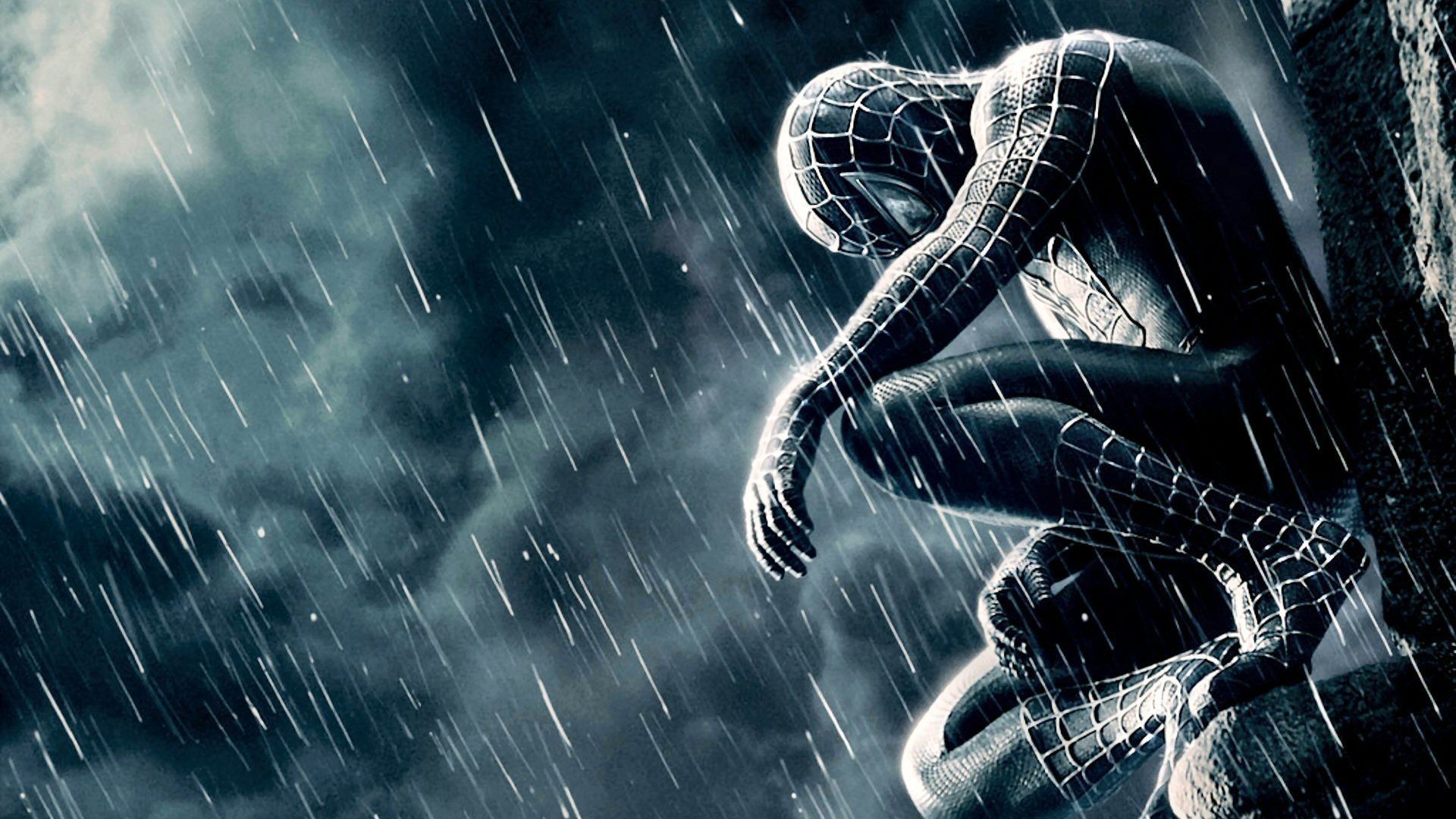
Honestly, it’s been nearly two decades, and we still haven't stopped talking about it. That 2007 release felt like a tectonic shift in pop culture, but not the kind everyone wanted at the time. Spider-Man 3 was supposed to be the victory lap for Sam Raimi. Instead, it became the poster child for "too much movie" in a single sitting. You've got the emo hair. You've got the jazz club. You've got three villains battling for screen time like they’re in a crowded elevator.
People hated it. Critics were confused.
But here’s the thing: in 2026, looking back through the lens of a "multiverse-exhausted" audience, this movie feels surprisingly refreshing. It’s weird. It’s earnest. It’s also deeply, tragically flawed because of some of the most famous studio interference in Hollywood history.
The Venom Problem and the Battle for the Script
If you want to understand why Spider-Man 3 feels like two different movies fighting for your soul, you have to look at the producers. Sam Raimi didn't want Venom. He flat-out said it. He was a Silver Age comic book fan who loved the humanity of characters like Sandman and the Vulture.
Avi Arad had other plans.
The studio saw the dollar signs attached to Venom’s tongue. They basically forced Raimi’s hand, insisting that the fans "demanded" the symbiote. The result? A narrative where the primary emotional arc—Peter Parker learning to forgive his uncle’s killer—gets interrupted by an alien goo plot that feels like it belongs in a different franchise.
Raimi tried to make it work. He really did. But you can feel his lack of passion for Eddie Brock in every frame Topher Grace is on screen. While Thomas Haden Church’s Sandman gets a beautiful, wordless birth sequence that remains one of the best bits of CGI ever made, Venom is relegated to a few screeches and a rushed final act. It’s a mess.
Why Bully Maguire Is a Stroke of Genius (Seriously)
Let’s talk about the dance. You know the one.
When Peter Parker gets infected by the symbiote, he doesn't become a "cool" bad boy. He becomes what a dork thinks a cool bad boy looks like. It’s cringeworthy. It’s painful to watch him strut down the street pointing at women.
That was the point.
Most modern superhero movies make the "dark side" look sleek and edgy. Raimi made it pathetic. He understood that Peter Parker is, at his core, a nerd from Queens. If you give a nerd absolute power and no ego check, he doesn't become James Bond; he becomes a jerk who buys a bad suit and tries to play jazz piano.
The "Bully Maguire" meme didn't just happen by accident. It persists because Tobey Maguire committed 100% to the bit. He wasn't afraid to look like an idiot. That kind of creative bravery is rare now. Everything is so polished today that we’ve lost the "uncomfortable" humor that Raimi excelled at.
The Tragic Weight of the Sandman Arc
Forget the black suit for a second. Look at Flint Marko.
The scene where he tries to pick up his daughter’s locket while his hands are literally turning into grains of sand is heartbreaking. It’s a silent movie within a blockbuster. Raimi was interested in the idea that villains aren't just monsters; they’re people who made one terrible choice under pressure.
Spider-Man 3 actually handles the theme of forgiveness better than most movies in the MCU. Peter has to realize that he isn't a "sinless" judge. He has to look at the man who killed his uncle and see a human being.
This was the movie Raimi wanted to make. A movie about a hero losing his way because of pride and finding it again through empathy.
The Technical Reality: Why It Still Looks Incredible
Budget-wise, this thing was a behemoth. We're talking $258 million in 2007 dollars. Adjust that for today and it’s astronomical.
But you can see the money on the screen.
The physics of the sand, the way the symbiote tendrils move, the practical sets—it all holds up better than the "gray sludge" CGI we often see in modern capes-and-tights flicks. The final battle at the construction site might be overstuffed, but the choreography is clear. You always know where the characters are.
Raimi’s camera is always moving. He uses "whip pans" and Dutch angles that remind you this is a comic book brought to life. It’s kinetic. It’s loud. It’s exhausting.
What We Get Wrong About the Reception
There's a myth that Spider-Man 3 was a box office failure.
It wasn't.
It made nearly $900 million worldwide. It was the highest-grossing film of the trilogy. The "failure" was purely critical and emotional. It broke the trust fans had after the near-perfect Spider-Man 2. Because it tried to do everything, it ended up feeling like it did nothing perfectly.
Harry Osborn’s amnesia subplot? Kinda lazy.
Gwen Stacy being shoehorned in? Unnecessary.
The butler suddenly explaining the truth about Norman’s death? A total "deus ex machina" that still bugs people.
But even with those cracks, it’s a film with a pulse. It’s not a product made by a committee; it’s a movie made by a director who was being pulled in five different directions and decided to go down swinging.
How to Re-watch Spider-Man 3 the Right Way
If you’re planning a re-watch, don’t go in expecting a tight narrative. It’s not going to happen. Instead, try these steps to actually enjoy the experience:
- Watch the "Editor’s Cut": There’s a version out there (often called the 2.1 or Editor's Cut) that reshuffles some scenes and removes some of the more egregious fluff. It flows much better.
- Focus on the Score: Christopher Young’s work here is underrated. He takes Danny Elfman’s themes and twists them into something much darker and more operatic.
- Embrace the Camp: Stop trying to make it "gritty." It’s a Sam Raimi movie. It’s supposed to be a little bit like a horror-comedy.
- Look for the Nuance in MJ and Peter: Their relationship is toxic in this movie, and that’s intentional. It’s a study of how fame and ego can ruin a good thing.
The legacy of this film isn't just a collection of memes. It’s a cautionary tale for studios and a weirdly beautiful mess for fans. It’s a movie that has more heart in its pinky finger than most modern blockbusters have in their entire runtime.
Next time you see a clip of Peter Parker dancing, don't just laugh. Appreciate that we once lived in a world where a director was allowed to be this weird with a billion-dollar IP. We might not see its like again.