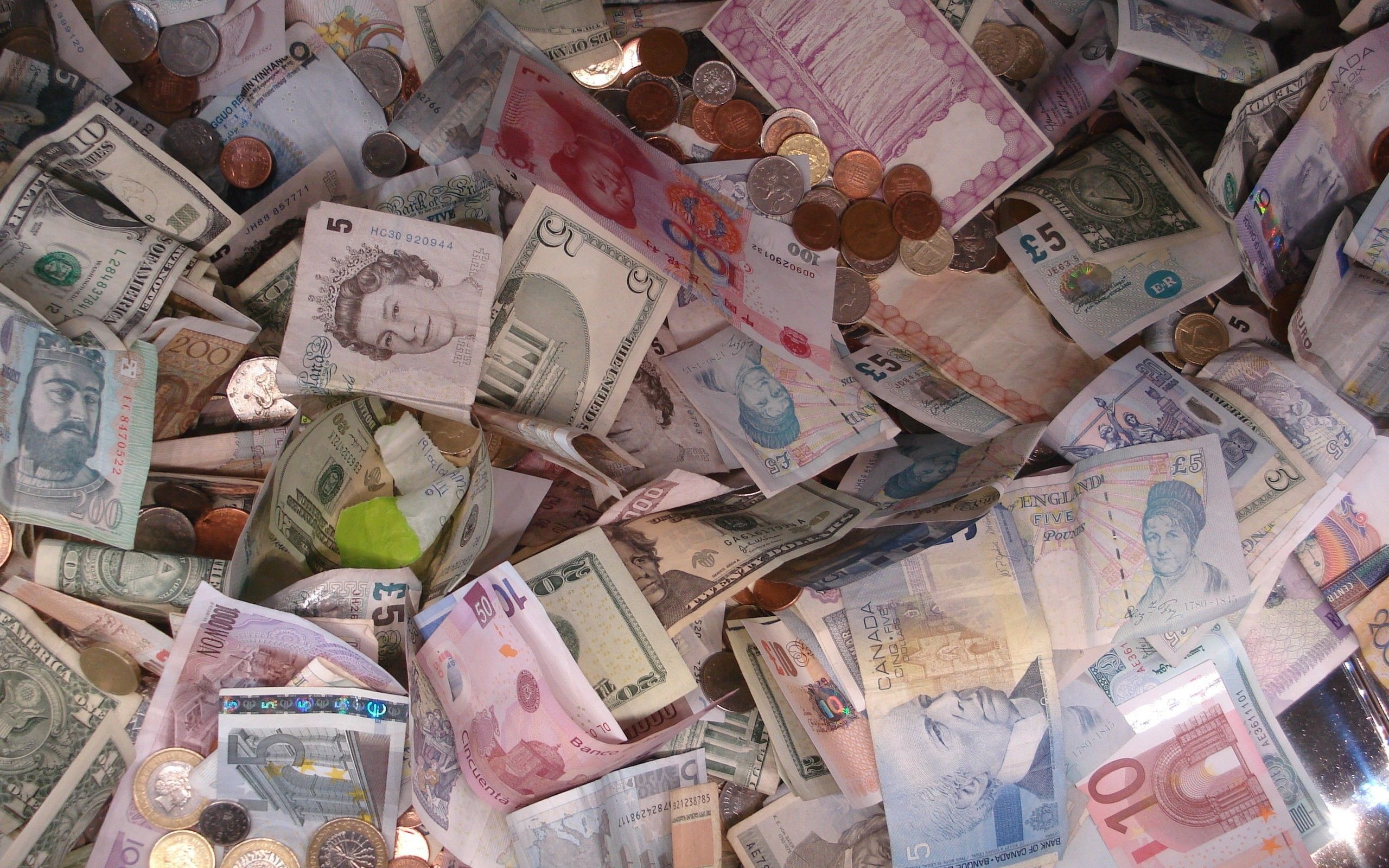
You’ve seen it on your feed. A rapper sits on a private jet, stone-faced, while a literal carpet of blue hundred-dollar bills fans out across their lap, down their legs, and onto the floor. It’s the money spread, a visual flex that has become the unofficial logo of modern hip-hop success.
But where did this actually come from? And why, in an era of digital banking and crypto, is physical cash still the ultimate status symbol?
Honestly, the "money spread" isn't just a photo op. It’s a cultural ritual. It’s about showing the world that you didn't just "make it"—you made it so big that the bank can’t even hold your ego anymore.
The Kodak Black vs. Lil Baby Debate
If you want to start a fight in a rap comment section, just ask who invented this move. In 2021, Kodak Black went on a tear, claiming he was the architect of the modern money spread. He even posted a video from 2016 showing himself with a massive stack fanned out across his arm and down his leg.
Kodak felt slighted. He saw everyone from Lil Baby to Pooh Shiesty doing the move and felt like he wasn't getting his flowers. Lil Baby, for his part, had rapped on a track with Lil Durk that he "invented" posting money on the Gram.
It was a clash of egos.
Pooh Shiesty eventually chimed in, basically calling Kodak corny for even caring about the credit. But the tension was real. It showed that the money spread isn't just a pose; it’s intellectual property in the streets. While people have been posing with cash since the 1980s (think Eric B. & Rakim on the Paid in Full cover), the specific "arm-to-leg" fan-out is a modern social media phenomenon.
Why Physical Cash Still Wins
We live in 2026. Most of us don't even carry a wallet anymore. We have Apple Pay, Zelle, and whatever new coin is trending on X. So why do rappers still insist on carrying $100k in a duffel bag?
It’s about "maximum liquidity."
Floyd Mayweather, the undisputed king of the flex, famously showed an ESPN reporter a bank slip with over $123 million in a single account. But even he knows a screenshot of a bank balance doesn't hit the same as a mountain of physical Benjamins. You can't smell a bank statement. You can't feel the weight of a wire transfer.
- Visibility: A digital number is abstract. $50,000 in cash is a physical object that occupies space.
- The "Hustle" Roots: For many artists, cash represents the transition from the "invisible" economy of the streets to the visible world of stardom.
- Tactile Flex: Spreading money out on a bed or a floor is a performance. It’s "money theater."
The Most Iconic Money Spreads in History
While every up-and-coming artist tries their hand at it, a few have reached legendary status.
The Pooh Shiesty Standard
Before his legal troubles, Pooh Shiesty was the poster child for the "Shiesty Spread." His photos often featured crisp, sequential bills—usually $20s or $100s—laid out with mathematical precision. It looked less like a flex and more like a high-stakes art installation.
Floyd "Money" Mayweather
Mayweather is the GOAT of this. He doesn't just do a money spread; he does a money lifestyle. He’s been photographed eating breakfast with stacks on the table and packing millions into suitcases for "light shopping." For Floyd, the money spread is a daily chore.
Ken Carson’s Cinematic Chaos
More recently, Ken Carson took things to a different level with his "Money Spread" music video. Shot on his tour bus, it captures the raw, unfiltered chaos of the road. It isn't the clean, curated look of a studio shoot. It’s messy. It’s loud. It’s exactly what the "Opium" aesthetic is about.
The Psychology of the Flex
Psychologists have actually studied this stuff. It turns out that when we see people "flaunting" wealth, it triggers two very different reactions.
Some people see a money spread and feel a sense of aspiration. They see the "American Dream" realized. Others see it and feel immediate distrust. Studies from UC Berkeley have suggested that wealth can sometimes cloud moral judgment—the famous "drivers of luxury cars are less likely to stop for pedestrians" study comes to mind.
But in the world of entertainment, the motive is usually simpler: Social Currency. We share what makes us look good. If you’re a rapper, looking "broke" is a career-ender. The money spread is a defensive move as much as it is offensive. It’s a way of saying, "I’m still here, and the checks are still clearing."
Is the Trend Dying?
Actually, it’s evolving. As banking becomes more digital, the "physical flex" is becoming more rare, which actually makes it more valuable. When everyone has a Cash App, the guy with the physical brick of cash looks like a boss.
However, there is a dark side. Posting a money spread is essentially a giant "Rob Me" sign for people with bad intentions. We’ve seen countless cases where social media posts led to home invasions or worse. Modern artists are getting smarter, often using "prop money" for videos or only posting the flex after they’ve already left the location.
How to Understand the "Spread" Like an Expert
If you're looking at these photos and wondering if the money is real, look at the details. Real money has a specific texture and color that's hard to fake under high-definition cameras.
- Check the Bands: Real bank bands have specific markings. If the money is just loose and messy, it might be a "quick flex."
- The Denominations: A spread of $20s looks huge but might only be a few thousand dollars. A spread of "Blue Benjamins" (the new $100 bills) is the real heavy lifting.
- The Surroundings: Is the artist in a five-star hotel or their mom's basement? The context tells you if the money belongs to them or the production company.
The money spread is a fascinating piece of modern folklore. It’s a bridge between the old-school grit of the 90s and the hyper-visual, attention-seeking world of 2026. Whether you think it's tacky or legendary, you can't deny its power to stop the scroll.
What to Do Next
If you want to understand the business behind the flex, stop looking at the Instagram posts and start looking at the "boring" stuff.
- Research Financial Literacy: Many of the rappers who post the biggest spreads (like Jay-Z or Master P) are the ones who eventually stop posting them because they’re too busy investing in real estate and tech.
- Track the Evolution: Watch how the "flex" changes as we move further into a cashless society. Will we see "crypto spreads" next? Probably not. It just doesn't have the same vibe.
- Verify the Source: Before you get FOMO from a celebrity post, remember that social media is a highlight reel, not a bank statement.
The ultimate flex isn't just having the money to spread—it's having the wisdom to keep it.
Next Steps: You can dive deeper by researching the specific history of the "Blue Benjamin" redesign or looking into how high-end security firms advise celebrities on social media safety. For now, just remember: a stack on the floor is worth a lot, but a diversified portfolio is worth a lot more.