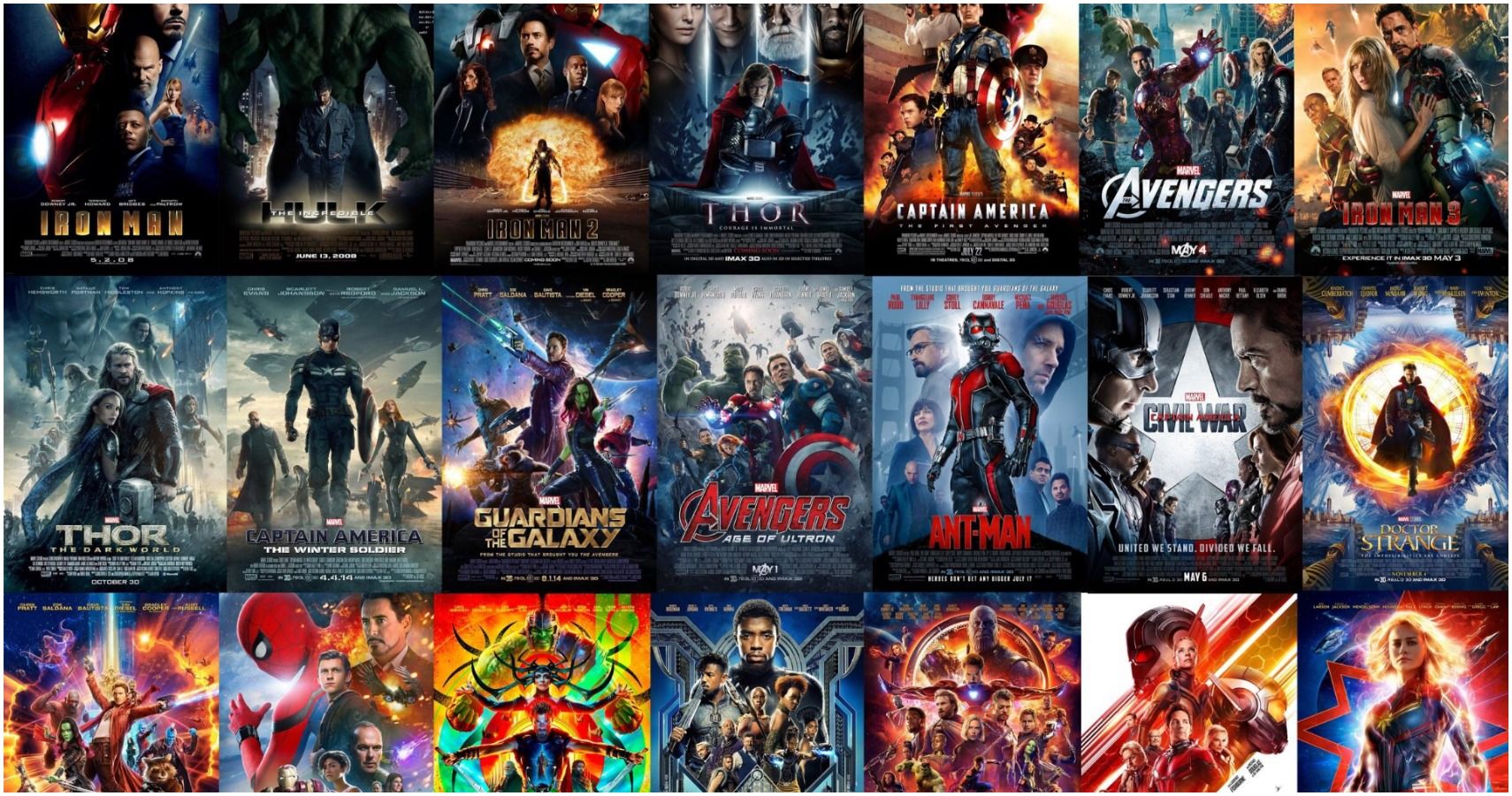
Let’s be real for a second. If you’re trying to figure out the marvel films release order by just glancing at a poster or a random list on a wiki, you’re basically trying to solve a Rubik's cube in the dark. It’s messy. It’s overwhelming. And honestly? Most people get the sequence totally twisted because they confuse "when it came out" with "when it actually happens."
We’re talking about nearly two decades of cinema.
Back in 2008, when Iron Man hit theaters, nobody—not even Kevin Feige, probably—could have predicted we’d be sitting here in 2026 debating the multiversal implications of Robert Downey Jr. returning as Doctor Doom. But here we are. If you want to watch these movies the way the world first saw them, you need the actual theatrical release dates.
The Foundations: Phase One to Three (The Infinity Saga)
The early days were simpler. You didn't need a PhD in quantum physics to understand why a guy in a metal suit was hanging out with a Norse god. The release order starts with the 2008 gamble that changed everything.
- Iron Man (May 2008) – The spark.
- The Incredible Hulk (June 2008) – The one everyone forgets is actually MCU canon.
- Iron Man 2 (May 2010) – Introducing Black Widow and a lot of world-building.
- Thor (May 2011) – Space magic and Dutch tilts.
- Captain America: The First Avenger (July 2011) – The WWII era.
- The Avengers (May 2012) – The first time the "experiment" truly worked.
Then things got bigger. Phase Two was a bit of a transition period. We saw the fallout of New York in Iron Man 3 (2013) and Thor: The Dark World (2013). Then came the game-changers: Captain America: The Winter Soldier (2014) and the weird, wonderful Guardians of the Galaxy (2014). It ended with Avengers: Age of Ultron and the palette-cleansing Ant-Man in 2015.
Phase Three? That’s where the gas hit the floor.
Between 2016 and 2019, Marvel released 11 movies. It started with the superhero breakup of Captain America: Civil War and introduced heavy hitters like Doctor Strange (2016), Black Panther (2018), and Captain Marvel (2019). Of course, this era peaked with the back-to-back punches of Infinity War (2018) and Endgame (2019), before Spider-Man: Far From Home (2019) put a quiet, grief-stricken cap on the saga.
The Multiverse Expansion: Phase Four and Five
Post-Endgame life got complicated. We didn't just have movies anymore; we had Disney+ shows that were suddenly "required reading." But if we're sticking strictly to the films, the marvel films release order for this era reflects a studio experimenting with tone and legacy.
- Black Widow (2021) – A delayed prequel.
- Shang-Chi and the Legend of the Ten Rings (2021) – Martial arts excellence.
- Eternals (2021) – Chloé Zhao’s divisive, sweeping epic.
- Spider-Man: No Way Home (2021) – The nostalgia bomb.
- Doctor Strange in the Multiverse of Madness (2022) – Sam Raimi horror-lite.
- Thor: Love and Thunder (2022) – Colorful, chaotic, and very Taika.
- Black Panther: Wakanda Forever (2022) – A heavy, beautiful tribute to Chadwick Boseman.
Phase Five kicked off with Ant-Man and the Wasp: Quantumania in early 2023, which was... a choice. It was followed by the emotional goodbye of Guardians of the Galaxy Vol. 3 and the high-energy The Marvels.
Then 2024 happened. It was a lean year, but a massive one. Deadpool & Wolverine (July 2024) basically carried the franchise on its back, proving that audiences still crave these characters if the chemistry is right.
Where We Are Now: 2025 and 2026
If you're reading this in early 2026, you've likely just seen Sam Wilson take flight. The schedule has shifted a lot lately. Marvel realized they couldn't just keep flooding the zone; quality over quantity became the new mantra.
- Captain America: Brave New World (February 14, 2025) – Sam Wilson vs. Harrison Ford’s Red Hulk.
- Thunderbolts* (May 2, 2025) – The "suicide squad" of the MCU, featuring Florence Pugh and Sebastian Stan.
- The Fantastic Four: First Steps (July 25, 2025) – A retro-futuristic 60s vibe that finally brings the First Family home.
Looking ahead at the rest of 2026, the calendar is terrifyingly exciting. We are currently staring down the barrel of two massive tentpoles that will define the next decade of the MCU.
Spider-Man: Brand New Day (July 31, 2026)
After the world forgot Peter Parker in No Way Home, we’re finally getting the "street-level" Spidey we’ve wanted. Destin Daniel Cretton is directing this one, and the rumors about it being a soft reboot for Peter’s life in college are basically confirmed. It’s a grounded contrast to what comes next.
Avengers: Doomsday (December 18, 2026)
This is the big one. The Russo Brothers are back. Robert Downey Jr. is back—but not as Tony. He’s Victor von Doom. This film was fast-tracked after the studio moved away from the Kang storyline, and it’s set to be the first half of the grand finale for the Multiverse Saga.
Why Release Order is Often Better Than Chronological
You'll see people online swearing by the "chronological" order. They’ll tell you to start with Captain America: The First Avenger because it’s set in the 40s, then jump to Captain Marvel because it’s in the 90s.
Honestly? Don't do that for your first watch.
The marvel films release order is designed to build tension. When you watch Captain Marvel in the 90s, you miss the emotional weight of seeing Nick Fury’s pager at the end of Infinity War. The post-credit scenes—the very soul of the MCU—are built for release order. If you watch chronologically, those stingers will spoil movies you haven't even seen yet. It’s a spoiler minefield.
Common Misconceptions About the Order
One thing that trips everyone up is the "Sony Factor." Because Sony owns the film rights to Spider-Man, those movies sometimes feel like they exist in a vacuum, but they are vital to the release sequence. You can't skip No Way Home and expect the multiverse stuff in Doctor Strange 2 to make total sense.
Another sticking point? The Hulk. The Incredible Hulk (2008) stars Edward Norton, not Mark Ruffalo. A lot of fans think it's not part of the same universe because of the recast, but it 100% is. General Ross and the Abomination both return later, proving that even the "black sheep" of Phase One matters.
Actionable Steps for Your Next Rewatch
If you’re planning a marathon to catch up before Avengers: Doomsday hits theaters later this year, here is how to handle it efficiently:
- Focus on the Pillars: If you don't have time for all 30+ movies, watch the "Captain America" and "Avengers" lines. They carry the main narrative weight of the Infinity and Multiverse Sagas.
- Don't Ignore the Specials: The Guardians of the Galaxy Holiday Special and Werewolf by Night are short but provide crucial character beats and lore.
- Check the Year: Double-check the 2025/2026 dates. Marvel is notorious for shifting things by a few months to avoid competition or fix VFX. As of right now, the July and December 2026 dates for Spider-Man and Avengers are the gold standard.
- Use Disney+ Collections: The platform usually has a "Release Order" category. Use it. It’s the most "human" way to experience the growth of the technology and the storytelling.
The MCU isn't just a series of movies anymore; it's a historical record of how blockbuster filmmaking evolved over 18 years. Watching it in the order the world experienced it is the only way to truly feel the scale of what they’ve built.