Let’s be real for a second. When you hear "D.H. Lawrence," your brain probably goes straight to the scandals, the banned books, and the kind of heavy-breathing prose that made our grandparents blush. It’s a lot. But when the BBC released Lady Chatterley’s Lover 2015 as part of their 20th-century classics season, something shifted. It wasn't just another stiff period piece.
It felt different.
Directed by Jed Mercurio—the same guy who gave us the high-octane stress of Line of Duty—this adaptation took a story famously known for its "filth" and turned it into a surprisingly tender, focused character study. Most people go into a Lawrence adaptation expecting wall-to-wall smut. Honestly? This version isn’t that. It’s more about the crushing weight of the British class system and the literal physical toll of the Great War.
If you’re looking for the 1981 version’s kitsch or the 1993 version’s sprawling length, you won’t find it here. This is a lean, 90-minute punch to the gut. It asks a simple question: What happens when the world you were promised disappears before your eyes? Further information on this are covered by Deadline.
The Mercurio Touch: Stripping Away the Fluff
Jed Mercurio has a very specific vibe. He likes tension. He likes silence. By bringing that sensibility to Lady Chatterley’s Lover 2015, he stripped away the flowery, philosophical ramblings that often make Lawrence’s original 1928 novel a bit of a slog to read.
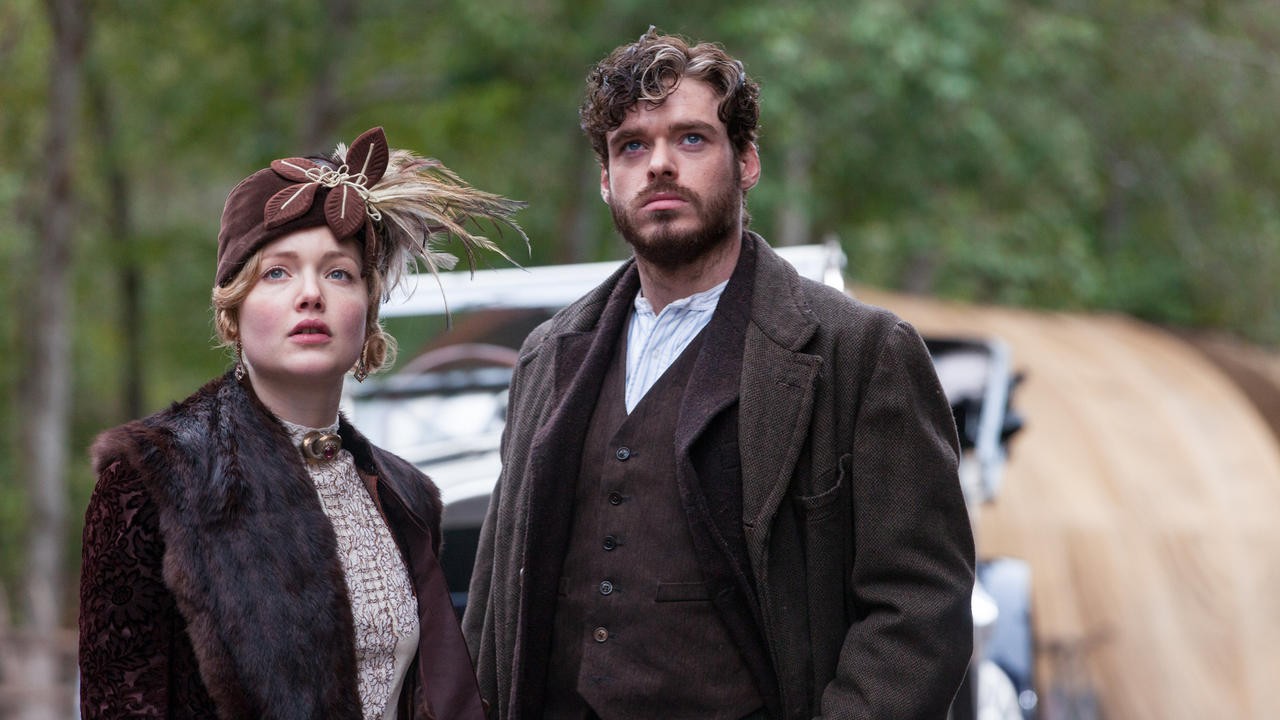
You’ve got Holliday Grainger playing Constance Chatterley. She’s brilliant. She captures that specific kind of "waiting for life to start" energy. Beside her is Richard Madden as Oliver Mellors. This was peak Game of Thrones era Madden, and he brings a rugged, almost feral stillness to the role. He doesn't say much. He doesn't have to.
The plot follows the standard beats, sure. Connie marries Sir Clifford Chatterley (James Norton). He goes off to WWI. He comes back paralyzed from the waist down. They move to Wragby Hall, a cold, oppressive estate surrounded by coal mines and soot. Clifford becomes obsessed with his own impotence and the preservation of his legacy, eventually suggesting Connie find a "suitable" man to father an heir.
Then she meets Mellors.
But here is where the 2015 version zags where others zig. It focuses heavily on the coal mines. You see the black lung, the grime, and the desperate poverty of the local villagers. It grounds the romance in a reality that feels dangerous. This isn't a sunny picnic romance. It's a "we might starve or be social outcasts" romance.
Why the 2015 Adaptation Frustrated Purists
Some Lawrence scholars hated it. Really.
They argued that by cutting out the explicit sexual descriptions—the very things that got the book banned in the UK until the 1960 Penguin trial—the BBC "sanitized" the message. Lawrence believed that physical passion was a way to reconnect with our humanity in an industrial, soul-killing world. If you take out the graphic nature of that passion, do you lose the point?
Maybe. But Mercurio’s script argues that the longing is just as powerful as the act.
There’s a scene where Connie watches Mellors washing himself behind his cabin. It’s a classic trope, but Grainger plays it with such a raw sense of shock. It’s not just "oh, he’s hot." It’s "oh, he’s alive." In a house filled with Clifford’s bitter intellectualism and the ghost of a dead era, Mellors is the only thing that breathes.
Also, James Norton’s portrayal of Clifford is nuanced. In many versions, Clifford is just a jerk. He’s a villain. Here, he’s a tragic figure. He’s a man who had everything—status, athleticism, a beautiful wife—and had it all ripped away by a stray piece of shrapnel. You feel for him, even when he’s being an elitist snob. That complexity is what makes the Lady Chatterley’s Lover 2015 version stick in your head long after the credits roll.
The Technical Craft: Visuals and Sound
The cinematography is surprisingly moody. Think desaturated greens and heavy greys. It’s meant to look like a world covered in coal dust. Even the forest, which should be a sanctuary, feels damp and cold. This isn't the "shimmering Edwardian summer" you see in Downton Abbey.
It’s gritty.
The sound design is worth mentioning too. The clanking of the mines, the squeak of Clifford's wheelchair, the rustle of the woods—it all builds a sensory wall that traps Connie. When she finally finds intimacy with Mellors, the soundscape opens up. It’s subtle work, but it’s why this version feels more "human" than the big-budget Netflix remake that came out later.
Comparing the 2015 Version to the 2022 Netflix Movie
It's impossible to talk about the 2015 film without mentioning the Emma Corrin/Jack O'Connell version from 2022.
- The 2015 BBC Film: Focuses on the social divide and the psychological breakdown of the trio. It’s shorter, more dialogue-driven, and feels like a play.
- The 2022 Netflix Film: Much more visual, much more explicit, and leans into the "female gaze." It’s more of a sweeping epic.
Honestly, the 2015 version feels more British. It’s restrained. It has that "stiff upper lip" that eventually cracks under pressure. Richard Madden’s Mellors feels like a man who actually works for a living, whereas O'Connell's version feels a bit more like a modern romantic lead. Both are good, but for different moods. If you want a gritty drama about the death of the old world, stick with 2015.
What Most People Get Wrong About the Story
The biggest misconception about Lady Chatterley’s Lover 2015—and the book in general—is that it’s just about a woman cheating on her disabled husband.
That’s the surface level.
The real story is about the Industrial Revolution. It’s about how machines and money were replacing human connection. Clifford represents the "mind"—cold, calculating, and mechanical. Mellors represents the "body"—instinctual, grounded, and messy. Connie is the soul trying to choose between them.
The 2015 version hammers this home by showing the tension between the estate and the pits. You see the miners’ faces. You see the soot on the windows. It makes Connie's escape into the woods feel like a political act, not just a physical one.
Is It Worth the Watch Today?
Absolutely. Especially if you’re a fan of the lead actors before they became global superstars. Seeing Richard Madden and James Norton face off is a masterclass in understated acting.
There’s a specific scene toward the end—no spoilers, but it involves a letter—that perfectly encapsulates the hopelessness and the tiny sliver of hope that Lawrence intended. It doesn't give you a "happily ever after" wrapped in a bow. It gives you a "maybe we can survive this" ending.
How to Get the Most Out of Lady Chatterley’s Lover 2015
If you're going to dive into this movie, do it right. Don't just have it on in the background while you're scrolling on your phone. It’s a slow burn.
- Watch the background. Notice how the colors change as Connie moves from the house to the woods. The "grey" of the house vs. the "brown/green" of the hut is intentional.
- Listen to the silence. Richard Madden’s performance is 80% eyes and 20% words.
- Research the context. Knowing a little bit about the 1920s mining strikes in England makes Clifford’s character way more interesting. He’s not just a landlord; he’s a man terrified of a changing social order.
Lady Chatterley’s Lover 2015 isn't a masterpiece of erotic cinema, and it doesn't try to be. It’s a smart, well-acted, and deeply melancholy look at three people trapped by the circumstances of their birth and their era. It’s about the search for something real in a world that’s becoming increasingly artificial.
Actionable Steps for Fans of Period Drama
If you enjoyed this specific adaptation, you should definitely check out these next steps to deepen your appreciation for the genre:
- Compare the Source: Read the final chapters of D.H. Lawrence's third version of the novel (he wrote three distinct versions). You'll see exactly where Mercurio took liberties and where he stayed loyal to the "spirit" over the "text."
- Explore the "Season of Classics": The BBC produced this alongside an adaptation of The Go-Between. Watching them back-to-back gives you a great sense of how British television handled the "modern classic" in the mid-2010s.
- Track the Cast: If you liked James Norton here, watch him in Grantchester or Happy Valley to see his incredible range—from a sensitive vicar to a terrifying psychopath.
- Visit the Setting: If you're ever in the UK, the "Lawrence Country" around Eastwood in Nottinghamshire is where the real Wragby Hall (actually based on several houses) and the mines were located. It puts the entire story into a physical perspective.
The 2015 film remains a standout because it doesn't try to shock you. It tries to make you feel. In a world of fast-paced media, that's worth a 90-minute investment.