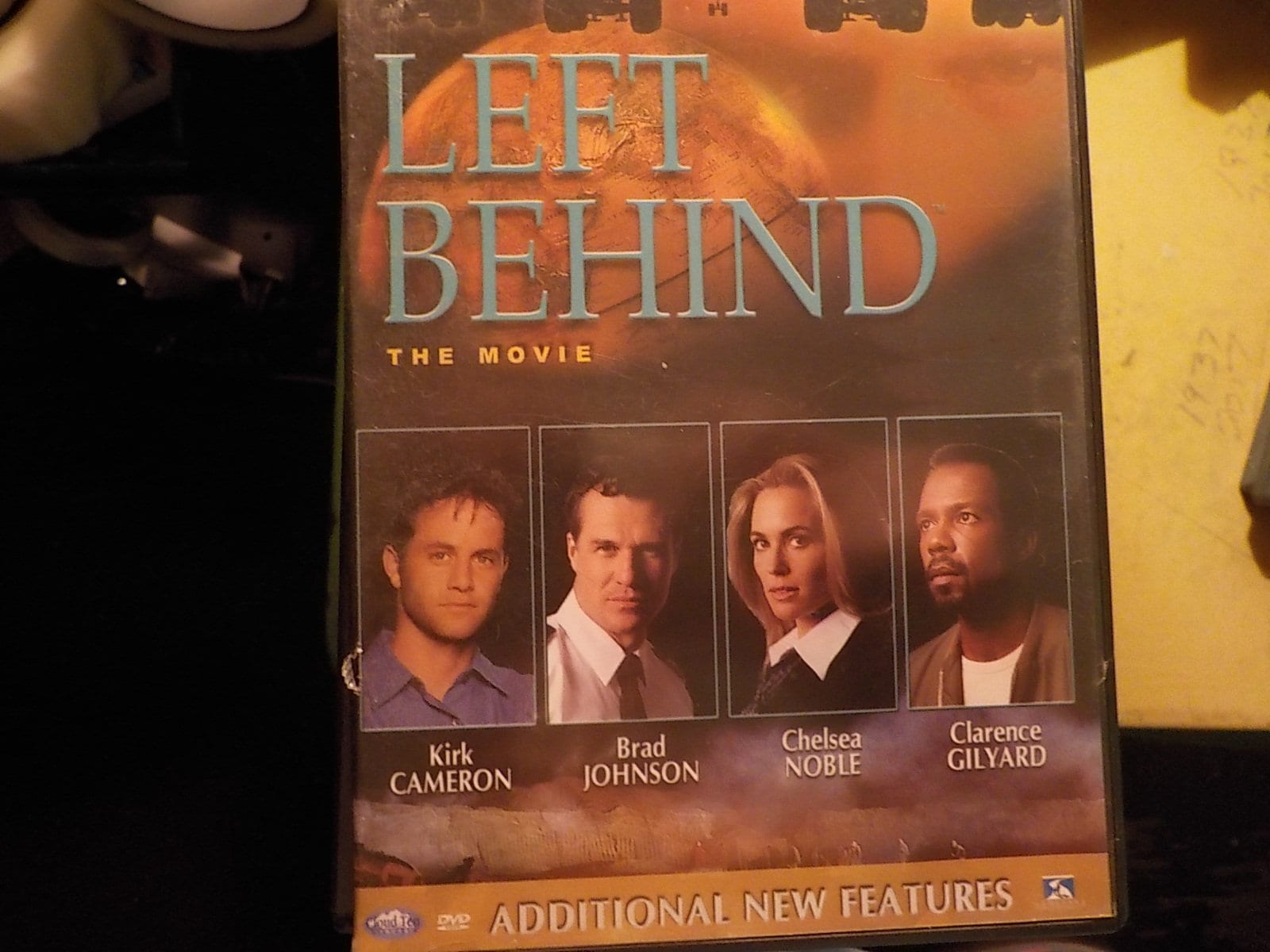
If you grew up in a certain kind of house in the early 2000s, you know the vibe. There was always that one DVD case sitting on the shelf next to the VeggieTales tapes. It had a gritty, orange-and-blue cover featuring a guy looking intensely at a computer screen while the world literally fell apart behind him. That guy was Kirk Cameron. The movie was Left Behind.
Honestly, it’s hard to overstate how much of a cultural earthquake this was for a specific slice of America. We aren't talking about a Marvel-level blockbuster here. But for millions of people, Kirk Cameron Left Behind wasn't just a movie; it was a warning. It was the cinematic equivalent of a "Turn or Burn" sign, packaged as a techno-thriller. Looking back now, the special effects look like they were made on a Windows 98 screensaver, but at the time? It felt like the most important thing ever filmed.
The Weird, Risky Birth of an Indie Icon
Most people assume this was a big Hollywood production because Kirk Cameron was a massive star from Growing Pains. He wasn't. He was a guy who had pivotally shifted his entire life toward his faith. When the movie went into production, the "faith-based film" industry as we know it today didn't really exist. There was no The Chosen. There was no God's Not Dead.
The producers, Peter and Paul Lalonde, were basically pioneers of "end times" schlock. They had been making low-budget Rapture movies for years under their Cloud Ten Pictures banner. When they got the rights to the mega-bestselling books by Tim LaHaye and Jerry B. Jenkins, they knew they needed a face people recognized. Enter Kirk. To understand the bigger picture, we recommend the detailed article by GQ.
Kirk Cameron played Buck Williams, a hotshot global journalist who survives the Rapture. It’s a wild role. One minute he's reporting on a mysterious Israeli missile defense system, and the next, he's trying to figure out why his pilot friend’s wife just vanished into a pile of clothes. The budget was about $17 million, which is peanuts by Hollywood standards but was basically the GDP of a small country for a Christian film in 2000.
A Release Strategy That Changed Everything
Here is a fact that usually shocks people: the movie didn't hit theaters first. In a move that would make modern marketing gurus sweat, the filmmakers released it direct-to-video on October 31, 2000. Yes, Halloween. They sold over three million copies before it ever touched a cinema screen.
By the time the theatrical release happened in February 2001, everyone had already seen it. The box office was a modest $4.2 million, but the home video sales were astronomical. It proved there was a massive, underserved audience that wanted movies about their beliefs, even if the "mainstream" critics at The Washington Post called it a "blundering cringefest."
Why the Fans Loved It (and Critics Hated It)
If you read the Rotten Tomatoes score today, it sits at a measly 16%. Ouch. Critics tore into the dialogue, the wooden acting from some of the supporting cast, and the pacing. But they missed the point.
For the audience, the draw wasn't the cinematography. It was the theology.
The film followed the "Pre-Tribulation" view of the end of the world. Basically:
- Jesus returns secretly to take the "true believers" to heaven.
- The world descends into chaos.
- A charismatic world leader (the Antichrist) rises to power.
- Those who are "left behind" have one last chance to get it right.
Kirk’s performance was actually pretty solid compared to everything else in the film. He brought a genuine intensity to Buck Williams. You could tell he really believed the stakes. He wasn't just hitting marks for a paycheck; he was on a mission. That sincerity is probably why people still talk about it today while other 2000-era thrillers have been totally forgotten.
The Nicolas Cage Elephant in the Room
You can't talk about Kirk Cameron Left Behind without mentioning the 2014 reboot starring Nicolas Cage. It’s sort of a "be careful what you wish for" scenario. Fans always said, "If only this movie had a huge budget and A-list stars!"
Well, they got Nic Cage. And honestly? It was a disaster.
The 2014 version tried to be a "mainstream" action movie and ended up stripping away almost all the stuff that made the original books popular. It was cynical. The original Kirk Cameron version, for all its technical flaws, had heart. It had Nicolae Carpathia, the chilling Antichrist figure played by Gordon Currie, who managed to be way more intimidating than anything in the reboot.
The Legacy of the Tribulation Force
The original movie spawned two sequels: Left Behind II: Tribulation Force and Left Behind: World at War.
The second movie is where things got really interesting. It moved away from the "disaster movie" vibe of the first film and became a weird sort of spy thriller. Buck Williams and Rayford Steele (the pilot played by Brad Johnson) form a secret cell to fight the Antichrist. It’s sort of like Mission: Impossible but with more Bibles and less Tom Cruise.
Interestingly, Kirk’s real-life wife, Chelsea Noble, played Hattie Durham in the series. This added a layer of chemistry that actually worked on screen. They were a "power couple" for the evangelical world, and seeing them together in an apocalyptic setting was a huge draw for the target demographic.
Why It Still Matters in 2026
We live in an era where faith-based content is a billion-dollar industry. We have high-end streaming series and theatrical releases every other month. None of that happens without the trail blazed by Kirk Cameron Left Behind.
It proved that you could market directly to churches. It proved that people would buy physical media in droves if the message resonated. It also created a specific "Rapture aesthetic" that has influenced everything from The Leftovers on HBO (though that took a much more secular approach) to various indie horror films.
The film also sparked a lot of debate within the church itself. Not every Christian believes in the "Secret Rapture" theory the movie presents. In fact, many theologians have spent the last twenty years writing books debunking the very ideas Kirk was promoting. The movie became a lightning rod for "rapture anxiety," with many adults now reflecting on how terrified they were as kids watching people vanish from their cars.
Facts You Probably Forgot
- The Soundtrack: It featured some of the biggest names in Christian music at the time, like Michael W. Smith and Third Day.
- The Cameos: Famous televangelists like Jack Van Impe and John Hagee actually show up as raptured passengers.
- The Budget: Even though it looked "cheap" to Hollywood, $17 million was a massive gamble for an independent faith-based studio in the year 2000.
- The Locations: Most of it was shot in and around Toronto, which doubled for Chicago and New York.
How to Revisit the Series
If you’re feeling nostalgic—or if you’ve never seen it and want to understand what all the fuss was about—here is the best way to dive back in:
- Watch the original 2000 film first. Skip the Cage reboot; it’ll just confuse you. Look for the version with Kirk’s face on the cover.
- Don’t expect Inception. Treat it like a stage play or a filmed version of a sermon. The "truth" of the movie, for its creators, was the message, not the pixels.
- Watch the sequels. World at War actually has some decent tension, and Louis Gossett Jr. even shows up as the President of the United States.
- Check out the books. If the movie feels like it’s skipping over things, it’s because it is. The books are massive and way more detailed regarding the "Global Community" and the Antichrist's rise.
Whether you think it’s a masterpiece of faith or a campy relic of the Y2K era, the impact of Kirk Cameron Left Behind is undeniable. It was the first time a "Christian movie" felt like an event. It turned a sitcom star into a religious icon and paved the way for an entire genre of filmmaking. You don't have to believe in the Rapture to appreciate the sheer audacity of what those filmmakers pulled off over twenty years ago.
To understand the broader context of this movement, look into the history of Cloud Ten Pictures and their earlier films like Apocalypse. This provides a clearer picture of how the indie Christian film industry evolved from low-budget "church basement" screenings to a force capable of landing a household name like Kirk Cameron. Reflecting on the evolution of this genre reveals a lot about how niche audiences can drive major cultural shifts outside the Hollywood system.