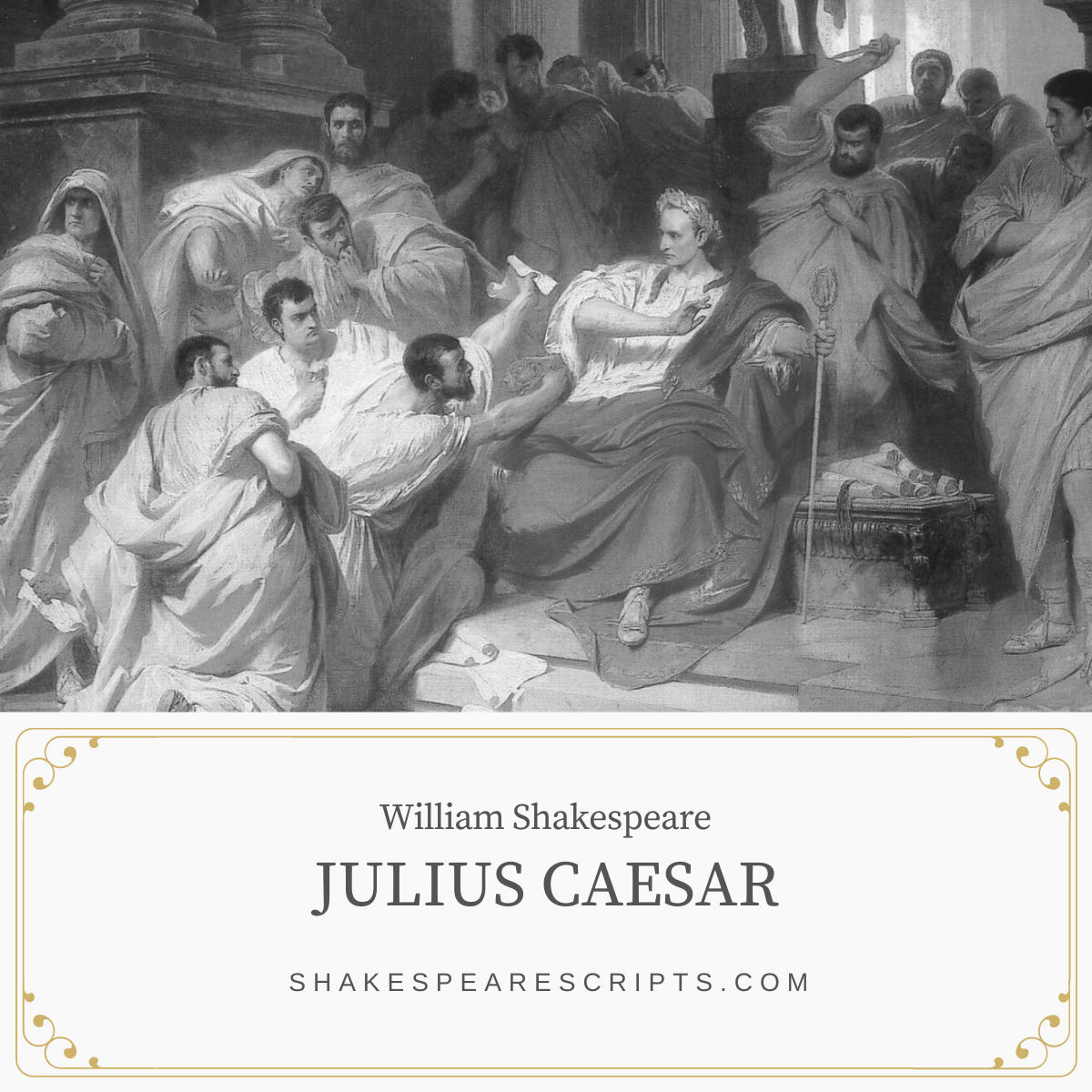
You’ve probably heard someone hiss "Et tu, Brute?" when a friend grabs the last slice of pizza. It’s the ultimate "how could you" moment. But in the world of Julius Caesar Shakespeare quotes, that line isn't just a meme; it’s the sound of a man’s soul actually exiting his body.
Honestly, it’s wild how much of our daily slang comes from this one play. We talk about having a "lean and hungry look" or tell people to "lend me your ears" without realizing we’re basically auditioning for a 1599 Globe Theatre production. Shakespeare wasn't just writing a history lesson; he was writing a psychological thriller about how power makes people go absolutely nuts.
The One Quote Everyone Actually Knows
Let’s start with the big one. "Et tu, Brute? — Then fall, Caesar!" (Act 3, Scene 1).
People think this is a question. It’s not. It’s more like a realization that the person he loved most in the world just put a knife in his ribs. Interestingly, the real historical Caesar probably didn’t say this. Suetonius, the Roman historian, suggests Caesar might have said nothing at all, or perhaps the Greek "Kai su, teknon?" which translates to "You too, child?"
Shakespeare chose Latin because it sounded punchier to an Elizabethan audience. It marks the exact second Caesar stops fighting. He basically decides that if Brutus wants him dead, then living isn't worth the effort. That’s heavy.
Why Julius Caesar Shakespeare Quotes Still Hit Different
Most of us feel like our lives are dictated by "the algorithm" or some cosmic plan we can’t see. Cassius had a very different take.
"The fault, dear Brutus, is not in our stars, but in ourselves..."
In Act 1, Scene 2, Cassius says: "The fault, dear Brutus, is not in our stars, / But in ourselves, that we are underlings."
He’s trying to gaslight Brutus into a revolution. He’s basically saying, "Stop blaming destiny for why this guy is a king and we’re just his groupies. We’re the ones letting it happen." It’s the original 'hustle culture' speech, but with more daggers and tunics.
You see this theme of agency versus fate everywhere in the play. Is Caesar destined to die because a Soothsayer told him to "Beware the ides of March"? Or does he die because he’s too arrogant to listen?
The Art of the Backhanded Compliment
If you want to see a masterclass in passive-aggression, look no further than Mark Antony’s funeral speech.
"Friends, Romans, countrymen, lend me your ears; / I come to bury Caesar, not to praise him." (Act 3, Scene 2).
Spoiler alert: He absolutely came to praise him.
Antony keeps calling the assassins "honorable men." Every time he says it, the word "honorable" gets a little more sarcastic, a little more poisonous. By the end of the speech, the crowd—who literally just a minute ago were cheering for Brutus—is ready to burn the whole city down.
- The Hook: Antony starts by agreeing with the crowd to keep them from lynching him.
- The Twist: He shows them Caesar’s cloak, pointing out exactly where each "honorable" man stabbed him.
- The Result: He turns a funeral into a riot.
It’s one of the most famous Julius Caesar Shakespeare quotes because it shows how easily "the people" can be manipulated by a good speaker who knows how to use irony like a scalpel.
Living in Fear (And Why It Sucks)
Caesar gets a bad rap for being a tyrant, but he drops some of the most profound wisdom in the play right before his wife, Calpurnia, begs him to stay home.
"Cowards die many times before their deaths; / The valiant never taste of death but once." (Act 2, Scene 2).
Think about that for a second. Every time you’re too scared to send that risky text or apply for that job, you’re "dying" a little bit. You’re feeling the sting of failure before it even happens. Caesar’s point is that death is coming anyway. Why spend your whole life rehearsing for it?
Of course, the irony is that his "bravery" is actually just massive ego. He goes to the Senate anyway and gets murdered. So, maybe listen to your wife sometimes?
The "Lean and Hungry Look"
Caesar wasn't a total idiot; he knew Cassius was trouble. He says to Antony: "Yond Cassius has a lean and hungry look; / He thinks too much: such men are dangerous." It’s a vibe check. Caesar prefers "sleek-headed men" who sleep well at night. Men who think too much, who analyze the power structures, who read between the lines—those are the guys who start coups.
Other Gems You Might Have Missed
- "It was Greek to me." (Casca, Act 1, Scene 2). We still say this! Casca was being a literalist—someone spoke Greek, and he didn't understand it. Now we use it for taxes or IKEA instructions.
- "Cry 'Havoc,' and let slip the dogs of war!" (Antony, Act 3, Scene 1). This isn't a call for a fun time. Antony says this over Caesar's bloody corpse, promising a civil war so violent that mothers will just smile when they see their infants slaughtered. Shakespeare didn't hold back.
- "This was the most unkindest cut of all." (Antony, Act 3, Scene 2). Referring to Brutus stabbing Caesar. It’s grammatically incorrect even for then, but it emphasizes that the emotional wound hurt way more than the physical one.
What Most People Get Wrong
People often treat Brutus like the villain. He’s not. He’s the tragic hero. His quote "Not that I loved Caesar less, but that I loved Rome more" is his entire manifesto.
The tragedy isn't just that Caesar died; it’s that Brutus destroyed his own soul to do what he thought was right. He was "the noblest Roman of them all" because he was the only one who didn't kill Caesar out of jealousy. He did it because he was terrified of what a king would do to a Republic.
Actionable Insights for Your Next Read
If you’re going back to read the play or watch a performance, keep these things in mind to actually enjoy it:
- Watch the Shadows: Every time someone mentions "the stars" or "omens," ask yourself if they’re actually seeing the future or just projecting their own fears.
- Track the Word 'Honorable': It changes meaning about six times throughout the play.
- Look for the Silence: Notice when characters don't speak. Caesar’s silence after "Et tu, Brute" is louder than any monologue.
To truly understand these Julius Caesar Shakespeare quotes, you have to look at the person saying them. Are they trying to inspire, or are they trying to manipulate? Usually, in this play, it's both.
Grab a copy of the Folger Shakespeare edition—the side-by-side notes are a lifesaver for the archaic bits—and pay attention to how Cassius uses "the fault in our stars" to move Brutus like a chess piece. You’ll start seeing those same tactics in modern politics and office drama almost immediately.