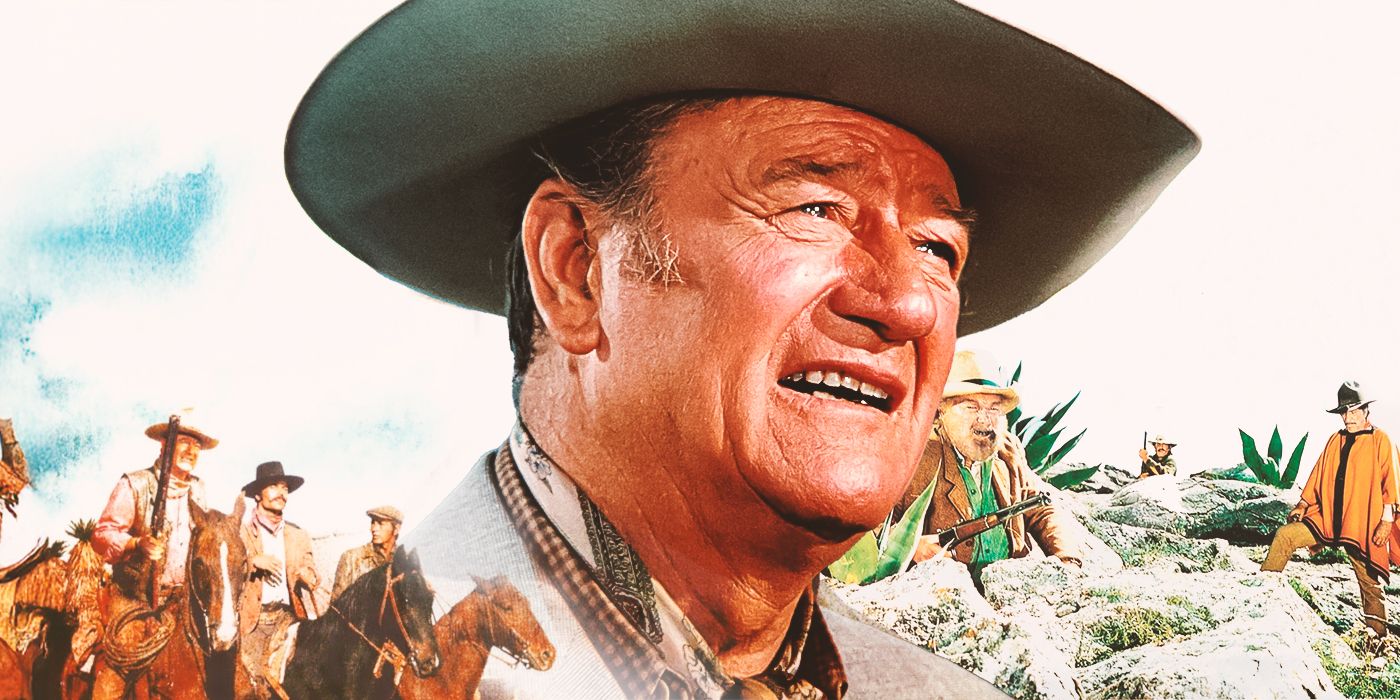
John Wayne was nearly 64 years old when he hopped on a horse for Big Jake. Most actors that age are looking at retirement homes or "distinguished" cameo roles. Not Duke. He was busy playing a grandfather who could still out-shoot, out-ride, and out-punch men half his age.
Released in 1971, John Wayne Big Jake isn't just another Western. It’s a fascinating, sometimes weird, crossroads of old Hollywood and the "New Hollywood" violence of the 70s. You’ve got the classic morality of a Wayne picture smashed right up against the gritty, bloody realism popularized by guys like Sam Peckinpah.
Honestly, if you haven't seen it in a while, it’s a lot darker than you probably remember.
The Family Affair Behind the Scenes
This movie was basically a Wayne family reunion. You think I'm joking? Look at the credits. It was produced by his eldest son, Michael Wayne, through their company, Batjac. But it didn't stop at the producer's chair.
For the first and only time on screen, John Wayne played the father of his real-life son, Patrick Wayne. Patrick plays James McCandles, the middle son who’s a bit of a hothead. Then you’ve got Ethan Wayne, Duke’s youngest, playing the kidnapped grandson, Little Jake.
It gets even more "family" when you realize the other son in the movie, Michael, was played by Christopher Mitchum. He isn't a Wayne, but he’s the son of Robert Mitchum, one of Duke’s closest friends. The chemistry between these guys feels real because, well, they actually knew each other.
The Return of Maureen O'Hara
Fans of The Quiet Man usually lose their minds over this one. Big Jake marked the fifth and final time John Wayne and Maureen O'Hara shared the screen.
She plays Martha McCandles, the matriarch who hasn't seen her husband in ten years. Their reunion at the train station is legendary for what isn't said. You can feel the decade of resentment and buried love just by the way they look at each other.
It was O'Hara's last film before a 20-year retirement. She didn't come back to movies until 1991. That makes the stakes in Big Jake feel even heavier for classic cinema buffs.
Why 1909 Changes Everything
Most Westerns live in that 1870s or 1880s sweet spot. Big Jake moves the clock forward to 1909. This matters.
The "Wild West" is dying. The movie opens with a montage of the modern world creeping in—cars, telephones, and even the "new-fangled" automatic pistols. When the Fain Gang kidnaps Little Jake, the Texas Rangers try to chase them in these clunky, early-model cars.
It’s a disaster.
The cars break down. They get shot up. They can't handle the terrain. This sets up the central theme: when technology fails, you need a man from a harder era. You need Big Jake. He ignores the motorcars and sets off on a horse, carrying a chest of "money" (no spoilers here, but the chest is a key plot point).
The Violence That Shocked Fans
If you watch a 1940s John Wayne movie, people get shot and they just... fall over. Big Jake is different.
The opening scene at the McCandles ranch is brutal. Men are gunned down in cold blood. A young girl is attacked (off-screen, mostly, but the implication is heavy). Even the ending features a pitchfork used in a way that would make a horror movie director proud.
The Fain Gang, led by a chilling Richard Boone, aren't your typical "cartoon" villains. They are mean. They kill without hesitation. Boone’s character, John Fain, is a great foil for Wayne because he respects Jake's skills while fully intending to kill his grandson.
The Dog (Who Stole the Show)
We have to talk about the dog. Simply named "Dog," he was a Rough Collie who basically acted as Jake’s shadow.
In a world of betrayal, Dog is the only one Jake fully trusts. There's a running gag where Jake tells the dog, "Don't let 'em through," and the dog stays put. It’s charming until the final showdown. I won’t ruin it if you haven't seen it, but let’s just say the dog’s role in the climax is why many people find this to be Wayne's most emotional "action" movie.
Production Secrets and Filming Locations
They didn't film this on a Hollywood backlot. Most of the movie was shot in Durango, Mexico.
Wayne loved Durango. It was cheap to film there, and the landscape was rugged enough to pass for the Texas-Mexico border. Director George Sherman was actually quite ill during production, and rumor has it that John Wayne himself stepped in to direct several of the action sequences.
The cinematography by William H. Clothier is stunning. He used the natural light of the Mexican desert to create these wide, sweeping shots that make the characters look small against the vastness of the land.
- Location: El Saltito, Mexico (that famous waterfall scene).
- Budget: Roughly $5 million (a decent chunk for 1971).
- Box Office: It pulled in over $7 million in rentals, making it a hit.
The "I Thought You Were Dead" Joke
One of the best parts of the script is the recurring line. Every time someone meets Jake McCandles, they look shocked and say, "I thought you were dead."
Jake’s response? "Not hardly."
It’s a meta-commentary on John Wayne’s own career. By 1971, the "cowboy" was supposed to be dead. The Western was supposed to be dead. But there was the Duke, standing 6'4", reminding everyone that the old ways still had some bite left in them.
Actionable Insights for Fans and Collectors
If you're looking to dive deeper into the world of Big Jake, here is how to get the most out of it today:
- Watch the 4K Restoration: Don't settle for an old DVD rip. The colors in the Durango desert scenes are vibrant, and the Technicolor really pops in the newer digital transfers.
- Look for the Script Details: Pay attention to the dialogue. It was written by Harry Julian Fink and R.M. Fink, the same duo who wrote Dirty Harry. You can see the similarities in the "tough guy" one-liners.
- Check the Soundtrack: Elmer Bernstein did the score. He’s the guy who did The Magnificent Seven. The music in Big Jake is less "heroic" and a bit more adventurous and frantic.
- Visit the Locations: If you’re ever in Durango, Mexico, many of the ranch sets used by Batjac Productions are still standing or recognizable to film tourists.
Big Jake serves as a bridge. It connects the romanticized Westerns of the 1950s with the cynical, violent Westerns of the 1970s. It shows a man who outlived his era but refused to change his principles. Whether you love the Duke or just love a good revenge story, this film holds up because it doesn't try to be anything other than a tough-as-nails adventure.