You're standing in the middle of a massive parking lot in Foxborough, surrounded by thousands of people in Taylor Swift cardigans or Metallica shirts, smelling the heavy scent of grill smoke and overpriced light beer. You’ve spent a fortune on tickets. But honestly, as you walk toward the gates of the home of the New England Patriots, a single thought starts gnawing at you: Can I actually see the stage from here?
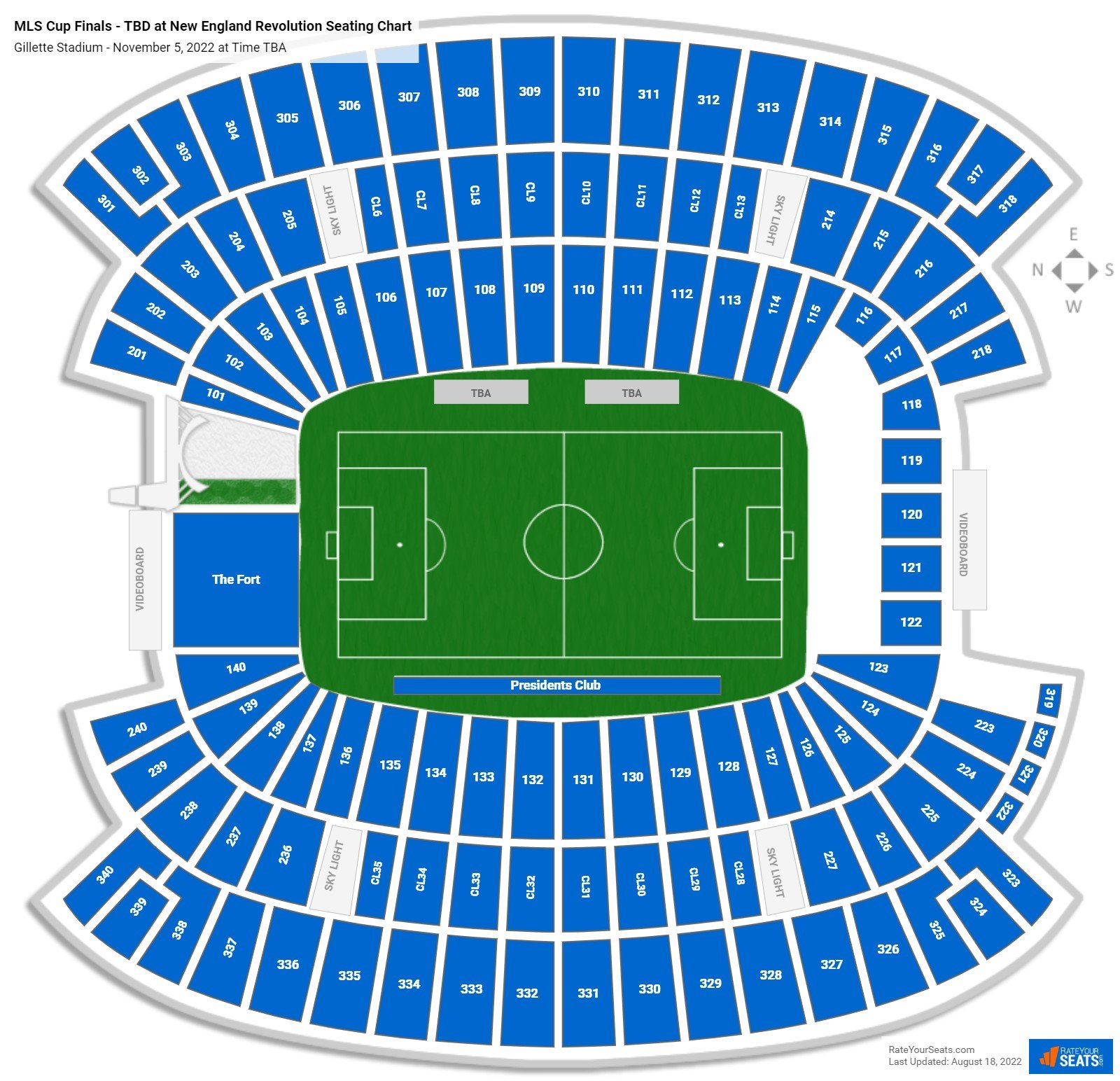
Navigating the Gillette Stadium concert seating chart is a completely different beast than finding a seat for a Sunday afternoon football game. When the pads come off and the stage goes up, the entire geometry of the stadium shifts. What was a 50-yard line prime spot for a touchdown pass might suddenly be a side-view nightmare where you’re staring at a stack of speakers and a black curtain.
I’ve been to dozens of shows here, from the sweltering humidity of July country fests to those freezing late-season stadium tours. If you don't know the layout, you’re basically gambling with your bank account. Let’s break down how this place actually functions when the music starts.
The Floor Is Not Always the Best View
Most people think the "Field" or "Floor" sections are the holy grail. It makes sense, right? You’re on the turf. You’re breathing the same air as the lead singer. But here is the reality: unless you are in the first ten rows of the A sections, you might spend the whole night looking at the back of a tall guy's head or a sea of raised iPhones.
Gillette usually splits the floor into lettered sections. A1, A2, and A3 are typically your "pit" or front-row areas. If you’re short, these are risky. Unlike the stands, the floor is perfectly flat. There’s no elevation. If you’re in Section C toward the back of the floor, you are essentially half a football field away from the stage with zero height advantage.
Think about the production. Most modern tours, like those from Ed Sheeran or Beyoncé, use massive video screens. If you’re too close on the floor, you actually miss the "big picture" of the stage production. You’re looking up at the artist’s ankles. Sometimes, the 100-level seats offer a much more balanced experience because you’re slightly elevated but still close enough to feel the bass in your chest.
Why the 100-Level is the "Goldilocks" Zone
If you’re looking at the Gillette Stadium concert seating chart and see availability in Sections 105 through 110 or 126 through 131, grab them. These are arguably the best seats in the house. You are elevated just enough to see over the heads of the people on the floor, but you aren't so high that the performers look like ants.
There’s a specific nuance to Foxborough’s layout. The stadium is "open" at one end near the lighthouse. Most concert stages are set up at the closed end (the south end zone). This means if you’re in the 100s near the lighthouse, you are as far away as humanly possible while still being in the lower bowl. You’ll hear the sound just fine—Gillette’s sound system is top-tier—but you’ll be relying entirely on the Jumbotrons.
Watch out for the "Side View" or "Obstructed View" labels in the 100s. Sections 101, 102, 139, and 140 are often sold at a discount. Why? Because you’re basically behind the stage. You’ll see the drummer’s back and maybe a sliver of the lead singer. Some people love the "behind the scenes" feel and the proximity to the stage, but if you want the full visual experience the artist intended, stay away from the extreme ends of the horseshoe.
The 300-Level: Perspective vs. Price
Let's talk about the nosebleeds. The 300-level at Gillette is high. Really high. On a windy night, you’ll feel the breeze coming off the Neponset Reservoir. But it’s not all bad.
The acoustics in the 300s can actually be surprisingly crisp because there are fewer obstructions for the sound waves to bounce off. If you’re in the front rows of the 300s (Rows 1-5), you get a panoramic view of the entire stadium. For a show with heavy pyrotechnics or a massive light show, this is actually the best place to be. You see the patterns, the lasers, and the way the crowd moves as one.
The downside? The stairs. If you’ve been tailgating at Patriot Place for four hours and then have to climb to Row 25 of Section 330, your legs are going to feel it. Also, if you have vertigo, the steepness of the upper deck at Gillette is no joke. It feels like you’re leaning over the edge of a cliff.
The Logistics of the "Lighthouse" End
Gillette underwent a massive renovation recently, particularly around the North End and the new, massive lighthouse. This has changed the vibe of the stadium. If the concert allows for "General Admission" roaming or has concourse viewing, the area under the lighthouse is a great spot to stretch your legs.
However, keep in mind that the Gillette Stadium concert seating chart usually places the stage at the opposite end. If your tickets are in the 300s near the lighthouse, you are roughly 200 yards from the stage. To put that in perspective, that’s two full football fields. You aren't watching a concert at that point; you're watching a very loud movie on a big screen.
Avoiding the "Sound Delay" Trap
One thing nobody tells you about stadium shows is physics. Sound travels at roughly 1,125 feet per second. In a massive concrete bowl like Gillette, if you are at the far end of the stadium, there is a tiny but noticeable delay between seeing the drummer hit the snare on the screen and actually hearing the "crack" of the sound.
To minimize this, try to stay "centered." Sections 107-109 or 127-129 are usually lined up with the sound engineers' mixing board (the "Front of House" or FOH). The engineers sit there because that’s where the show sounds best. If you sit near the FOH, you’re hearing exactly what the pros want you to hear.
Practical Survival Tips for Your Section
Gillette is in Foxborough, not Boston. It’s a trek. Once you’ve found your spot on the Gillette Stadium concert seating chart, you need to plan for the environment.
- The Metal Benches: Most of the 300-level consists of metal bleachers with backrests. They get cold. They get hot. They are never particularly comfortable. If you’re in the 100s or 200s, you get actual plastic stadium seats.
- The Weather: There is no roof. If it rains, you are getting wet. The only covered seats are in the very back rows of the 100-level (under the overhang of the 200-level) or in the expensive club sections.
- The Exit Strategy: If you are on the floor, getting out takes forever. You have to funnel through narrow gaps in the barricades. If you need to catch a train or beat the traffic in the P10 lot, the 100-level seats near the exits are your best bet.
Final Insights for the Best Experience
Don't just buy the cheapest ticket you see on a secondary market site. Look at the seat numbers. In Gillette, Seat 1 is always on the right side of the section when you are facing the field.
If you're eyeing the 200-level (The Putnam Club), you're paying for the amenities. You get shorter bathroom lines, better food options, and a climate-controlled indoor space to duck into if the weather turns. For a three-hour concert, those "boring" logistical perks often end up being the difference between a good night and a miserable one.
Look at the stage design before you buy. Is it a "360" stage in the round? If so, the traditional "bad seats" don't exist. If it’s a standard end-zone stage, stick to the sides of the horseshoe for the best mix of sound and sight.
Ultimately, your experience at Gillette is defined by your expectations. If you want to dance and don't care about seeing the artist’s facial expressions, the 300s are a bargain. If you want to feel like you're part of the performance, save your pennies for the 100-level mid-field. Just remember: once the lights go down and 65,000 people start screaming, even the "worst" seat in the house feels pretty electric.
Check the specific tour map on the ticketing site before you pull the trigger. Every tour brings its own rigging, towers, and "blind spots." A little bit of research into the specific tour's stage footprint—whether they have a "B-stage" or a long catwalk—can help you find a 100-level seat that’s actually closer to the artist than the expensive floor seats.
Now, go clear some space on your phone for photos, wear comfortable shoes (seriously, do not wear heels to Foxborough), and get ready for the show.
Next Steps for Your Trip:
- Verify your section's orientation by cross-referencing the official Gillette Stadium seating map with the specific tour layout on Ticketmaster to see where the sound towers are located.
- Download the Gillette Stadium App before you leave; it has a way-finding feature that helps you find the shortest route to your specific gate and section.
- Check the "Clear Bag Policy" specifically for concerts, as it is often stricter than standard NFL game days, usually requiring bags to be clear plastic and no larger than 12" x 6" x 12".