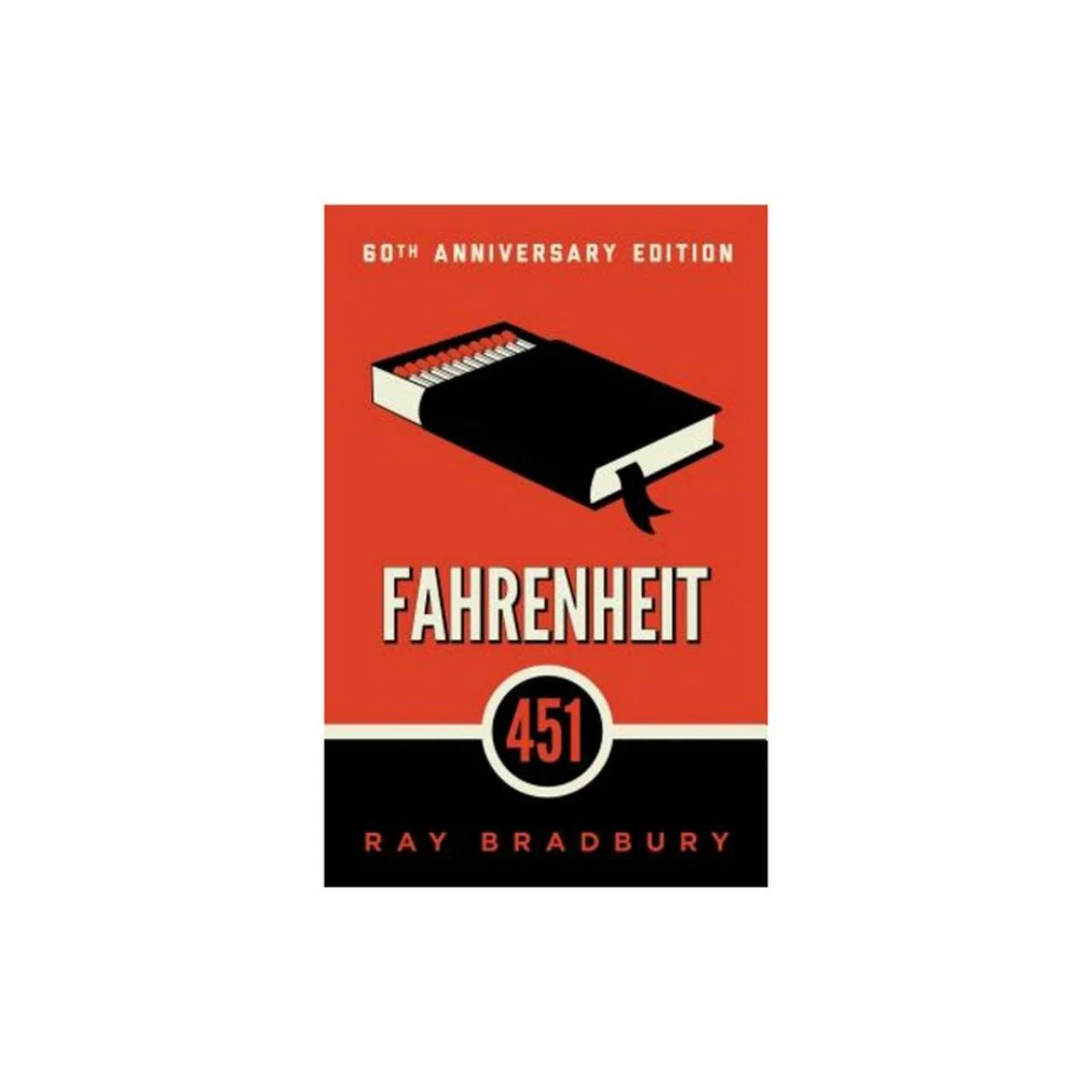
It’s a weird feeling when you realize a book you read in high school isn't actually about what you thought it was. Most people walk away from the Fahrenheit 451 Ray Bradbury book thinking it’s a terrifying warning about government censorship. They picture Big Brother-style goons kicking down doors to burn books because the "State" wants to control thought. But if you actually listen to Bradbury—or read the text closely—you'll see something much more uncomfortable.
The government didn't start the fires. The people did.
In our current world of 15-second TikToks and doomscrolling, Bradbury’s 1953 masterpiece feels less like a dusty classic and more like a mirror. It's about how we, the consumers, chose to stop reading because it was too hard, too slow, or too offensive. Guy Montag isn't just a fireman who starts fires; he’s a guy waking up from a sedative-induced coma that the rest of society is still very much enjoying.
The Fahrenheit 451 Ray Bradbury Book Was Never Just About Censorship
If you asked Ray Bradbury himself what his book was about, he’d probably get a bit cranky if you said "censorship." During a famous 2007 lecture and multiple interviews late in his life, Bradbury clarified that his real target was television. He saw the "idiot box" as a medium that destroys the attention span. He wasn't scared of a dictator banning books; he was scared of a population that simply didn't want to read them anymore.
Captain Beatty explains this perfectly in one of the most chilling monologues in literature. He tells Montag that the "dumbing down" started with the public. They wanted things faster. Snappier. Summaries of summaries. Eventually, books were seen as troublesome things that made people feel inferior or sad, so they were tossed aside in favor of "the walls"—giant interactive TV screens that offer constant, mindless stimulation.
It’s honestly kind of terrifying how well he predicted the "attention economy." We have "Seashells" in the book, which are basically Bluetooth earbuds pumping out a constant stream of white noise and mindless chatter. Sound familiar? Bradbury wasn't guessing the future; he was observing the trajectory of a society that prioritizes comfort over truth.
The Real History Behind the Firemen
You've probably heard the legend that "451 degrees Fahrenheit" is the temperature at which book paper catches fire and burns. Well, Bradbury famously called a local fire station to ask, and that's the number they gave him. Whether it’s scientifically perfect (it varies based on paper type and oxygen) doesn't really matter. What matters is the subversion of the profession.
In the world of the Fahrenheit 451 Ray Bradbury book, Ben Franklin is falsely remembered as the first fireman who burned books. This rewriting of history is a classic move for any decaying society. The firemen are the enforcers of "happiness." If a book makes a minority group feel slighted, burn it. If a book makes someone feel stupid, burn it. If it makes you think about death, burn it.
Mildred and the Death of Empathy
Mildred Montag is perhaps the most tragic character in the story. She’s obsessed with her "family"—the actors on the parlor walls. She lives in a state of constant, low-level suicidal ideation, taking handfuls of sleeping pills and then forgetting she even took them. When Montag tries to read her poetry, she’s physically repulsed. It’s too "real."
This is the core of Bradbury’s warning. When we trade deep, difficult engagement with art for easy, shallow entertainment, we lose the ability to feel for other people. Mildred can’t even remember where she met her husband. She has no interior life. She’s just a vessel for the content being streamed into her living room.
Why the Mechanical Hound Still Haunts Our Nightmares
The Mechanical Hound is one of those literary inventions that feels more plausible every year. It’s an eight-legged robot that tracks people by their chemical scent and injects them with procaine. It’s the ultimate "cancel culture" tool, literally.
What’s interesting is that the Hound doesn't think. It just calculates. It's a precursor to the algorithms that govern our lives today. It doesn't care about the nuance of Montag's rebellion. It just sees a deviation from the norm and corrects it.
The Evolution of the Book’s Reputation
Over the decades, the Fahrenheit 451 Ray Bradbury book has been censored itself. Irony at its finest. In the 1960s and 70s, some publishers actually released "expurgated" versions for schools, removing swear words or references to drinking. Bradbury eventually found out and was furious, demanding that the full, "gritty" version be the only one available.
He understood that you can’t protect people from "bad" words if you want them to understand big ideas.
The "Book People" and the Future of Memory
Toward the end of the novel, Montag meets Granger and the "Book People." This is where the story shifts from a tragedy to a weird kind of hope. These people don't physically carry books; they are the books. One man is Plato’s Republic, another is part of the Bible.
They realized that the physical object of a book is just a container. The "quality" of information is what matters. They are waiting for the city to blow itself up—which it eventually does in a brief, nuclear flash—so they can start over.
Practical Takeaways from Fahrenheit 451
If you’re looking to actually apply the lessons from this book to your life, it’s not about becoming a Luddite and throwing your phone in a lake. It’s about intentionality.
- Audit your "walls": How much of your day is spent on "parlor wall" entertainment that leaves you feeling empty?
- Embrace the "unpleasant" in art: If a book or a film makes you feel uncomfortable, ask why. Don't just "burn" it by clicking away.
- Practice deep focus: Bradbury’s biggest fear was the death of the long-form thought. Read a physical book for 30 minutes without checking a notification. It’s harder than it sounds.
- Value the "old" stuff: In the book, Clarisse McClellan is considered "antisocial" because she likes to walk, look at flowers, and talk to people. Be a little antisocial by those standards.
Bradbury’s world isn't a fantasy anymore. We have the Seashells. We have the walls. We have the summaries of summaries. The only thing we don't have is a mandatory fire department for books—mostly because we’re doing a pretty good job of ignoring them all on our own.
The next time you pick up the Fahrenheit 451 Ray Bradbury book, try to see it not as a story about "bad guys" in power, but as a story about a guy trying to stay awake in a world that is desperately trying to put him to sleep.
Actionable Insights for the Modern Reader
- Read the 60th Anniversary Edition: It contains a great introduction by Neil Gaiman that puts the book’s legacy into a modern context.
- Watch the 1966 Truffaut Film: While it’s dated, it captures the eerie, sterile atmosphere of the book better than most modern adaptations.
- Memorize something: Try to memorize a poem or a short passage. Experience what it feels like to hold a piece of literature inside your own mind, independent of a screen.
- Support your local library: In a world where digital access can be revoked at any time, physical archives are the only way to ensure information stays "unburned."