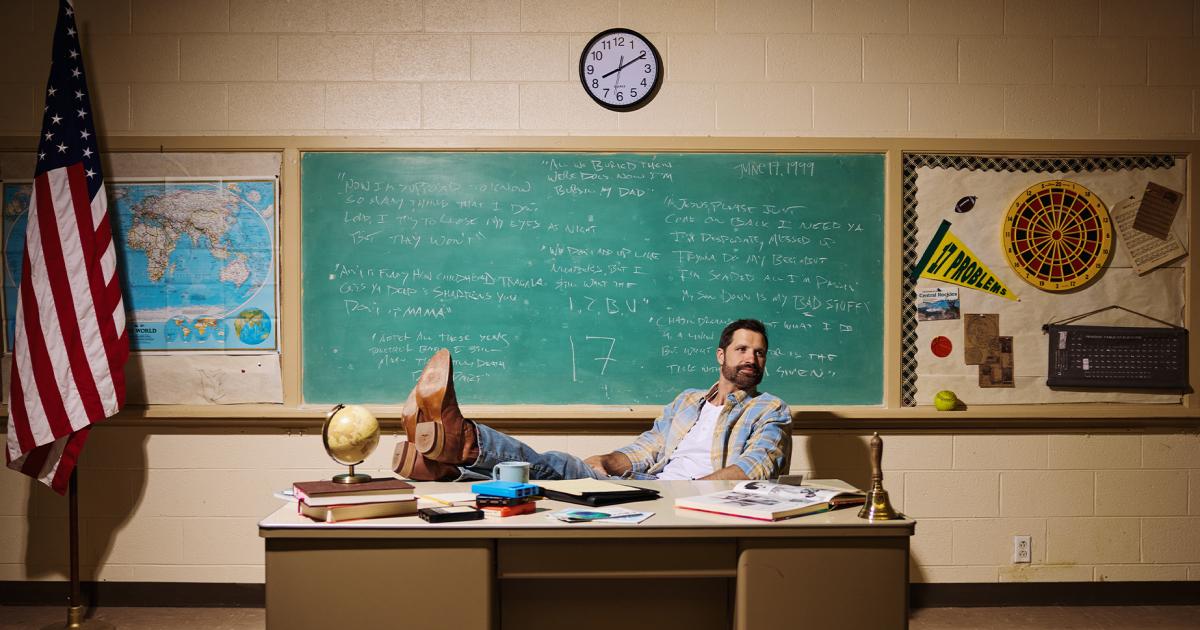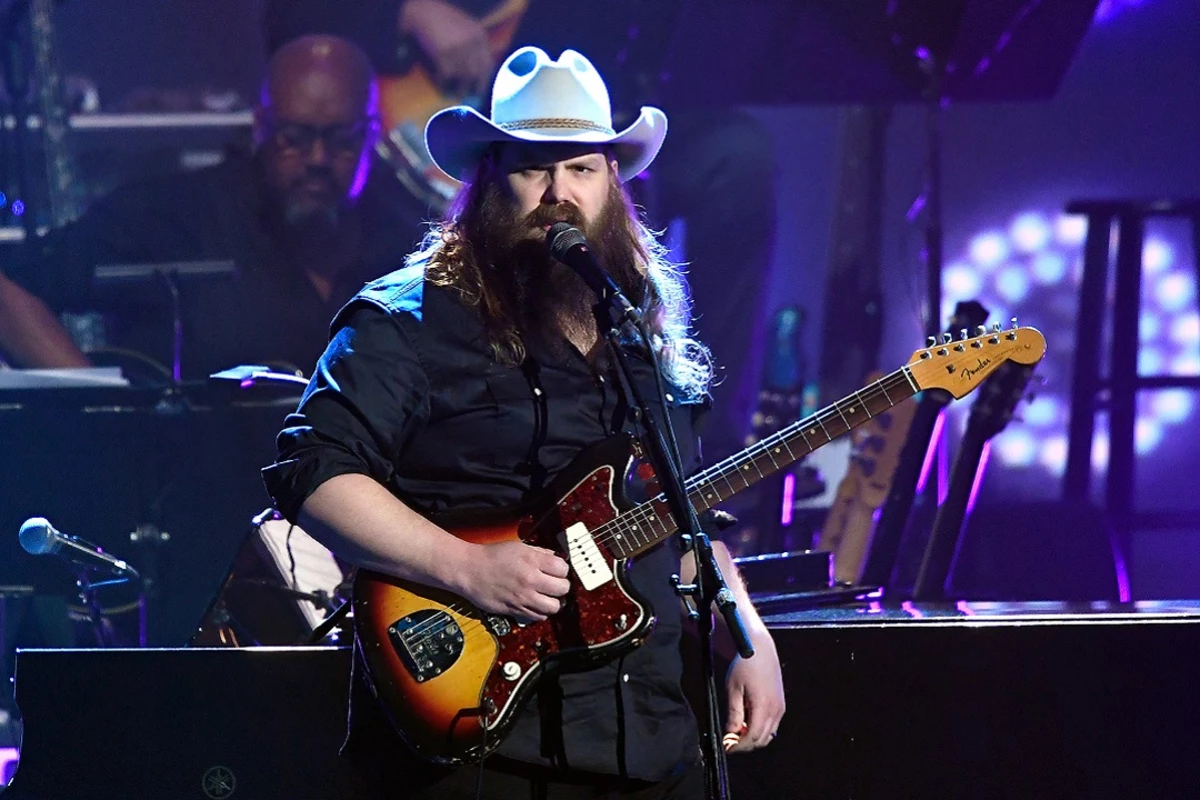
You’ve seen the beard. You’ve heard that voice—the kind of gravelly, soul-shaking roar that sounds like it was forged in a Kentucky coal mine and tempered in a whiskey barrel. Most people look at Chris Stapleton and see the ultimate "overnight success" story from that 2015 CMA Awards night with Justin Timberlake.
But honestly? That’s not what happened at all.
Calling him a newcomer in 2015 is like calling a 20-year veteran of the special forces a "new recruit" because you just saw him on the news. By the time the world finally woke up to his debut album Traveller, Chris Stapleton had already been the secret engine driving Nashville for over a decade. He wasn't some lucky guy who got a break. He was the guy the stars called when they needed a hit.
The Engineer Who Forgot to Build Bridges
Back in 1996, a young guy from Staffordsville, Kentucky, moved to Nashville with a very different plan. He wasn't there to sign a record deal. He was actually there to study biomedical engineering at Vanderbilt University. Imagine that. One of the greatest voices in music history almost spent his life designing medical equipment or calculating structural loads.
He didn't even know songwriting was a job.
Growing up, he just figured that if you sang a song on the radio, you must have made it up yourself right then and there. It wasn't until he met an actual professional songwriter that the lightbulb went off. He realized he could get paid to sit in a room and make things up on a guitar. That was it. Engineering was out; the "Music Row thing" was in.
He dropped out, moved back to Kentucky for a bit, then eventually returned to Nashville to start the real grind. This wasn't the glitzy part. It was the "writing 1,000 songs" part. It was the "paying your dues in a bluegrass band called The SteelDrivers" part. If you haven't heard their album Reckless, go listen to it. It’s raw. It’s haunting. And it’s the blueprint for everything he’s doing now.
Why Chris Stapleton Still Matters in 2026
Fast forward to today, January 2026. The music industry moves at the speed of a TikTok scroll, yet Stapleton is still the gold standard. He just announced more dates for his All-American Road Show tour, hitting massive venues like Nissan Stadium in Nashville and Ford Field in Detroit.
Why does he still matter?
Because he’s a bridge. He’s the guy who connects the old-school outlaw country of Waylon Jennings with the modern pop-country of Luke Bryan, and then somehow swings over to collaborate with Dua Lipa and Adele. He’s basically the only artist alive who can win a Grammy for Best Country Album while also being the coolest person in a room full of rock stars.
People often argue about whether he’s "real" country. Some purists on Reddit will tell you he "screeches" or that he’s just "mainstream’s answer to Americana." But they’re usually missing the point. Stapleton isn't trying to save country music; he’s just playing what he likes. Whether it’s the bluesy grit of "Death Row" or the radio-friendly hook of "Starting Over," he’s consistently authentic. That’s a rare currency in 2026.
The Hits You Didn't Realize He Wrote
If you think you only know a few of his songs, you’re probably wrong. His pen is everywhere. You’ve definitely sung along to these at a bar without realizing the bearded guy from Kentucky was the one who actually wrote them:
- "Your Man" by Josh Turner: Yeah, that deep-voiced classic? Stapleton.
- "Drink a Beer" by Luke Bryan: A rare moment of genuine vulnerability for Luke, written by Chris.
- "Never Wanted Nothing More" by Kenny Chesney: A massive #1 hit.
- "Come Back Song" by Darius Rucker: Another one.
He’s written for George Strait, Brad Paisley, and even Dierks Bentley. He was the guy behind the scenes for years, collecting checks and honing his craft while everyone else was busy trying to be famous.
The "Tennessee Whiskey" Misconception
Here is a fun fact that usually shocks people: Chris Stapleton did not write "Tennessee Whiskey."
I know. It feels like he owns that song. But it was actually written by Dean Dillon and Linda Hargrove. It was recorded by David Allan Coe in 1981 and George Jones in 1983. Stapleton’s version only happened because he was playing around with it during a soundcheck one day, and his band started playing a soulful, R&B-style groove under it.
That one "mistake" in a soundcheck changed everything. It turned a classic country song into a multi-platinum soul anthem that basically defines his career. It’s a perfect example of his genius—taking something old and making it feel like it was born yesterday.
What’s Next for the All-American Road Show?
If you're looking to catch him live this year, the 2026 tour is shaping up to be his biggest yet. He’s bringing out some heavy hitters as openers—Lainey Wilson, Zach Top, and even Mike Campbell (from Tom Petty’s Heartbreakers).
He’s also leaning into his other passions, like his collaboration with Buffalo Trace Distillery for "Traveller Whiskey." It’s not just a celebrity endorsement; he actually worked with the Master Distiller to blend it. It’s a very "Stapleton" move: slow, deliberate, and high quality.
Actionable Insights for Fans and Creators
If you're a fan or even a songwriter looking to follow in his footsteps, there are a few things you can actually learn from his trajectory:
- Master the craft first: He wrote for 15 years before he became a "star." Don't rush the process.
- Collaborate outside your lane: Working with Justin Timberlake and Dua Lipa didn't hurt his "country" cred; it expanded it.
- The "Live" Factor is everything: In a world of Autotune, Stapleton wins because he can actually sing. Focus on the raw performance.
- Don't ignore your roots: He still records at RCA Studio A with Dave Cobb. He sticks to what works.
If you’re trying to get tickets for the 2026 shows, the fan club pre-sale starts today, January 13th. General sales go live on January 16th. Given how fast these stadium shows sell out, you’ll want to be on the site at 10:00 AM local time sharp. There's no "secret" to getting in; just be fast and have your account ready.