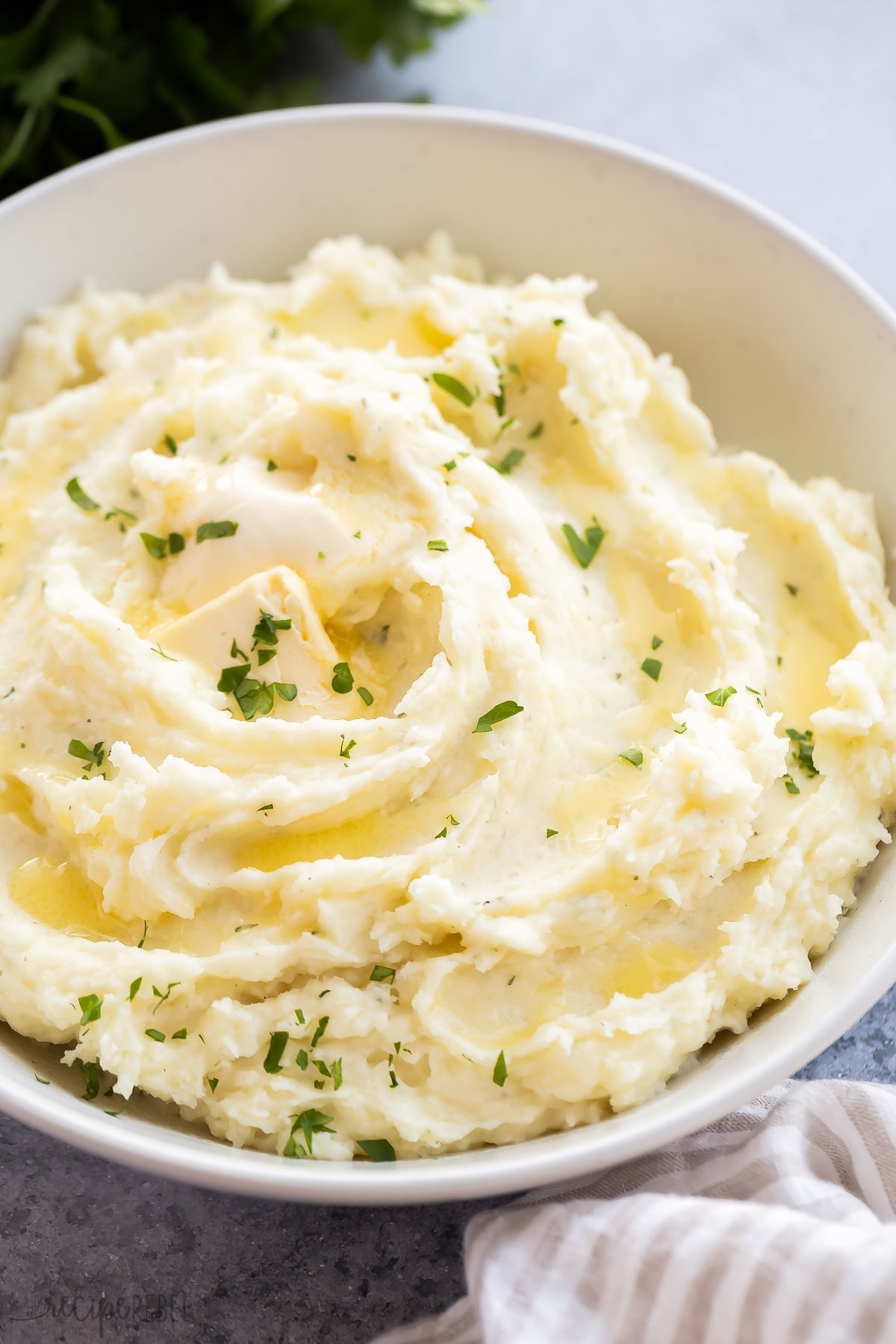
You’ve been there. It’s Thanksgiving, or maybe just a random Tuesday when you really need some comfort food, and you’re staring at a bowl of gray, gluey spuds that look more like wallpaper paste than a side dish. It’s frustrating. We’ve all been told that a mashed potatoes recipe with cream is the gold standard, but the reality is that most people mess it up before the water even boils.
Making great potatoes isn't about being a Michelin-starred chef. It’s about science. Specifically, it’s about starch. If you treat a Yukon Gold like a Russet, you’re going to have a bad time.
The Potato Paradox: Why Choice Matters More Than Technique
Honestly, the biggest mistake starts in the produce aisle. You can’t just grab any bag of brown lumpy things and expect magic.
Starch content is everything. Russet potatoes, often called Idaho potatoes, are high-starch and low-moisture. They’re floury. When you mash them, they fall apart into beautiful, light flakes that drink up cream like a sponge. On the flip side, you have waxy potatoes like Red Bliss or New potatoes. These are great for potato salad because they hold their shape, but for a mashed potatoes recipe with cream, they are a nightmare. If you try to mash a waxy potato into submission, you’ll end up with a gummy, translucent mess that no amount of heavy cream can save.
Then there’s the middle ground: Yukon Golds. Most chefs, including Joël Robuchon—the man famous for making the world’s most decadent potatoes—swear by a buttery, yellow-fleshed potato. They have a naturally creamy texture that bridges the gap.
Temperature is the Secret Killer
Here is something nobody tells you: stop putting your potatoes in boiling water.
If you drop cold potato chunks into boiling water, the outside overcooks and starts to dissolve while the inside stays hard as a rock. You get "lump-city." Start them in cold, heavily salted water. This allows the temperature to rise gradually, cooking the potato evenly from the skin to the core. It’s a slow process. It takes patience.
And salt your water like the sea. This is your only chance to season the potato from the inside out. If you wait until the end to add salt, you’re just seasoning the cream, not the vegetable.
The Role of Fat in a Mashed Potatoes Recipe with Cream
Why use cream at all? Why not just milk?
Fat molecules coat the starch granules. When you mash a potato, you’re breaking open cells and releasing starch. If you overwork them, that starch turns into a sticky web. Heavy cream, specifically stuff with at least 36% milkfat, provides a buffer. It creates a silky mouthfeel that milk simply can’t replicate because milk is mostly water.
But here’s the trick: Never, ever add cold cream to hot potatoes.
It’s a thermal shock. Cold liquid causes the starches to seize up. You want to simmer your cream in a small saucepan with some butter and maybe a smashed clove of garlic or a sprig of thyme. When you pour that warm, infused liquid over your hot, drained spuds, they embrace it. It’s a beautiful thing.
The Gear: Put Down the Hand Mixer
If you take a hand mixer or a food processor to your potatoes, you are essentially making edible glue. The high-speed blades shear the starch molecules too aggressively. You want a ricer or a food mill.
A ricer looks like a giant garlic press. You push the cooked potato through tiny holes, which creates the lightest, fluffiest base possible without any gluten-like development. If you don't own one, a classic wire masher is fine, but it requires a bit more elbow grease. Just stay away from anything with a motor.
The Robuchon Method vs. The Home Cook
If you’ve ever looked up the famous "Robuchon Potatoes," you’ll see the ratio is almost 2:1. Two parts potato to one part butter. It’s insane. It’s barely a vegetable at that point; it’s a warm, potato-flavored mousse.
For a realistic mashed potatoes recipe with cream at home, you don't need to go that far, but you should be braver with your fat ratios. For every two pounds of potatoes, you’re looking at about a half-cup of heavy cream and at least half a stick of unsalted butter.
Does the Skin Stay or Go?
This is a point of contention. Purists say peel them. They want that pristine, snowy white look.
But there’s a lot of flavor in the skins. If you’re using thin-skinned Yukon Golds, leaving the skins on adds an earthy, rustic vibe. If you’re using Russets, the skins are thick and bitter—get rid of them.
Step-by-Step Reality Check
- Peel and cube your potatoes into uniform 1-inch pieces. Size matters. If some are big and some are small, the small ones turn to mush while the big ones stay crunchy.
- Submerge them in cold water with a literal palmful of kosher salt.
- Bring to a boil, then drop to a simmer. Hard boiling bangs the potatoes together and makes them watery. Simmer until a paring knife slides in and out with zero resistance.
- Drain them. Then—and this is the "pro" move—put them back in the hot pot for two minutes on low heat. Shake the pot. You’ll see steam rising. You are drying them out. Getting rid of that excess water makes more room for the cream.
- Mash or rice them while they are screaming hot.
- Fold in your warm cream and butter mixture. Use a spatula. Be gentle.
Seasoning Beyond Salt
Salt is the baseline. But a great mashed potatoes recipe with cream needs a little more.
Freshly cracked white pepper is the traditional choice because it doesn't leave little black specks in your white clouds, but black pepper tastes better, frankly. A tiny grate of fresh nutmeg is a secret weapon. You won’t taste "nutmeg," but it makes the cream taste "creamier." It’s a weird trick of the palate.
Common Pitfalls and How to Fix Them
Sometimes things go south.
If your potatoes are too thin, don't keep mashing. Put them in a baking dish and pop them in a 350-degree oven for ten minutes. The dry heat will evaporate some of the excess liquid.
If they’re too thick, add more warm cream. Never add water. Water is the enemy of flavor here.
And if they are already gluey? You can't un-glue a potato. The best move there is to spread them in a dish, top them with a mountain of parmesan cheese and breadcrumbs, and bake them into a gratin. You’re essentially hiding the texture behind a crust. It works every time.
Beyond the Basics: Infusions and Add-ins
Once you master the basic mashed potatoes recipe with cream, you can start playing around.
Roasted garlic is the obvious choice. Squeeze the cloves out of their skins and mash them into a paste before stirring them into the cream. Or try folding in some mascarpone cheese instead of just butter for a tangier, richer finish.
Chives are classic. Scallions give a sharper bite. Some people like sour cream, but be careful—sour cream has a high water content and can make the dish runny if you aren't careful. Stick to the heavy cream as your primary liquid and use sour cream just for a flavor accent.
A Note on Storage
Leftover mashed potatoes are a gift, but they never reheat well in the microwave. They get grainy.
The best way to reheat them is in a heavy-bottomed pot over low heat with a splash of fresh cream to loosen them back up. Or, even better, use them to make potato pancakes. Mix the cold potatoes with an egg and some flour, fry them in butter, and you’ve got a whole new meal.
Actionable Next Steps for Perfect Potatoes
- Buy the right potato: Look for Yukon Golds or Russets. Avoid the "all-purpose" bags if you want elite results.
- Invest in a ricer: It is the single biggest upgrade you can make for under twenty dollars.
- Warm your liquids: Never pour cold cream into your pot. Keep a small saucepan on the back burner specifically for your dairy.
- Dry the potatoes: Don't skip the step of "steaming off" the moisture in the hot pot after draining. It is the difference between watery potatoes and rich, creamy ones.
- Salt early: Ensure the water is salty enough that it tastes like soup before the potatoes even go in.