If you’ve ever sat through a match involving 中国 对 澳大利亚 足球 (China vs Australia football), you know the vibe is usually one of massive expectation met with a very specific kind of tension. It’s a clash of styles. It’s also a clash of trajectories. On one side, you have the Socceroos, who have basically become a permanent fixture in the World Cup knockout conversation. On the other, the Dragon Team, a squad that has all the resources in the world but seems to be constantly searching for a soul.
Honestly, the gap between these two hasn't always been this wide. But looking at the recent World Cup qualifiers and the AFC Asian Cup history, the story of these two nations on the pitch is a wild ride of "what ifs" and tactical nightmares.
The Brutal Reality of the Recent Qualifiers
Let’s talk about October 2024. The atmosphere in Adelaide was electric. China actually took the lead early on through Xie Wenneng, and for a second, the upset felt real. But that's the thing about Australia. They don't panic. They’ve got this physical, relentless way of grinding you down until the 90th minute.
Tony Popovic had just taken over the Socceroos from Graham Arnold, and you could see the shift. Australia eventually won that game 3-1. It wasn't just about the scoreline; it was about the way Australia exploited the aerial weaknesses in the Chinese defense. Lewis Miller and Craig Goodwin basically turned the game into a highlight reel of clinical finishing. For Chinese fans, it was another "close but no cigar" moment that highlighted a recurring theme: the inability to hold a lead against Tier 1 Asian competition.
Branko Ivanković, the China coach, has been under fire, and understandably so. When you look at 中国 对 澳大利亚 足球, the stats tell a depressing story for the CSL-based players. In that specific 2024 match, Australia held over 70% possession. You can't win games when you're chasing shadows for an hour and a half.
The Physicality Gap
Australia plays a brand of football that is, frankly, exhausting to watch if you're the opponent. They are big. They are fast. They use the wings like a highway.
China, historically, has struggled with the "Australian Press." When the Socceroos lose the ball, they hunt in packs. This isn't just a tactical choice; it’s baked into the Australian sporting DNA—think AFL or Rugby League influences. Chinese players, often groomed in a slower, more technical but less physical CSL environment, find the pace of a match against Australia to be a massive culture shock every single time.
Does Home Field Advantage Even Matter?
When China hosts Australia, the energy is different, but the result often rhymes. Think back to the neutral venue games during the pandemic or the matches in Doha. Even without a roaring home crowd, the Socceroos tend to dictate the tempo. China's best performances against Australia usually happen when they abandon the idea of "playing beautiful" and just park the bus.
It’s ugly. It’s grit. It’s boring. But it works.
When China tries to go toe-to-toe and trade blows offensively, they get exposed. The 2015 Asian Cup quarter-final is a prime example. Tim Cahill—the man who haunted Chinese dreams for a decade—scored that legendary overhead kick. That game was a masterclass in Australian dominance. China wasn't "bad," they were just outclassed by a team that knew exactly how to use the width of the pitch.
Why the Naturalization Project Failed to Bridge the Gap
For a few years, the big talk in Chinese football circles was naturalization. Bring in the Brazilians! Elkeson, Alan, Aloísio. The idea was that these guys would provide the finishing touch that homegrown strikers lacked.
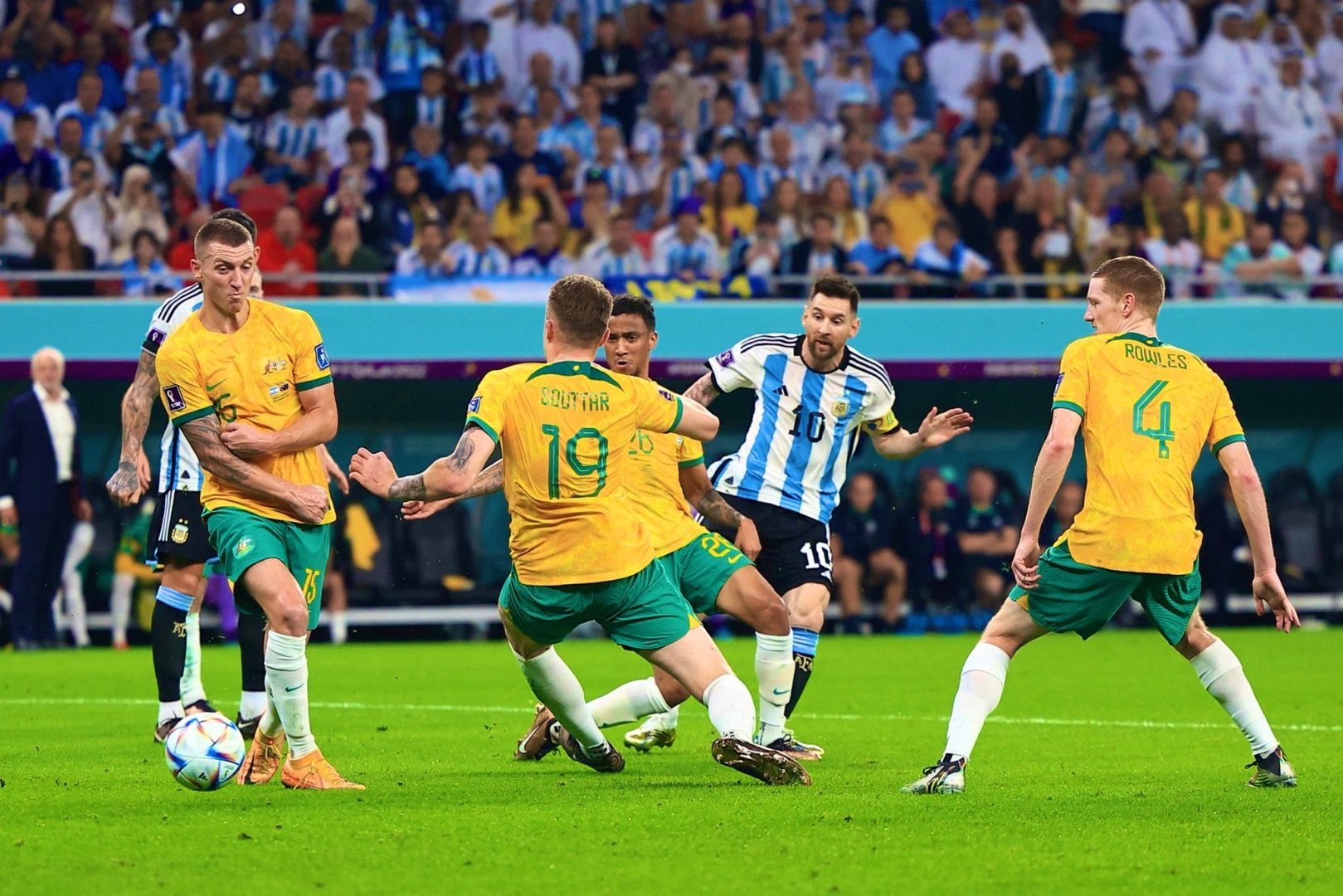
But when it came to 中国 对 澳大利亚 足球, these "imports" didn't really change the math. Why? Because football is a team sport, and you can't just drop three prolific scorers into a system that can't get them the ball. Australia’s defenders, guys like Harry Souttar—who is basically a human skyscraper—didn't find the naturalized Chinese strikers particularly intimidating.
The physical mismatch remained.
Also, there’s the chemistry issue. The Socceroos have a core that has played together since they were teenagers in the A-League or European academies. China’s "quick fix" with naturalized players felt like trying to put Ferrari tires on a tractor. It just didn't handle the corners.
The Souttar Factor
If you want to understand why Australia keeps winning, just look at Harry Souttar. The guy is 198cm (6'6"). In every set-piece during a China vs Australia match, he is the most dangerous person on the field. China hasn't produced a center-back with that kind of aerial dominance in a generation.
It’s a simple math problem. If you can’t win the headers in your own box, you’re going to concede.
The Tactical Identity Crisis
What is "Chinese Football"? Ask ten experts, and you'll get ten different answers. Is it counter-attacking? Is it possession-based? Under various coaches like Marcello Lippi or Gao Hongbo, the team has oscillated between styles.
Australia, conversely, knows exactly who they are. They are a high-octane, crossing-heavy, physically imposing unit. Even when they aren't at their most talented—and let's be honest, the current Australian squad doesn't have a Harry Kewell or a Mark Viduka—they have a system that works.
Key Matchups That Define the Rivalry
- The Midfield Engine: This is where China usually loses the game. Jackson Irvine and Keanu Baccus for Australia provide a level of "engine room" work rate that often overwhelms the Chinese midfield.
- The Fullback Battle: Australia loves to push their fullbacks high. This leaves space behind them, which China should exploit. Wu Lei has done this occasionally, but he's often isolated.
- The Goalkeeping Wall: Maty Ryan has been a rock for Australia. On the other side, Yan Junling has had some heroic matches against the Socceroos, but he’s often left out to dry by his defenders.
Looking Ahead: Can China Ever Catch Up?
If we’re being real, the gap isn't closing as fast as the CFA (Chinese Football Association) would like. To beat Australia, China needs more than just a new coach or a couple of Brazilian-born strikers. They need a generation of players who are comfortable playing at a high intensity for 90 minutes.
Right now, the CSL (Chinese Super League) is in a bit of a transition period. The "money era" is over. This might actually be a good thing. It’s forcing clubs to play younger, local talent. But that talent is still years away from being able to bully an Australian defender off the ball.
What China Needs to Do Differently
Next time these two meet, China has to stop respecting Australia so much. There’s a psychological hurdle. Every time the Chinese team steps onto the pitch against the Socceroos, they look like they’re waiting for something bad to happen.
They need to disrupt the rhythm. Foul more (strategically). Slow the game down. Use the "dark arts." Australia hates it when games become stop-start and scrappy. When the ball is in play for 60+ minutes, Australia wins. When the ball is out of play for half the match, China has a chance.
Actionable Insights for Fans and Analysts
If you're betting on or analyzing the next 中国 对 澳大利亚 足球 matchup, keep these three things in mind:
- Watch the First 15 Minutes of the Second Half: Australia tends to blitz teams right after the break. If China survives until the 60th minute without conceding, the game usually stays tight.
- Monitor Set-Piece Stats: Australia scores a disproportionate amount of goals against China from corners and indirect free kicks. If China hasn't fixed their zonal marking, expect a Souttar or Burgess header.
- The "Wu Lei" Dependency: China’s offense is almost entirely dependent on Wu Lei’s movement. If Australia’s holding midfielder (likely Irvine) sits deep to cut off the passing lanes to him, China's attack becomes stagnant.
The rivalry isn't just about points; it's a barometer for where Asian football is headed. Australia represents the European-adjacent model of fitness and structure. China represents the massive potential of the East that is still struggling to find its footing. Until China can match the physical output of the Socceroos, the "Big Brother" dynamic in this matchup isn't going anywhere.
Keep an eye on the youth setups. The next U-23 clashes will tell us more about the future than any senior team friendly ever could. If the young Dragon Team can start winning the physical duels, the tide might finally turn.