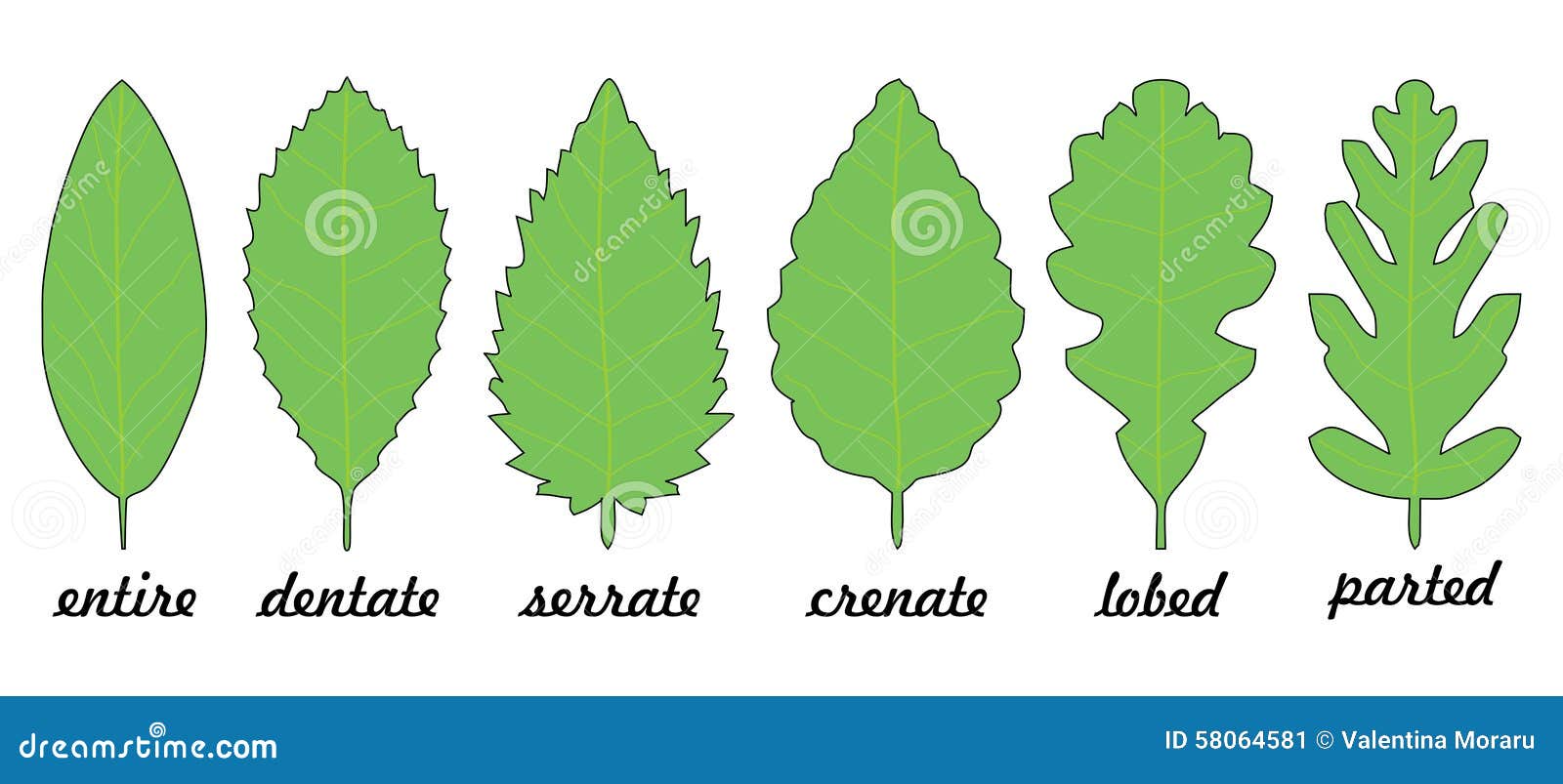
You’re walking through a park or maybe just staring at that dying pothos in your living room, and you notice the edges. Some are smooth. Some look like they were attacked by a tiny pair of pinking shears. Others have weird little teeth that look sharp enough to draw blood, though they won't. In botany, we call this the leaf margin.
It’s easy to dismiss it as just "the edge," but that’s like saying the hull of a ship is just the "side part." The margin is where the leaf meets the world. It’s the frontline of gas exchange, water regulation, and defense against things that want to eat it. Honestly, if you want to identify a plant without being an actual scientist, the margin is your best friend. It’s the fingerprint of the forest.
What is Margin in Leaf Anatomy?
Basically, the leaf margin is the boundary area extending along the edge of the leaf blade (the lamina). It's the perimeter. But it isn't just a static line. It's a dynamic zone of growth. Cells at the margin divide differently than cells in the center of the leaf.
Think about a Red Oak versus a White Oak. If you look at the margins, you’ll see the Red Oak has these little bristles at the tips of its lobes. The White Oak? Rounded and smooth. That tiny difference in the margin is how foragers and hikers have told them apart for centuries. Biologists use these margins to categorize plants into specific families, but nature didn't make them look cool just for our benefit. There’s serious physics at play here.
Different plants have evolved different edges based on where they live. If you’re a plant in a rainforest, your margin needs to handle torrential rain. If you’re a desert shrub, you might want a margin that creates a boundary layer of air to prevent drying out. It's survival, written in cellulose.
The Most Common Types You’ll See
Most people think a leaf is just a leaf, but once you start looking at the margins, you can't stop seeing the patterns.
Entire Margins
This is the simplest version. The edge is completely smooth. No teeth, no jagged bits, no waves. Think of a Mango leaf or a Rubber plant. They look clean. Scientists call this entire. It’s common in tropical plants because a smooth edge allows water to run off quickly. If water sits on the edge of a leaf too long, you get fungal growth. Nobody wants a moldy leaf.
Serrated or Toothed Margins
These look like a saw blade. You’ve definitely seen this on a rose bush or a birch tree. Within this category, you’ve got serrate (teeth pointing forward toward the tip), dentate (teeth pointing straight out), and serrulate (just tiny little baby teeth).
Why have teeth? It's kind of fascinating. Some research, like the studies conducted by the University of Guelph, suggests that toothed margins allow for more surface area at the edges. This can actually jumpstart photosynthesis in the early spring. Teeth often have more stomata—tiny pores—which means they can "breathe" better when the weather is still cool.
Lobed and Sinuate Margins
Lobes are those deep indentations that don't quite reach the middle of the leaf. Maples and Oaks are the kings of the lobed margin. Then you have sinuate, which is basically a wavy edge. It’s not sharp; it’s just curvy. Imagine a "wavy" potato chip, but it’s a leaf.
Why the Edge Changes with the Weather
Here is a wild fact that most people don't know: paleobotanists use leaf margins to figure out what the temperature was millions of years ago.
It’s called Leaf Margin Analysis.
There is a direct, proven correlation between the percentage of "entire" (smooth) margins in a forest and the mean annual temperature. In hotter, tropical climates, almost all plants have smooth margins. In colder, temperate climates, you see way more serrated and toothed margins.
When scientists find a fossilized leaf from the Eocene epoch, they don't just look at what plant it was. They count the teeth on the margin. If they find a bunch of toothed leaves in a layer of rock, they know that specific area used to be cold. It’s a literal thermometer frozen in stone. Why? Because toothed margins help a plant move water and nutrients faster in short growing seasons. They are built for speed, not for surviving the long, humid soak of the tropics.
The Micro-World of the Margin
If you zoom in with a macro lens, the margin stops looking like a line and starts looking like a landscape.
- Ciliate margins: These have tiny hairs (cilia) along the edge. They can trap moisture or discourage crawling insects.
- Revolute margins: The edge actually rolls downward toward the underside. You see this a lot in rosemary or rhododendrons. It’s a genius way to protect the stomata from wind and keep the leaf from drying out.
- Undulate: These are the wavy ones that move up and down.
It’s all about the "boundary layer." This is a thin layer of still air that sits right against the surface of the leaf. A smooth margin lets air flow over it easily, which cools the leaf down. A complex, toothed, or hairy margin breaks up the airflow. This can keep the leaf warmer or more humid than the air around it. It’s a micro-climate created by the leaf itself.
How to Use This Knowledge
Honestly, knowing about leaf margins makes you a better gardener and a more observant human. If you're trying to diagnose a plant problem, look at the margin first.
If the margin is turning brown and crispy (we call this "marginal necrosis"), it’s usually a sign that the plant can’t get water to its furthest extremities. This could be underwatering, but it’s often a buildup of salts from tap water or over-fertilizing. The margin is the "end of the line" for the plant’s plumbing system. If there's a problem with the pipes, the margin shows it first.
Identification Cheat Sheet
- Check for smoothness: If it’s smooth, it’s "Entire."
- Look for teeth: Are they pointing up (Serrate) or out (Dentate)?
- Check the waves: Is it just a bit wavy (Undulate) or deeply cut (Lobed)?
- Feel for hairs: If it’s fuzzy on the edge, it’s Ciliate.
Next time you’re outside, grab a leaf. Don't just look at the color. Run your finger along that edge. That margin is the result of millions of years of climate adaptation, hydraulic engineering, and defensive strategy. It's not just an edge; it's a masterpiece of biological survival.
To get better at plant ID, start a "margin journal." Take photos of ten different leaves in your neighborhood and try to categorize them by their edges rather than their names. You'll notice that plants in the shade often have different margin behaviors than those in full sun, even within the same species. Pay attention to the "teeth"—they are telling you the story of the climate that leaf was built to handle. Observe the way water beads on a smooth entire margin versus how it clings to a serrated one. This mechanical interaction determines how the plant survives a storm. Use a magnifying glass to check for revolute edges on your herbs; it’ll tell you exactly how much wind they can take before they dehydrate.