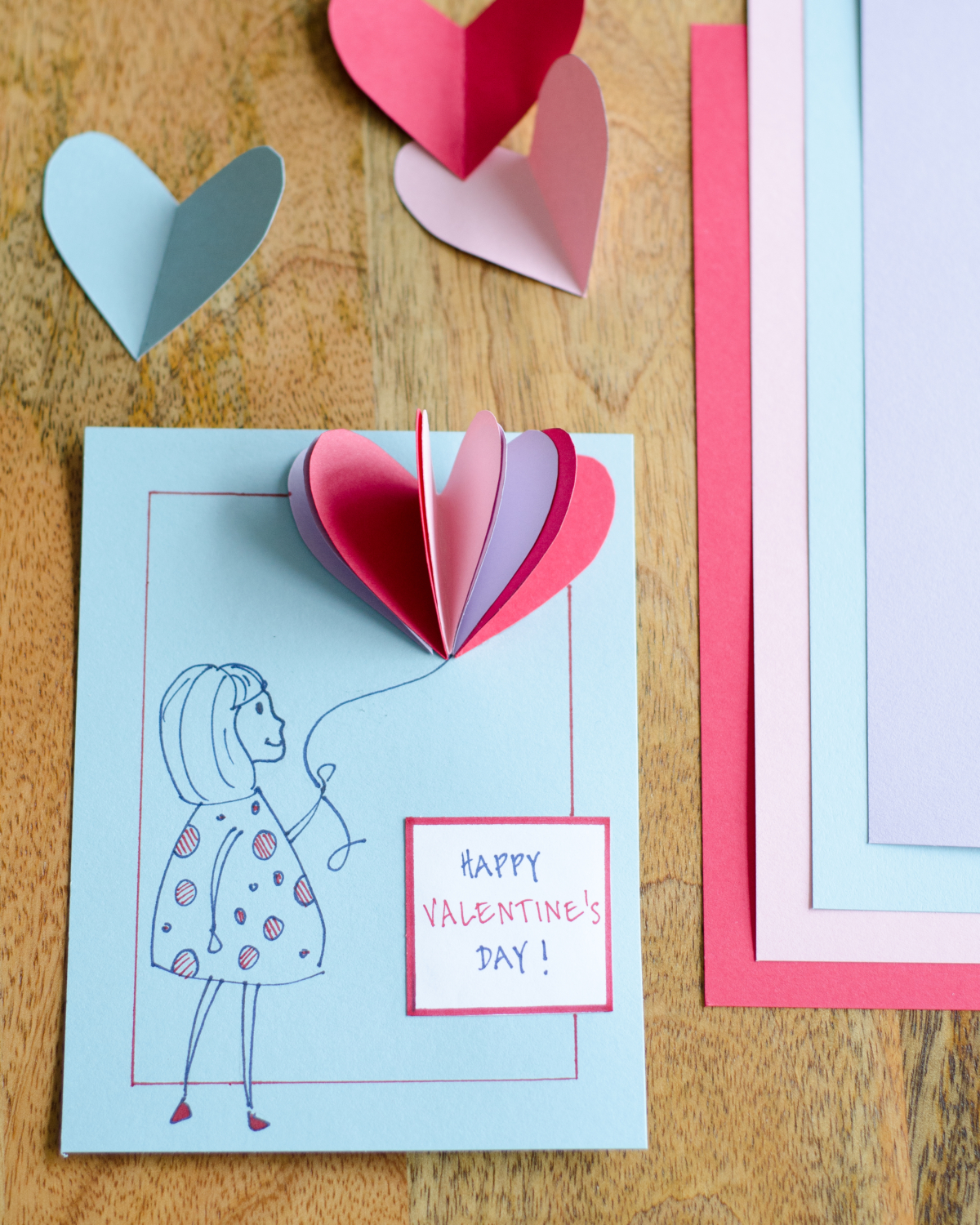
Store-bought cards are kinda weird if you think about them. You walk down a sterile aisle at a pharmacy, flip through three dozen mass-produced cardstock rectangles, and settle on one that has a pun about "loving you a latte" written by a guy in a corporate office six months ago. It's fine. It works. But honestly? It's forgettable. Do it yourself Valentine's day cards actually mean something because they require the one thing we’re all short on: time.
I’ve seen people spend $12 on a "premium" embossed card that gets glanced at for ten seconds and then shoved into a junk drawer. Or worse, the recycling bin. On the flip side, a messy, hand-cut heart with a specific inside joke usually ends up tucked into a mirror frame or kept in a bedside table for years. There is a psychological weight to a handmade gesture that a barcode just can’t replicate.
It’s about effort. Real effort.
The Science of Why Handmade Matters
Believe it or not, there’s actual research into this. Dr. Peggy Liu from the University of Pittsburgh has studied "the giver-receiver gap." Her research suggests that while givers often worry their gifts (or cards) aren't "perfect" or expensive enough, the person receiving them actually puts a massive premium on the thought and effort involved. They aren't looking for Hallmark-level calligraphy. They're looking for you.
When you make do it yourself Valentine's day cards, you are signaling "costly signaling" in evolutionary psychology terms. You spent an hour of your life making this. That’s an hour you’ll never get back. In a world of instant digital gratification, that’s the ultimate flex.
Stop Trying to Be an Artist
Most people bail on DIY projects because they think they’re "not creative."
That is a total myth.
The charm of a handmade card is often the fact that it looks handmade. If I wanted a perfect card, I’d go to Target. I want your slightly crooked handwriting. I want to see where the glue might have smudged a little bit.
If you’re staring at a blank piece of cardstock and feeling panicked, just lean into the basics.
A black Sharpie and some heavy paper can do wonders.
Minimalism is your friend.
Write one sentence that only the two of you understand. That beats a generic poem every day of the week.
Materials That Actually Work (And What to Skip)
You don't need a $300 Cricut machine. Honestly, those often make things look too professional, which defeats the purpose.
Go to a local craft store or even a decent office supply shop. Look for heavyweight cardstock. Anything under 80lb weight is going to feel like flimsy printer paper, and that’s not the vibe we want. You want something with "tooth"—that slightly textured feel that catches the light.
Watercolor sets are incredibly underrated for do it yourself Valentine's day cards. Even if you haven't painted since third grade, you can do a "wash." Basically, you just soak the paper with a little water and drop in some red or pink pigment. Let it bleed naturally. It looks intentional and sophisticated, but it takes about four minutes.
- Avoid: Using standard Elmer's school glue on thin paper. It will warp, wrinkle, and look like a soggy mess.
- Use: Double-sided tape or a glue pen. They keep the paper flat and professional.
- Pro-tip: Use a bone folder (or the back of a spoon) to crease your folds. A crisp, sharp fold is the difference between "I made this in the car" and "I am a craft god."
The "Polaroid" Hack
If you really can't draw, use a photo.
But don't just print a photo from your phone on regular paper. Use an actual instant camera or get a 4x6 print from a kiosk.
Take a piece of dark cardstock. Cut two small slits in the center and slide the corners of the photo in. This gives it a "gallery" look without needing any artistic skill. Underneath the photo, write the date and the location. Done. It’s a keepsake, not just a card.
Why Minimalism is Winning in 2026
We are seeing a huge shift back to "Analog Living." People are burnt out on screens. Receiving a physical, textured card in the mail or across a dinner table feels like a tactile relief.
The most successful do it yourself Valentine's day cards right now aren't the ones covered in glitter and lace. They are the ones that use negative space. A tiny red heart in the bottom right corner of a vast white card is powerful. It’s confident.
Let’s Talk About the "Meme" Card
Sometimes, the best DIY approach isn't sentimental—it's funny. If your relationship is built on roasting each other, a sappy card is going to feel fake.
Get a piece of cardboard. Draw a stick figure of yourself. Write something like, "I'd still share my fries with you." It’s low-stakes, high-impact.
Beyond the Paper: Alternative "Cards"
Who says a card has to be a folded piece of paper?
I’ve seen people use wooden coasters, embroidered fabric scraps, or even a customized "View-Master" reel.
One of the coolest ideas I’ve encountered recently involved a deck of playing cards. The person took 52 cards and wrote one reason they loved their partner on each card using a permanent marker. Technically, it’s a deck of cards, but functionally, it’s a do it yourself Valentine's day card that lasts for an hour of reading.
The "Word Dump" Method for Writing
The hardest part isn't the glue. It's the message.
"Happy Valentine's Day! Love, Me" is a bit of a letdown after all that crafting.
Try this: Grab a scrap piece of paper first. Write down three specific things that happened in the last year.
Maybe it was that time you both got lost trying to find that one taco truck.
Maybe it was the way they took care of you when you had that brutal flu in November.
Pick one. Describe it in two sentences.
"I loved when we sat on the floor and ate pizza because the table hadn't arrived yet. It was my favorite night of the year."
That is 100x more powerful than "You are the light of my life." Specificity is the secret sauce of do it yourself Valentine's day cards.
Technical Considerations for Mailing
If you are mailing your masterpiece, please remember that "lumpy" cards require extra postage. Anything over a quarter-inch thick or containing rigid items (like a wooden heart) won't go through the automated sorters at the post office.
Go to the counter. Ask for a "non-machinable" stamp. It costs a few cents more, but it ensures your card won't get shredded by a machine in a distribution center in Ohio.
Final Steps for Your DIY Project
If you're ready to start, don't overthink it. Grab some supplies tonight.
- Source your paper: Buy a pack of 100lb cardstock in a neutral tone like cream or charcoal.
- Pick a medium: Watercolor, ink pens, or even high-quality colored pencils (Prismacolor is the gold standard here).
- Create a "dummy": Fold a piece of cheap printer paper first to test your layout before you touch the expensive stuff.
- The Message: Write your draft on your phone or a notepad before committing it to the card. Correcting a typo on a handmade card with white-out looks... not great.
- Seal it: Use a wax seal if you want to be extra fancy. You can buy a kit for $15, and it makes the opening experience feel like a royal event.
Making do it yourself Valentine's day cards isn't about saving five dollars. It’s about the fact that in a world of AI-generated everything and "one-click" ordering, you chose to use your actual hands to make something for another human being. That never goes out of style.
Start by choosing one specific memory from the last six months. Buy a single sheet of high-quality textured paper from a local art supply store. Write that memory down in your natural handwriting. Don't worry about being a poet; just be honest. The imperfection of your lines and the sincerity of your words will always carry more weight than a gold-foiled card from a factory. Give yourself thirty minutes this evening to just sit and create without distractions. Your partner will feel the difference the moment they touch the paper.