The old blue-vinyl-wall-in-the-backyard trope is dying a slow, much-needed death. Honestly, if you grew up in the 90s, you remember exactly what an above ground pool looked like: a giant, corrugated metal bucket that stuck out like a sore thumb against the grass and somehow always had a slightly rusty ladder. It was purely functional. It was where you went to cool off, but you didn't exactly brag about the aesthetics of it to your neighbors.
Things have changed. Seriously.
Modern above ground pool designs have pivoted from "temporary eyesore" to legitimate architectural features. We’re seeing a massive shift toward integrated decks, resin finishes that actually look like stone, and semi-inground installations that trick the eye into thinking you spent $60,000 on a custom gunite build. People are realized they can get 90% of the luxury for about 30% of the cost, provided they stop thinking about the pool as a standalone object and start thinking about it as part of a landscape.
The "Deck-Flush" Revolution
The biggest mistake most homeowners make? Leaving the pool as an island.
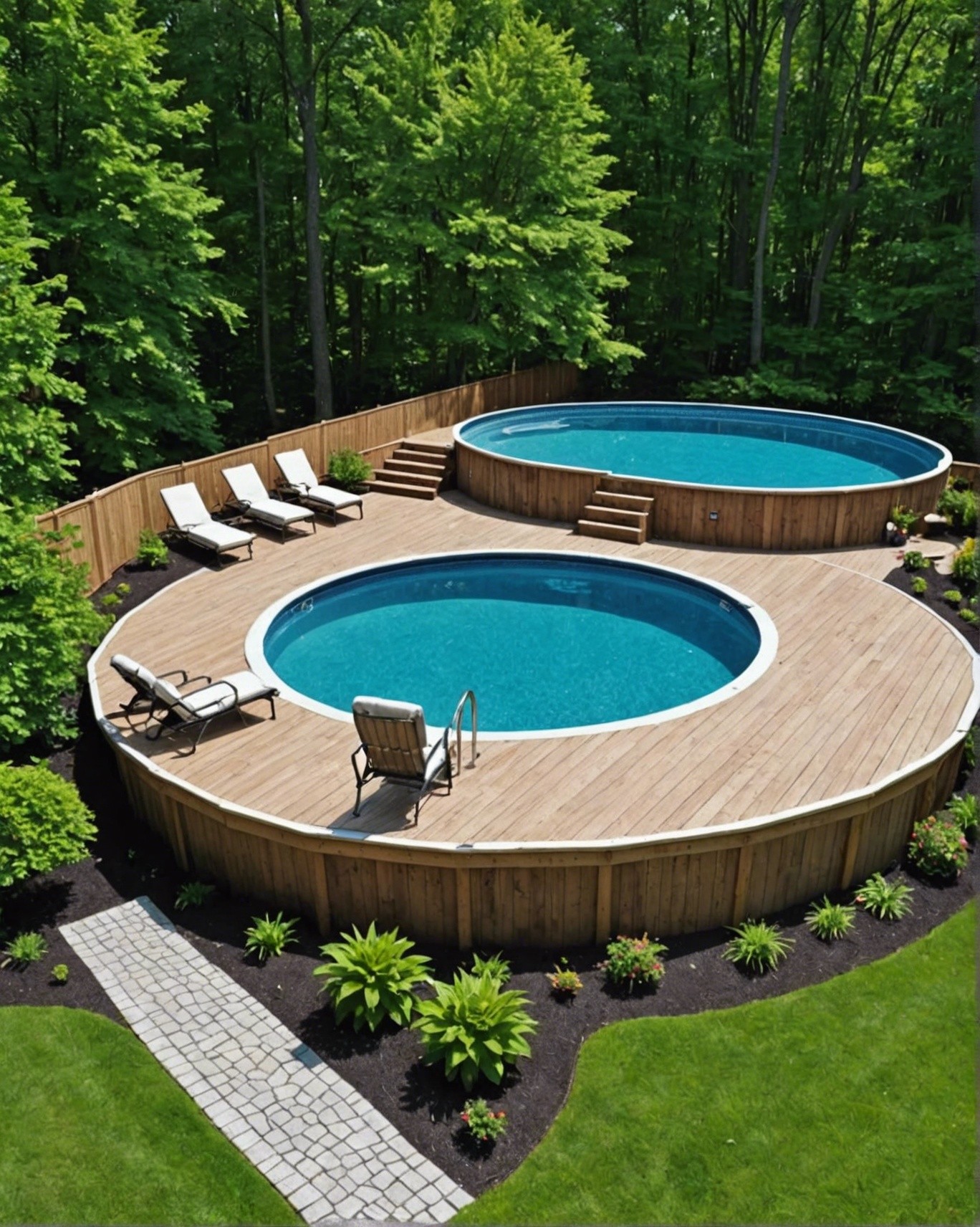
When you look at high-end above ground pool designs, the pool itself is almost secondary to the surrounding woodwork. The "deck-flush" method involves building a multi-level wooden or composite deck that meets the top rail of the pool. It changes the entire psychology of the backyard. Instead of climbing up a shaky A-frame ladder, you’re walking across a flat surface and stepping down into the water. It feels permanent. It feels expensive.
Expert landscapers often suggest using a "wrap-around" technique. You don't need to encircle the whole pool. Even a 180-degree deck creates a focal point. Use pressure-treated pine for a budget-friendly look, or go with Ipe or Cedar if you want that high-end, spa-like vibration.
But here’s a tip most pool salesmen won't tell you: you have to account for the "winter cover" gap. If you build your deck perfectly flush against the top rail, getting your winter cover clips on is going to be a nightmare. Leave a half-inch of breathing room. Your future self will thank you in October.
Steel vs. Resin vs. Aluminum (The Nerd Stuff Matters)
If you're shopping for a frame, you're going to hear a lot of marketing jargon. Let’s cut through it.
Steel is the traditional choice. It’s heavy, it’s sturdy, and it’s the cheapest. But steel hates salt. If you’re planning on a saltwater chlorine generator—which, honestly, you should because it's way easier on your skin—steel is a bad move. It’ll corrode the wall bolts within five years.
Resin is the current darling of the industry. Brands like Radiant Pools or Sharkline have gone heavy into resin components because they don’t rust, they don't corrode, and they stay cool to the touch even in 100-degree July heat. A resin-frame pool is basically the "set it and forget it" option for modern above ground pool designs.
Then there’s aluminum. It’s the gold standard for many because it’s incredibly strong and naturally rust-resistant. However, it’s pricey. If you live near the coast where salt air is a constant reality, aluminum is your only real choice.
Why Semi-Inground is the Real Secret
This is the middle ground nobody talks about enough. Some pools, specifically those with "slat-wall" construction or reinforced steel like the Radiant Metric series, are rated to be buried.
You can put them 18 inches, 24 inches, or even halfway into the ground.
Why bother? Because backyards aren't flat. If you have a sloped yard, a standard above ground pool looks ridiculous—one side is sticking out six feet and the other is buried in dirt. A semi-inground design allows you to "cut" the pool into the hill. You get a natural-looking entry on the high side and a cool, raised-wall look on the low side. It’s the ultimate hack for difficult terrain.
Forget the Blue Liner
Can we please talk about the liners?
The classic "bright blue" liner is a dead giveaway that you bought the cheapest kit on the market. It looks artificial. If you want your pool to look like a high-end resort, look for "full print" liners that mimic stone or marble.
- Tan/Beige base colors: These turn the water a gorgeous, sparkling turquoise that looks like the Caribbean.
- Dark Grey/Slate liners: These create a "mirror" effect on the surface. They make the pool look deep and sophisticated. Plus, they absorb more heat from the sun, which can naturally raise your water temperature by 5-7 degrees.
- Black liners: Very trendy, very bold. Just be warned, you won't be able to see the bottom clearly, which can be a safety concern for some parents.
Lighting and Landscaping Hacks
The pool is just the centerpiece. The "design" part comes from what’s around it.
Instead of the standard "floating disco ball" light, look into magnetic LED lights that snap onto the steel walls under the water line. They’re battery-powered or rechargeable and create a glow that makes the water look radioactive (in a cool way) at night.
For landscaping, skip the mulch. Mulch blows into the water. It messes with your pH. It’s a mess. Use river rock or pea gravel around the perimeter. It provides excellent drainage—which is vital because above ground pools splash a lot—and it looks much cleaner. Add some ornamental grasses like Maiden Grass or Blue Fescue. They add height, they don't drop leaves, and they sway in the wind to give you a bit of privacy.
The Cost Factor
Let’s talk numbers. A high-end 24-foot round above ground pool kit might cost you $4,000 to $7,000. Installation is another $1,500 to $2,500. Then there's the deck.
A professional deck can easily double your total investment.
Is it worth it? Well, compared to an inground pool which starts at $50,000 in today's market, you're still coming out way ahead. The resale value isn't as high as an inground pool—that's just facts—but the "lifestyle value" for the next ten years is identical.
Maintenance Truths
Let's be real: no pool is "no maintenance."
The smaller the pool, the faster the chemistry changes. A heavy rainstorm can tank your alkalinity in an afternoon. If you’re going for one of these modern above ground pool designs, invest in a robotic cleaner. Don't waste your Saturdays pushing a manual vacuum. Brands like Maytronics make robots specifically for above ground walls. They’ll climb the sides and scrub the "bathtub ring" for you.
Also, get a oversized filter. If the pool kit comes with a 1-HP pump and a small sand filter, ask to upgrade. A larger filter means you have to clean it less often and the water stays crystal clear even when twelve kids are splashing around in it.
The Verdict on Shape
Round pools are the most popular for a reason: they’re structurally the strongest. The water pressure is distributed equally across the entire wall.
Ovals are great if you have a narrow yard or want to swim laps, but they require "buttresses"—those big metal legs that stick out from the sides to keep the walls from bowing. If you don't like the look of those legs, you’ll have to pay more for a "buttress-free" oval, which uses an underground bracing system. It’s cleaner, but it’s a lot more work to install.
Actionable Next Steps
If you’re serious about upgrading your backyard this season, don't just click "buy" on the first kit you see online.
- Check your local codes first. Many townships require a "pool alarm" and a specific fence height, even for above ground models. Some consider the pool wall itself "the fence" if it's over 48 inches tall, but you'll need a lockable ladder.
- Measure your "flat" space. Even a 2-inch slope across 24 feet requires significant site prep. You can't just put a pool on grass. You need to strip the sod and level the dirt.
- Shop for the liner first. Sometimes the best pool frames come with the worst liners. Ask your dealer if you can swap the standard blue for a pebble or slate pattern.
- Plan the electrical. You’ll need a dedicated 20-amp circuit for the pump. If you’re adding a heater later, you might need more. Get an electrician out for a quote before the pool arrives.
The days of the "ugly" backyard pool are over. It’s all about how you frame it. Build a solid deck, choose a stone-pattern liner, and hide the equipment behind some nice lattice or shrubs. You’ll have a backyard that looks like a magazine spread without the second mortgage.