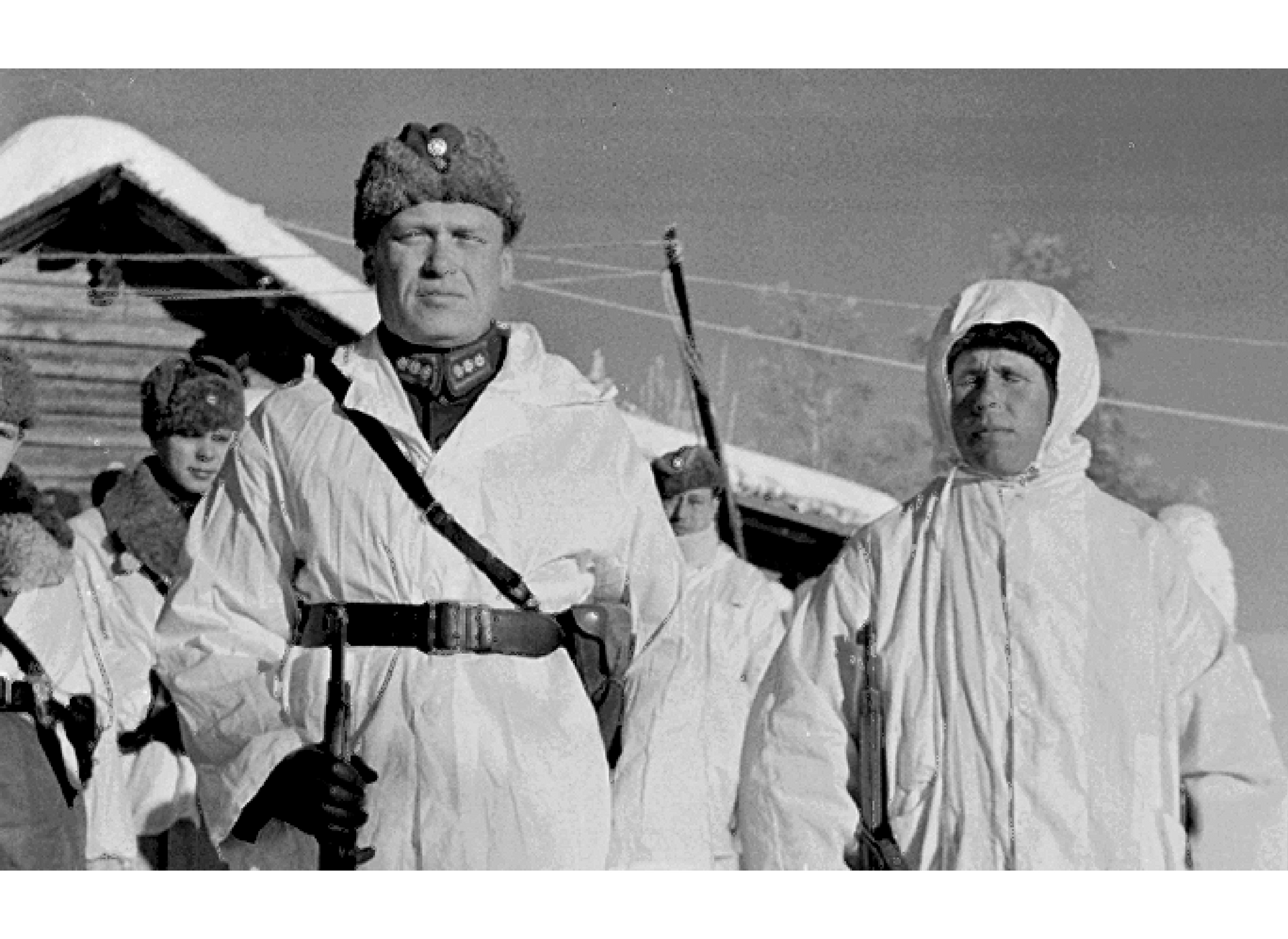
Everyone loves a good war legend. You’ve likely seen the grainy black-and-white photo of a small Finnish man with a mangled jaw and a gaze that looks right through you. That’s Simo Häyhä. In the annals of military history, his name is synonymous with the White Death kill count, a number so staggering it sounds like something out of a video game.
Most sources will tell you he killed 505 men in just 100 days.
But history is messy. Honestly, once you start digging into the actual Finnish military archives and the personal memoirs discovered as recently as 2017, the "official" story starts to look a bit more complicated. It’s not that Häyhä wasn’t a terrifyingly good shot—he was. It’s just that the line between a soldier’s reality and a nation’s propaganda is thinner than a tripwire in the snow.
The 505 Figure: Fact or Finnish Folklore?
If you search for the most lethal sniper ever, Häyhä is the undisputed king. The number 505 is the one usually cited by historians like Tapio Saarelainen, who interviewed Häyhä dozens of times. Some even push it to 542. To put that in perspective, he was supposedly averaging five kills a day. This happened during the Winter War (1939–1940), where daylight in Finland lasts about as long as a coffee break.
He didn't use a scope. Imagine that. In temperatures hitting $-40$ degrees, he relied on iron sights because scopes could fog up or reflect the sun, giving away his position. He’d even keep snow in his mouth so his breath wouldn't steam.
But where did "505" actually come from?
It wasn't a number Häyhä bragged about. In fact, he was famously quiet. The Finnish press, however, was not. They needed a hero. Finland was a tiny nation being steamrolled by the Soviet behemoth, and "The Magic Shooter" was the perfect face for the resistance.
The "Sin List" and the Missing Bodies
In 2017, a private memoir titled Sotamuistoja (War Memories) was found. In it, Häyhä himself estimated his total at around 500. He called it his "sin list."
Historians like Risto Marjomaa are a bit more skeptical. They point out that confirming a kill in a frozen forest while being shot at is... well, it's hard. Usually, a "confirmed" kill requires a witness. But when the Finnish army awarded Häyhä an honorary rifle in February 1940, his division commander, Antero Svensson, credited him with 219 confirmed rifle kills.
That’s a big gap. 219 is still legendary, but it’s not 505.
So what happened to the other 300?
The White Death Kill Count and the SMG Factor
This is where the math gets weird. Häyhä wasn't just a sniper; he was a squad leader. When he wasn't belly-down in a snowbank with his M/28-30 rifle, he was often carrying a Suomi KP/-31 submachine gun.
Some records suggest that his "total" count includes these close-quarters engagements.
- Rifle Kills: Roughly 219 to 259.
- SMG Kills: Often cited as an additional 200+.
If you add those together, you get the magic 500 number. But in the world of military records, a "sniper kill" usually refers specifically to long-range precision work. Mixing the two creates a bit of a statistical nightmare. Military chaplain Antti Rantamaa noted in his diary that Häyhä had 259 rifle kills and an "equal number" with a submachine gun by early March.
Basically, the 500+ number is likely a combined total of everything he did on the front lines, rather than 505 distinct "one shot, one kill" moments from a distance.
Why the Russians Feared the "Belaya Smert"
The Soviets didn't call him the White Death because they liked him. They were terrified. Entire units supposedly refused to move if they knew a sniper was in the area. The Red Army even tried calling in artillery strikes on entire sections of the forest just to kill one man.
Think about that. They were so desperate they used heavy cannons to swat a fly.
The psychological toll was massive. Soviet soldiers were wearing dark olive uniforms against white snow—basically human bullseyes. Meanwhile, Häyhä was a ghost. He would pack the snow in front of his barrel so the muzzle blast wouldn't kick up powder. He was essentially a part of the landscape.
The End of the Streak
The "White Death" was finally stopped on March 6, 1940. An explosive bullet from a Soviet soldier hit him in the lower left jaw. It didn't kill him, but it blew off half his face.
He woke up from a coma on March 13—the very day the peace treaty was signed.
He lived to be 96. When people asked him if he felt remorse for the sheer volume of the White Death kill count, his answer was always the same: "I did what I was told to do, as well as I could."
Sorting Myth From Reality
Is the 505 number "real"?
It depends on who you ask. If you're looking for rigorous, third-party verified body counts, you might settle on something closer to 200–250. If you include the chaos of close-range combat and his own personal records, the 500+ figure holds water.
Regardless of the exact digit, the impact was real. He didn't just kill soldiers; he killed the momentum of an invasion.
Actionable Takeaways for History Buffs
If you're researching Häyhä or trying to understand why his stats vary so much, keep these things in mind:
- Propaganda is a factor. Every country in WWII inflated their heroes' numbers to boost morale. Finland was no exception.
- Verification methods varied. In the 1940s, "confirmed" often meant "a buddy saw it happen," which isn't exactly a lab-tested metric.
- Equipment matters. His lack of a scope is what makes the count truly impressive. Most modern snipers wouldn't dream of taking a 400-meter shot with iron sights in a blizzard.
- Context is king. The Winter War was a unique conflict. The terrain and the Soviet "human wave" tactics provided a target-rich environment that simply doesn't exist in most modern wars.
To understand the full scope of the Winter War beyond just the snipers, looking into the "Motti" tactics used by the Finnish ski troops provides the necessary context for how a small force managed to inflict such massive casualties on the Red Army.