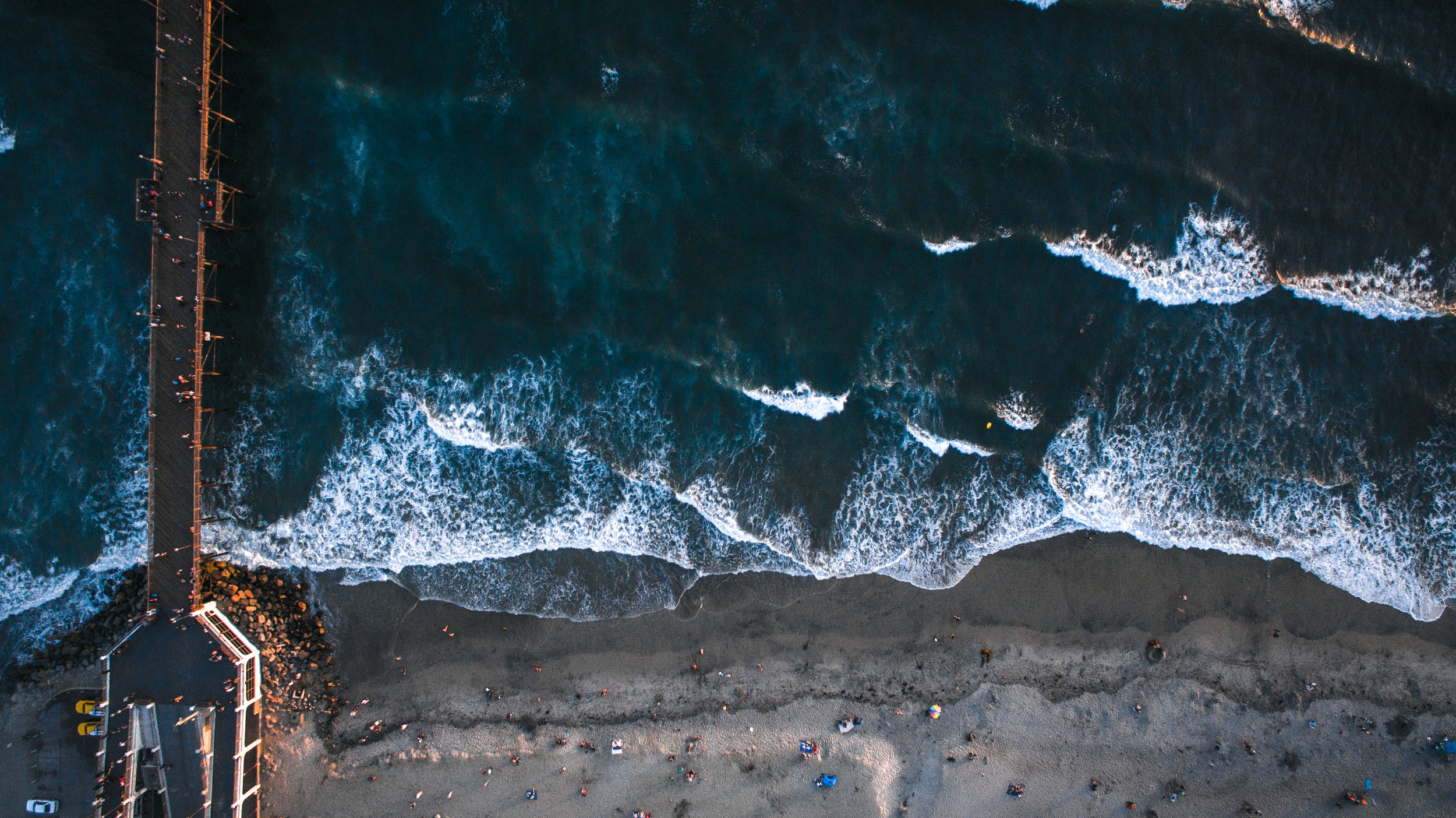
If you’re standing on the Oceanside Pier, looking out at the Pacific, the air feels different. It’s that salt-tinged, steady breeze that defines the local climate. Most people think Southern California is just "sunny and 75" every single day of the year. Honestly? That’s a bit of a stretch. The weather for Oceanside CA is actually a delicate dance between the cold California Current and the hot Mojave Desert air.
It’s predictable, sure. But it has its moods.
You’ve got the morning fog that creeps in like a gray blanket, only to vanish by noon. You’ve got those weird weeks in October where it’s hotter than July. Basically, if you want to understand the vibe here, you have to look past the postcard.
The Reality of the Marine Layer (No, It’s Not Just Clouds)
Locals call it "June Gloom," but it’s really a spring and summer staple. This isn't your typical rainy-day overcast. It’s a thick, low-altitude stratus cloud deck formed by the temperature difference between the cool ocean water and the warming land.
In May and June, you might wake up to a world that looks like a black-and-white movie.
Don't let it ruin your morning. Usually, the sun "burns off" this layer by 11:00 AM or 1:00 PM. If you’re planning a beach day during these months, the weather for Oceanside CA might look depressing on your phone app at 7:00 AM, but wait it out. By the time you’ve grabbed a coffee at one of the spots on Coast Highway, the blue sky will likely be peeking through.
The science is actually pretty cool. The "Catalina Eddy" — a localized weather phenomenon — often spins these clouds right into our coastline. Interestingly, if you drive just five miles inland toward Guajome Regional Park, the sun might be blazing while the harbor is still shrouded in mist.
Breaking Down the Seasons: What to Actually Expect
Oceanside doesn't really do "winter" in the traditional sense. We have "slightly-less-warm-and-maybe-a-bit-damp" season.
Summer and Early Fall: The Golden Window
July through October is peak time. August is statistically the hottest month, with average highs hitting around 76°F. That sounds mild, right? It is. But remember, the humidity can stay high near the water, making it feel a bit "sticker" than the dry heat you find in Riverside or Escondido.
Pro tip: September is the secret winner. The crowds from the San Diego County Fair and summer break have thinned out. The water temperature is at its warmest—usually peaking around 68°F to 72°F. It’s the one time of year you might skip the 3/2mm wetsuit if you’re just splashing around.
Late Fall and Winter: The Santa Ana Influence
November through February brings the "Cool Season." Highs hover around 65°F. Nighttime lows can dip to 45°F. You’ll definitely need a hoodie. This is also when we get our "Santa Ana" winds. These are hot, dry winds that blow from the desert toward the coast.
They flip the script.
Suddenly, it’s 80 degrees in January, the air is bone-dry, and the sky is a piercing, cloudless blue. The surf gets "offshore," which means the wind blows against the face of the waves, grooming them into perfect barrels. Ask any local surfer; they live for these winter wind shifts.
Spring: The Transition
March and April are the wildcards. This is when most of our roughly 10 inches of annual rain falls. It’s rarely a deluge. Mostly, it’s passing showers that leave the hills of Camp Pendleton looking shockingly green for a few weeks before the summer brown returns.
Surviving the Microclimates
Oceanside is geographically diverse. The weather for Oceanside CA at the Harbor can be five degrees cooler than the weather at the South Morro Hills agricultural area.
If you’re staying near the water, the ocean acts as a giant radiator. It keeps the nights from getting too cold and the days from getting too hot. This is why many older beach cottages don't even have air conditioning. You just open the window and let the Pacific do the work.
However, if you move inland toward the 76 Expressway, that coastal influence starts to fade. The hills block the breeze. On a day where it’s a perfect 74°F at the Pier, it could easily hit 82°F near the Mission San Luis Rey.
Understanding the Water Conditions
You can't talk about the weather here without talking about the sea. The Pacific is cold. Even in the height of summer, it’s not Hawaii.
- Winter Water (Jan-Mar): 58°F – 60°F. (Full wetsuit territory).
- Spring Water (Apr-Jun): 61°F – 64°F. (Still chilly, June Gloom keeps it from warming fast).
- Summer/Fall Water (Jul-Oct): 66°F – 72°F. (The "trunkable" window for the brave).
The surf is most consistent in the winter thanks to North Pacific swells, but the "best" beach weather usually aligns with the West-Southwest swells of late summer.
Actionable Tips for Your Oceanside Visit
Forget the generic forecasts. If you want to master the weather for Oceanside CA, follow these rules:
- The Layer Rule: Never leave the house without a light jacket or flannel, even if it's 80 degrees. Once the sun drops behind the horizon, the temperature falls off a cliff.
- Check the Cams: Use sites like Surfline to look at the Pier or Harbor cameras. This tells you exactly where the marine layer sits before you make the drive.
- October is the "Real" Summer: If you want heat and warm water without the crowds, book your trip for the first two weeks of October.
- Sunscreen is Non-Negotiable: Even on "Gloomy" days, the UV index remains high. The fog doesn't block the rays that burn you; it just hides them.
- Inland Escape: If the coast is stuck in a fog bank all day (it happens!), head ten miles east. You’ll likely find the sun and a completely different temperature profile.
To get the most out of your time here, keep an eye on the National Weather Service's "Coastal Waters Forecast." It’s much more accurate for Oceanside's specific geography than the broad "San Diego" reports you'll find on national news. Grab your sunglasses, pack a sweater, and enjoy the most temperate corner of the country.