You’re standing in the produce aisle or wandering through a farmers' market, and you see it. Long, green, and bumpy. You grab it, thinking about a crisp salad, but then you realize the skin feels a bit too fuzzy, or maybe the smell is off. Or worse, you get it home, take a big bite, and it tastes like a sour lemon or a bitter melon. Honestly, it happens to the best of us. There are dozens of plants in the Cucurbitaceae family, and many of them are masters of disguise.
Identifying a vegetable that looks like cucumber isn't just a fun trivia game; it’s actually pretty important for your cooking. Some of these look-alikes need to be peeled, some need to be cooked for hours, and some are just plain weird. If you’ve ever accidentally put a bitter melon in a Greek salad, you know exactly why we need to talk about this.
The Armenian Cucumber: The Biggest Liar in the Garden
Let's start with the most common culprit. The Armenian cucumber isn't even a cucumber. Technically, it’s a variety of muskmelon (Cucumis melo var. flexuosus).
It looks exactly like a cucumber that went to the gym and got really long and slightly ribbed. Sometimes people call it a "snake melon." It can grow up to 30 inches long, which is frankly excessive for a salad topping. The skin is thin, light green, and never bitter because it lacks the compound cucurbitacin, which is what makes regular cucumbers sometimes taste like soap or chemicals.
Why does this matter? Because you don't have to peel it. You can eat the whole thing, seeds and all. In Middle Eastern cuisine, these are prized for their crunch. But if you try to pickle them using a standard vinegar brine meant for Kirby cucumbers, they can get mushy because their cell structure is more "melon-y" than "cucumber-y."
Zucchini vs. Cucumber: The Classic Identity Crisis
This is the one that trips up everyone. Zucchini and cucumbers are like the Mary-Kate and Ashley of the veggie world—at a distance, they're identical. But get close.
Cucumbers are cold. They literally feel cooler to the touch because of their water content and skin density. Their skin is usually waxy and bumpy. Zucchini, on the other hand, has a matte finish. It’s dry. If you see a "cucumber" with a woody stem that looks like a little pentagon, it’s a zucchini.
What happens if you swap them?
- Raw: Eating a raw zucchini won't hurt you, but it’s a bit "woody" and bland compared to the snap of a cucumber.
- Cooked: Never, ever try to sauté a cucumber like a zucchini unless you want a pan full of hot, translucent slime. It doesn't hold up to heat.
The Bitter Melon: A Dangerous Doppelgänger
If you see something that looks like a cucumber with a severe skin condition—warts, ridges, and deep wrinkles—back away slowly. Or, buy it, but know what you’re getting into. This is the Bitter Melon (Momordica charantia).
It’s a staple in Chinese, Indian, and Southeast Asian cooking. It looks like a cucumber that’s seen some things. The flavor is exactly what the name suggests: intensely bitter. You can't just slice this up for a sandwich. Chefs usually salt it, rinse it, and then stir-fry it with strong flavors like fermented black beans or chili to balance the punch.
It’s actually incredibly healthy. There’s a lot of research, including studies published in the Journal of Ethnopharmacology, looking at how bitter melon can help regulate blood sugar. But as a cucumber substitute? It’s a disaster.
Mexican Sour Gherkins (Cucamelons)
Imagine a cucumber for a dollhouse. Or a grape that's pretending to be a watermelon.
These are Cucamelons (Melothria scabra). They are adorable. They look like tiny, 1-inch cucumbers with watermelon stripes. They taste like a cucumber dipped in lime juice. They’re great for snacks, but they grow on delicate vines that look nothing like the heavy, broad leaves of a standard cucumber plant.
Chayote: The Pear-Shaped Cousin
In many Latin American markets, you’ll find Chayote. It’s green. It’s crunchy. If you slice it into sticks, it looks exactly like a peeled cucumber.
However, Chayote is much firmer. It’s almost like a cross between a cucumber and a potato. You can eat it raw in a slaw, where it provides a fantastic crunch that stays crispy even after being dressed in lime and salt for an hour. Most people prefer it lightly sautéed. It’s a "vegetable that looks like cucumber" once it’s processed, but in its whole form, it looks more like a green, wrinkled pear.
Sorting Through the Confusion
It's easy to get overwhelmed. You're just trying to make dinner, not get a botany degree. But the nuances matter because of how these plants react to salt and heat.
The "Squirting Cucumber" is another one to watch out for, though you'll rarely find it in a store. It’s a wild plant that literally explodes to spread its seeds. It looks like a tiny, hairy cucumber. Do not eat it. It’s purgative and can make you incredibly sick. This is why "foraging" for wild cucumbers is generally a bad idea unless you're with an expert.
How to tell the difference in 3 seconds
- Check the Stem: Is it round and soft (Cucumber) or woody and angled (Zucchini/Squash)?
- Feel the Skin: Is it waxy/prickly (Cucumber) or fuzzy/matte (Zucchini/Armenian)?
- The Smell: Scratch the skin. If it smells like nothing, it’s likely a squash. If it smells like a spa day, it’s a cucumber.
Why Do They All Look Alike?
Evolution is lazy sometimes. Or rather, it finds a "build" that works and sticks with it. The long, cylindrical shape is efficient for water storage and seed distribution. Most of these plants originated in similar climates—warm, humid regions where they could crawl along the ground or climb trees.
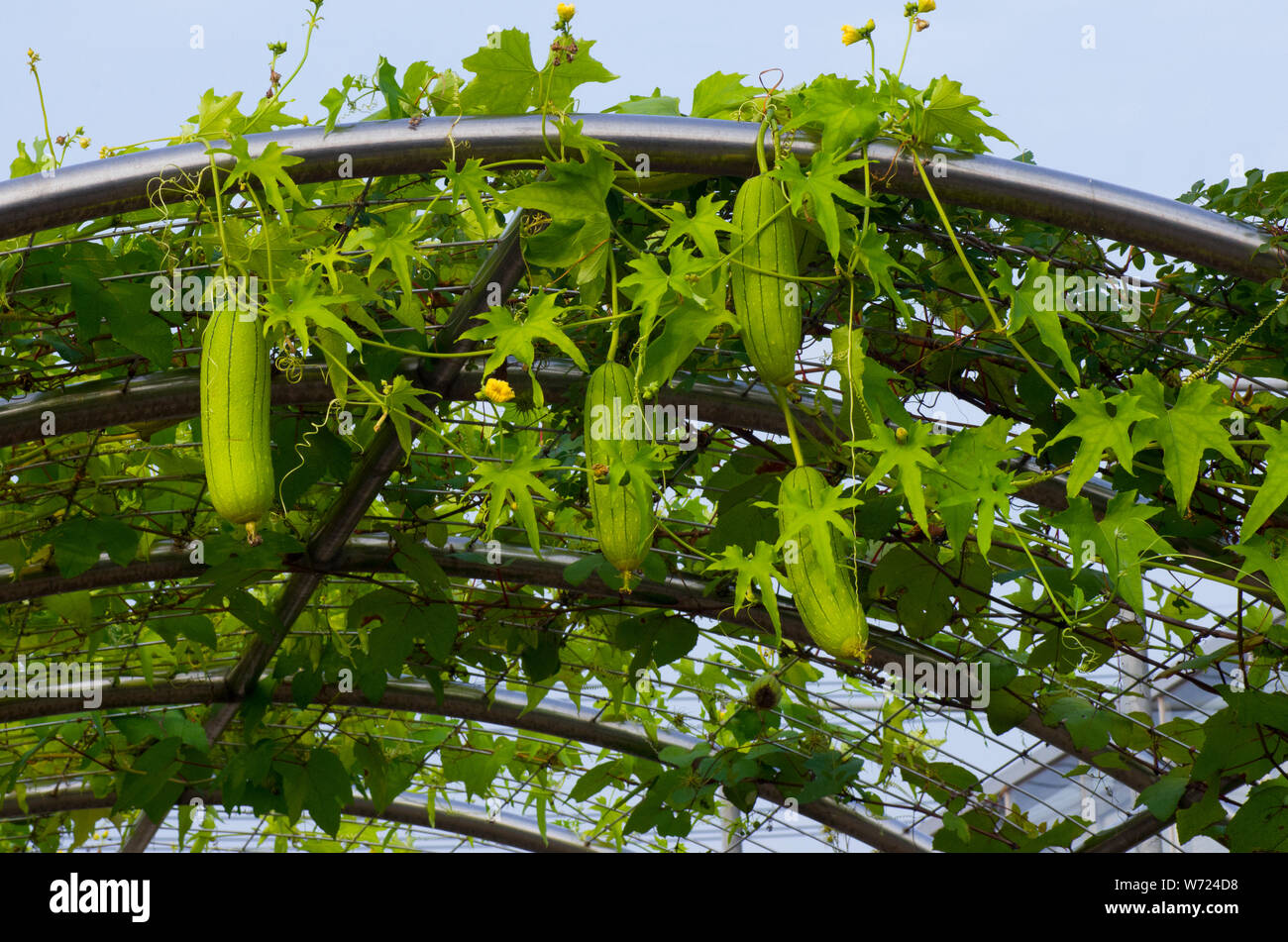
For instance, the Sponge Gourd (Luffa) looks like a massive cucumber when it’s young. In fact, in many Asian cuisines, it’s eaten just like a cucumber in soups. But if you let it stay on the vine too long, the insides turn into the fibrous scrubby sponge you use in the shower. Imagine trying to eat that. You’d be flossing for days.
Practical Steps for the Confused Cook
If you’ve accidentally bought a vegetable that looks like cucumber and you aren't sure what it is, don't panic.
First, cut a tiny slice from the end. Taste it with the tip of your tongue. If it’s extremely bitter, it’s likely a bitter melon or a wild gourd—toss it or look up a specific "bitter melon" recipe that involves parboiling. If it tastes like a bland melon, it’s probably Armenian or a young Luffa; use it raw in salads. If it feels starchy and dense, it’s a squash or chayote; get the frying pan out.
Always wash the skin thoroughly. Many "cucumber-adjacent" veggies are heavily waxed to prevent them from drying out during transport. A quick scrub with a vegetable brush reveals the true texture of the skin, which is often the biggest giveaway for identification.
When shopping at ethnic markets, look at the signage. "Gourd" is a catch-all term that often includes cucumber-look-alikes that require cooking. If the sign says "Opo Squash" or "Long Melon," it’s going to be much denser than your standard salad cuke.
Go ahead and experiment with these imposters. The Armenian cucumber, in particular, is often superior to the standard English cucumber because it never gets that soggy, seedy middle. Just make sure you know which "green tube" you're putting in your grocery cart before you head to the checkout.