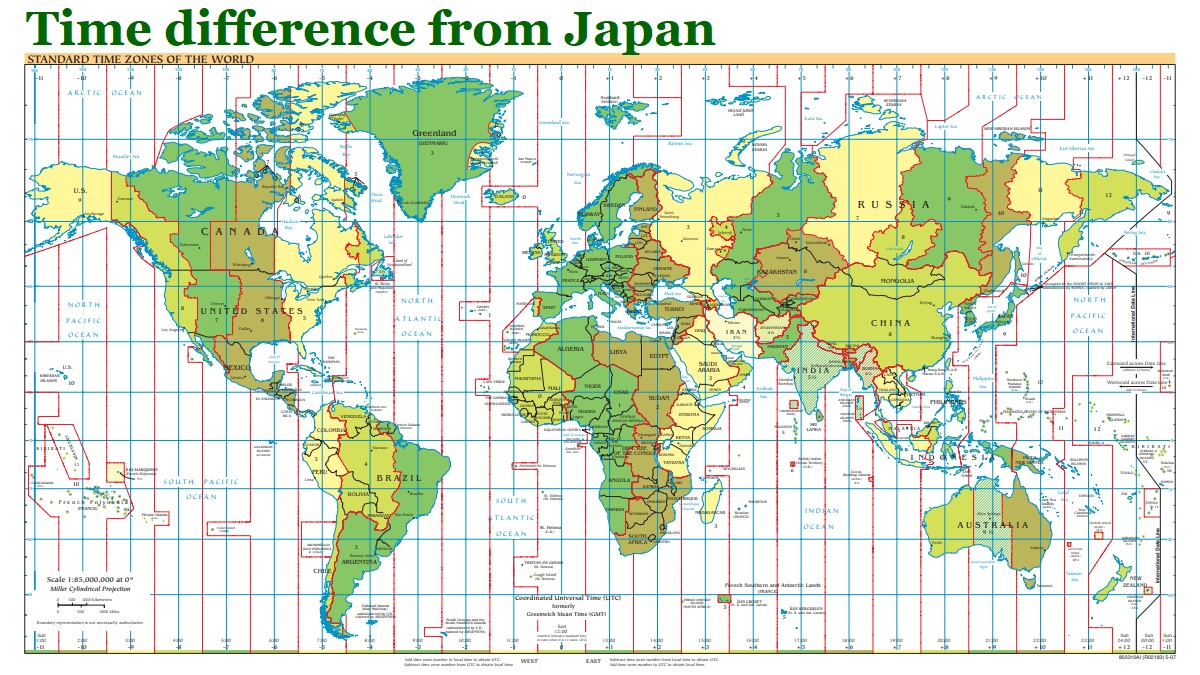
Honestly, the US Aus time difference is a beast. You think you've nailed it because you remember Sydney is ahead, but then Daylight Saving Time (DST) kicks in somewhere, and suddenly you're waking up at 4:00 AM for a Zoom call that doesn't exist. It’s a mess. Dealing with the gap between North America and Australia isn't just about adding a few hours; it’s about navigating three different US time zones, two Australian ones that actually matter for business, and a calendar that flips the seasons upside down.
If you're trying to coordinate a project between New York and Melbourne, you aren't just dealing with a clock. You’re dealing with tomorrow. When it’s Monday afternoon in Los Angeles, it’s already Tuesday morning in Brisbane. That "tomorrow" factor is what trips everyone up. You send an "urgent" email on your Friday, but your Aussie colleague has already logged off for their Saturday morning coffee. You've basically lost a whole day of productivity without even realizing it.
The Brutal Reality of the International Date Line
The International Date Line is the silent killer of productivity. It sits right there in the Pacific, mocking your calendar invites. Most people forget that the US Aus time difference means Australia is almost always "in the future."
Take a look at the math, but don't expect it to stay the same all year. If you’re in New York (EST) and your partner is in Sydney (AEST), the gap is usually 14 to 16 hours. Why the range? Because the US and Australia don't change their clocks at the same time. Not even close. The US shifts in March and November. Australia shifts in October and April. This creates these weird "shoulder periods" where the difference changes by an hour, then stays that way for a few weeks, then changes again. It's enough to make you want to throw your MacBook into the ocean.
Why Western Australia is the "Easy" One
If you are lucky enough to work with someone in Perth, the US Aus time difference is actually a bit more manageable, especially for those on the US West Coast. Perth (AWST) doesn't do Daylight Saving. Ever. They stayed sensible.
For a freelancer in San Francisco, Perth is often 12 to 15 hours ahead. This sounds like a lot, but it often aligns so that the end of the US workday hits right as the Perth workday begins. It’s a "follow the sun" model that actually works. You finish your tasks at 5:00 PM, hand them over, and the Perth team works on them while you sleep. You wake up, and the work is done. It’s like having a magic elf, except the elf wants a competitive hourly rate and likes AFL.
The "Death Zones" of Scheduling
There are specific windows where scheduling is just impossible. We call these the Death Zones. For an East Coast American and an East Coast Australian, the worst time is usually between 1:00 PM and 6:00 PM EST.
Why? Because that’s 3:00 AM to 8:00 AM in Sydney. Unless your Australian counterpart is a severe insomniac or a very dedicated baker, they aren't answering that call.
Conversely, the "Golden Window" is usually the US evening. If you’re in Chicago, calling Sydney at 6:00 PM your time means it’s 10:00 AM for them. Everyone is caffeinated. Everyone is awake. It’s the only time of day where nobody has to sacrifice their sleep or their sanity. But even this window shrinks and expands based on the time of year. In the northern summer, New York is 14 hours behind Sydney. In the northern winter, it’s 16 hours. That two-hour swing is the difference between a 7:00 PM meeting and a 9:00 PM meeting. One is a minor inconvenience; the other ruins your dinner plans.
The Seasonal Flip-Flop
The most confusing part of the US Aus time difference is the seasons. While the US is hunkering down for a blizzard in January, Australians are hitting the beach for Australia Day. This isn't just a weather thing; it's a "mental state" thing.
In late December, the US is grinding to finish the Q4 goals. Meanwhile, half of Australia has basically checked out for their summer holidays. You might find yourself frantically pinging a contact in Adelaide only to realize they are currently camping in a spot with zero cell service. Understanding the cultural rhythm of the opposite hemisphere is just as important as knowing what time it is on the clock.
Tools That Actually Help (and One That Doesn't)
Don't trust your brain. Seriously. I've seen senior VPs miss board meetings because they "thought" they knew the offset.
- World Time Buddy: This is the gold standard. It lets you stack time zones vertically so you can see where the workdays overlap. It turns the US Aus time difference into a visual map.
- The Mac/Windows Clock: It’s fine for a quick check, but it won't help you plan for a meeting three weeks from now when the clocks change.
- Google Calendar: It’s generally smart, but it has a nasty habit of not clearly showing you that a meeting is on "Tuesday" for one person and "Wednesday" for the other. Always check the date, not just the hour.
You've gotta be careful with the "automatic" time zone detection in some CRM software. Sometimes it bases the time on the server location, not the user's location. If your company uses a server in Virginia but your client is in Brisbane, things get weird fast. Always confirm the time in both "Your Time" and "Their Time" in the body of the invite. "See you at 5:00 PM EST / 8:00 AM AEST" saves lives. Or at least saves face.
Real World Example: The "Friday" Trap
Let's talk about the Friday Trap. This is a classic rookie mistake in managing the US Aus time difference.
Imagine it’s Friday morning in New York. You have a brilliant idea and want to run it by your Aussie team. You think, "I'll send this now, they'll see it when they get in." Wrong. When it’s 10:00 AM Friday in New York, it is 1:00 AM Saturday in Sydney. Your "Friday" email sits in their inbox all weekend. By the time they see it on their Monday morning, you are already halfway through your Sunday.
If you want an Australian to do something "by the end of the week," you actually need to have it to them by your Wednesday afternoon. That gives them their Thursday and Friday to work on it. If you wait until your Thursday, you've already missed their Friday deadline. It’s a literal time warp.
The Queensland Confusion
Queensland is the wild card. Unlike New South Wales (Sydney) or Victoria (Melbourne), Queensland does not observe Daylight Saving Time. This means for part of the year, Brisbane and Sydney are on the same time. For the other part of the year, they are an hour apart.
If you have a call with a team that has people in both cities, one of them is going to be late. Guaranteed. They’ll forget that their own domestic time difference has shifted. As the US contact, you basically have to act as a temporal air traffic controller.
Health Impacts of the Gap
Living in the US Aus time difference takes a toll if you aren't careful. I know people who have worked "Global" roles for years, and their circadian rhythms are shot. They spend their nights talking to Melbourne and their mornings talking to London.
The trick is to pick a "home" zone and stick to it. If you’re the US side of the relationship, don't try to stay up until 2:00 AM every night to catch the start of the Australian day. It’s not sustainable. Instead, push for that "Golden Window" in the morning or early evening. Establish boundaries. If you don't, you'll find yourself eating dinner at your desk while trying to explain a spreadsheet to someone who just finished their breakfast.
Strategies for Mastery
Managing this doesn't have to be a nightmare if you use a bit of strategy.
First, stop thinking in "hours ahead" and start thinking in "calendar days." Always ask: "What day is it there?"
Second, use asynchronous communication. Tools like Slack, Loom, or even just detailed emails are your best friends. If you can explain something in a 3-minute video, you don't need a 30-minute meeting at a terrible hour.
Third, acknowledge the suck. If you're asking an Australian to jump on a call at 6:00 AM their time, acknowledge it. If you're staying up until 9:00 PM to talk to them, tell them. It builds rapport. We're all just humans trying to navigate a planet that rotates too fast.
Actionable Next Steps
To stop the scheduling madness, implement these three habits immediately:
- Double-Date Your Invites: Every single meeting invite should include both time zones in the description. "10:00 AM PST (Tuesday) / 4:00 AM AEST (Wednesday)." This forces everyone to look at the date shift.
- The Wednesday Rule: If you need something from Australia by the end of their week, the absolute latest you can send the request is your Wednesday morning. Anything later is effectively a "next week" request.
- Check the "Shoulder" Dates: Mark your calendar for the first week of April and the first week of October. These are the danger zones where the US and Australia are out of sync with their DST shifts. Re-verify every recurring meeting during these weeks.
The US Aus time difference is a puzzle that never stays solved. But once you stop fighting the clock and start respecting the date line, the "future" doesn't seem so far away.