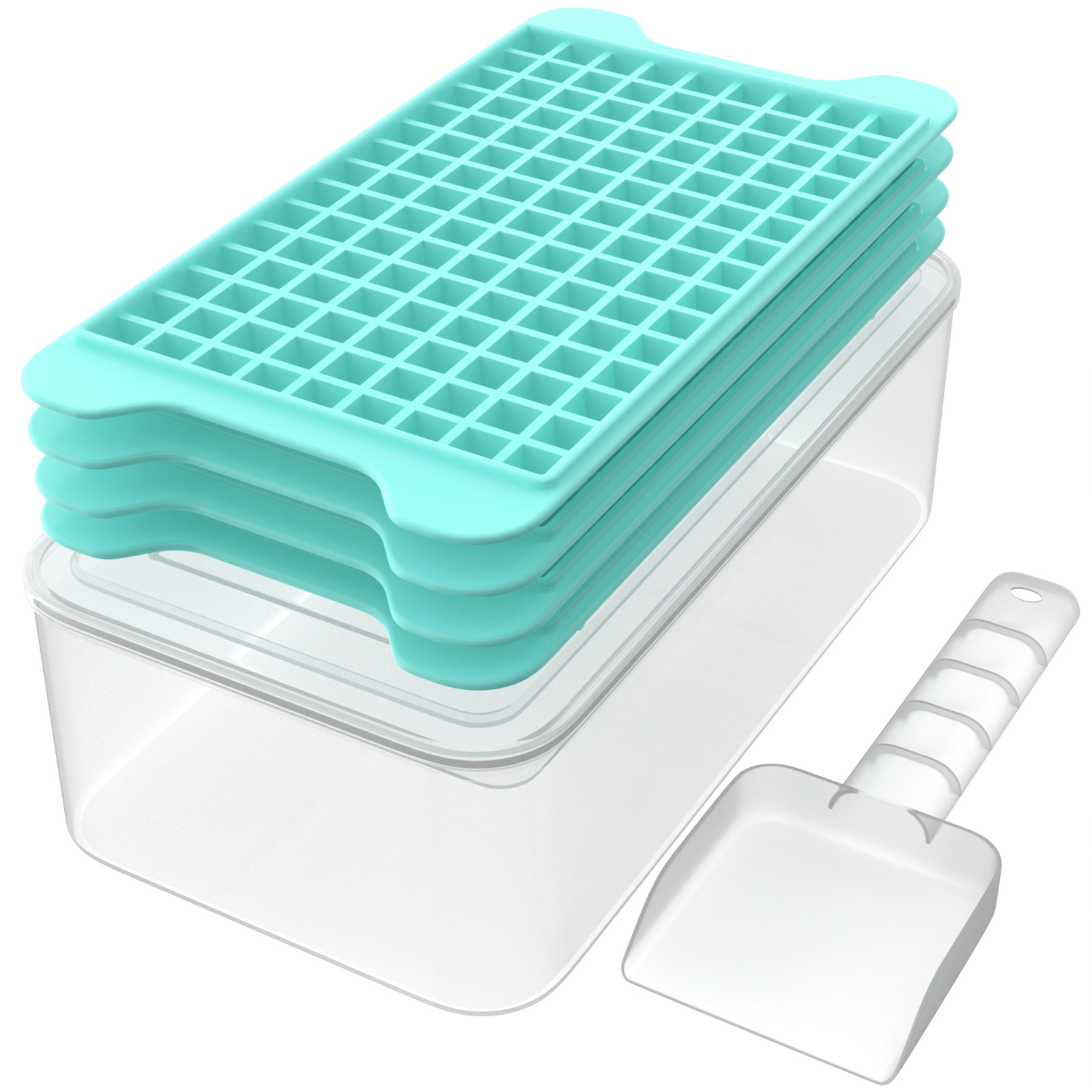
You know that specific, satisfying crunch you get from hospital ice or the "good ice" at Sonic? It isn't just a fluke of the freezer. It’s a matter of surface area. Most people settle for those clunky, trapezoidal blocks that come with their fridge, but if you’re serious about your drinks, you've probably realized those giant chunks are actually kind of a letdown. They take forever to chill a soda and they're a nightmare to fit into a reusable water bottle. That is where ice cube trays for small cubes come into play. They aren't just for people who like to chew ice—though that’s a huge part of the appeal. They are about thermodynamics. Smaller cubes mean more surface area in contact with your liquid, which leads to a drink that hits a cold temperature almost instantly.
It's science.
I’ve spent way too much time testing different freezing methods. Honestly, the difference between a standard 1-inch cube and a half-inch pebble is massive. When you toss a handful of mini cubes into a glass of room-temperature coffee, the temperature drops so fast it’s basically magic. But there is a catch. Not all small ice trays are built the same, and if you buy the wrong one, you’ll end up fighting with a piece of stiff plastic in your sink at 7:00 AM, wondering why you didn't just buy a bag of ice at the gas station.
The Material Debate: Silicone vs. Plastic
Most people think silicone is the gold standard for everything in the kitchen these days. It’s flexible. It’s "modern." But when it comes to ice cube trays for small cubes, silicone can actually be a bit of a pain. Because the cubes are so tiny, they don't have much weight to them. In a flexible silicone tray, they tend to get stuck in the corners. You end up having to push out every single individual cube with your thumb, which takes forever and makes your hands freezing cold.
On the flip side, cheap plastic trays are even worse. They crack. You try to twist them to loosen the ice, and snap—there goes the corner.
The middle ground is a rigid frame with a silicone bottom. Brands like OXO have toyed with this, but for tiny cubes, the best designs usually involve a "pop-out" mechanism or a very specific grade of food-safe TPE (Thermoplastic Elastomer). TPE stays flexible at low temperatures but has enough rigidity that you can actually carry the tray from the sink to the freezer without spilling water all over your socks.
Why Size Actually Matters for Your Drink
Let’s talk about dilution. This is the big argument against small ice. People say, "Won't it melt faster?"
Yes. It will.
But that is actually the point in certain scenarios. If you are drinking a high-proof cocktail or a very sweet iced tea, a little bit of rapid melt-water opens up the flavors. According to bartenders at places like Death & Co, pebble ice or "crushed" ice is essential for drinks like juleps or tiki cocktails because the dilution is part of the recipe. If you use a giant, slow-melting sphere in a Bramble, it just doesn't taste right. It stays too boozy and too warm for too long.
For the water bottle crowd, small cubes are a logistical necessity. If you own a S’well bottle or any narrow-mouth flask, you know the struggle of trying to ram a standard cube through that tiny opening. It doesn't work. You end up with ice on the floor. Tiny cubes, usually around 0.5 inches, slide right in.
The Messy Reality of Filling and Freezing
Filling these things is a nightmare if you don't know the trick. If you just run the tap over a tray with 160 tiny holes, water sprays everywhere. Surface tension is your enemy here. The water tends to bead up on top of the dividers instead of flowing into the holes.
The pro move? Use a measuring cup or a pitcher to pour the water slowly at one end and let it "flood" the tray. Or, look for trays that come with a lid. Lids are a game-changer for two reasons. First, they let you stack trays so you can make a massive amount of ice at once. Second, they protect the ice from that weird "freezer smell." You know the one. It’s the smell of old peas and frozen pizza that somehow migrates into your ice cubes. Because small cubes have so much surface area, they absorb odors way faster than big blocks do.
Keep them covered. Always.
What Most People Get Wrong About "Nugget" Ice
There is a huge misconception that a tray can make "nugget" ice. It can't. Not really.
True nugget ice, like the stuff from the expensive GE Profile Opal machines, is made by scraping ice off a cold cylinder and compressing it into small flakes. It’s airy and chewable because it’s full of tiny air pockets. An ice tray creates solid, frozen blocks. They might be small, but they are hard. If you have sensitive teeth or expensive dental work, do not go chomping on cubes from a tray like they are soft nuggets. You will regret it.
However, if you want that "crunchy" feel without the $500 machine, you can get close by using filtered, boiling water. This is called the "Mpemba effect" in some circles, though that's more about freezing speed. In reality, using boiled (and then cooled) water removes air bubbles, making the ice clearer and slightly more brittle, which makes it easier to crunch through.
Maintenance and the "Slimy" Problem
Have you ever noticed a white residue in your trays? Or worse, a slightly slimy film? That’s not just "old water." It’s often a buildup of calcium and magnesium from hard water, mixed with whatever biofilm is hanging out in your kitchen.
You need to wash your ice cube trays for small cubes at least once a month. Don't just rinse them. Scrub them with a bit of vinegar and warm water. If you have silicone trays, they can actually absorb oils from the air in your kitchen. If you’ve ever had ice that tasted like soap, it’s probably because the silicone "leached" some dish detergent. A quick bake in the oven at a low temperature (around 250°F) for 20 minutes can actually help "off-gas" those odors from silicone, though you should check the manufacturer's specs first.
Real World Testing: My Top Pick Logic
When looking for the best setup, don't just buy one tray. You need a system. A single tray of mini cubes usually yields about half a cup of ice. That’s barely enough for one glass of water. If you're serious, you want a "bin and tray" combo.
Look for sets that include:
- At least 3 stacking trays.
- A dedicated bin to store the finished cubes.
- A scoop (because using your hands melts the tiny cubes instantly).
I’ve found that the honeycomb-shaped trays are popular on social media, but they are a pain to harvest. The hexagonal shape creates more "walls" for the ice to stick to. Square mini-cubes are much easier to pop out.
Actionable Steps for the Perfect Chill
If you're ready to upgrade from those chunky blocks to something more refined, here is how you actually do it without wasting money.
- Measure your freezer shelf. Mini-cube trays are often longer than standard ones. Make sure you have a flat surface; if these trays are tilted even slightly, the water will overflow the tiny dividers and you'll end up with one giant, thin sheet of ice instead of individual cubes.
- Buy a set with a lid. I cannot stress this enough. Small cubes disappear (evaporate) in the freezer surprisingly fast due to sublimation. A lid keeps them intact for weeks instead of days.
- Use filtered water. Because you're likely going to be chewing this ice or letting it melt into your drink, the flavor of your tap water matters 10x more than it does with large cubes.
- The "Twist and Tap" Method. To get the cubes out, twist the tray gently across the diagonal, then flip it over a large bowl and give the back a firm whack. If they're stubborn, let the tray sit on the counter for exactly 60 seconds. That slight surface melt acts like a lubricant.
- Storage. Once frozen, dump the cubes into a freezer-safe bag or bin immediately. Leaving them in the tray makes them get "sticky" and harder to remove later.
The transition to smaller ice is one of those tiny life upgrades that feels insignificant until you do it. Then, you go to a restaurant that serves big, clunky cubes and you feel like a caveman. It’s a cheap thrill, but in a world of expensive kitchen gadgets, a $15 set of trays is a pretty solid investment in your daily hydration.