You’re at the gym. You see someone doing a bench press, and right next to them, another person is grinding through a set of push-ups. On the surface, they’re doing the same thing—pushing weight away from their chest. But from a biomechanical perspective, these movements are worlds apart. One is an open chain exercise, and the other is a closed chain exercise. Honestly, most people just pick the one that feels harder or looks cooler, but if you actually want to fix a nagging shoulder or get your vertical jump up, the distinction matters more than you think.
The concept of kinetic chains isn't some new-age fitness fad. It actually dates back to 1875 when a mechanical engineer named Franz Reuleaux proposed that if series of overlapping segments are connected via joints, they create a system where the movement of one joint affects the others. Later, in the 1950s, Dr. Arthur Steindler adapted this for human biology. He basically argued that our limbs work like a literal chain.
The Basic Logic of Open vs. Closed Chain Exercises
Let’s simplify this. An open kinetic chain (OKC) exercise happens when the segment furthest from the body—usually your hand or foot—is free to move through space. Think of a bicep curl. Your shoulder and elbow are fixed, but your hand is swinging that dumbbell around. The end of the "chain" is open.
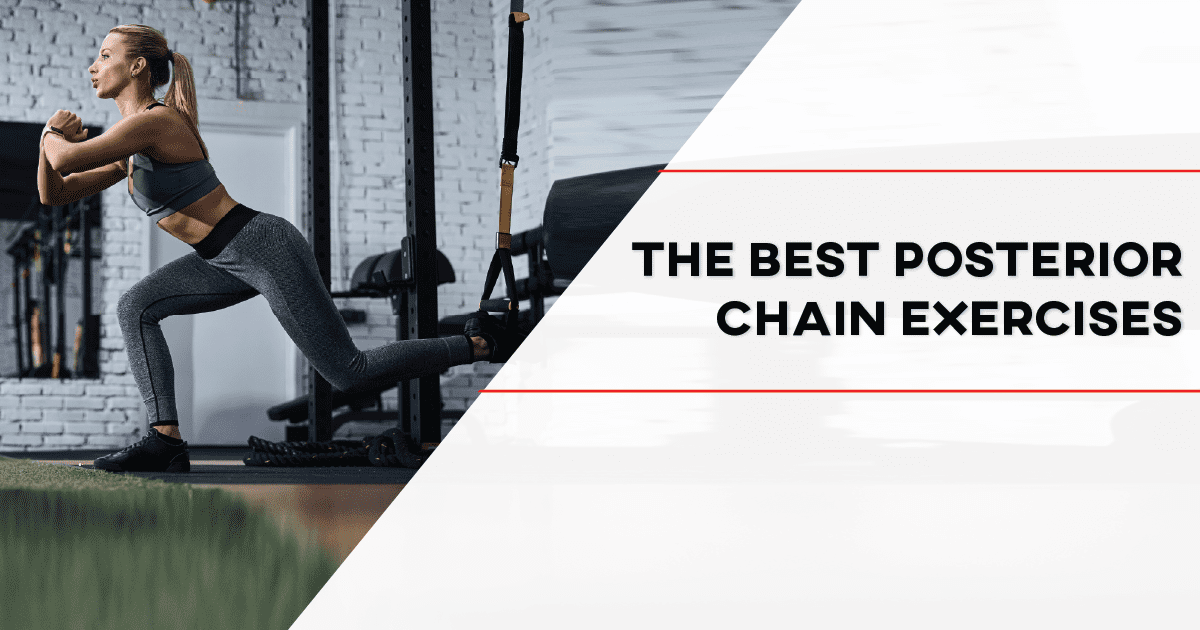
Conversely, a closed kinetic chain (CKC) exercise is when that distal end is fixed against a stable surface. Think of a squat. Your feet are glued to the floor. Because your feet can't move, the rest of your body—your knees, hips, and ankles—has to move to accommodate the motion. You aren't moving the floor; you're moving your body relative to the floor.
It sounds like a minor academic detail. It isn't.
Why Closed Chain Movements Rule the Functional World
If you’ve ever been to physical therapy for an ACL tear or a meniscus repair, your therapist likely obsessed over closed chain exercises. Why? Because they’re inherently "functional." When you walk, run, or climb stairs, your feet are hitting the ground. That’s closed chain.
CKC movements like squats, lunges, and deadlifts are multi-joint powerhouses. They recruit more muscles, sure, but they also trigger something called co-contraction. When you squat, your hamstrings and quads fire together to stabilize the knee. This creates a compressive force that actually makes the joint feel more "snug" and secure. For someone with joint laxity or a history of dislocations, this compression is a lifesaver. It’s a lot safer than sitting on a leg extension machine and letting your lower leg swing freely, which puts a decent amount of shear force on the ACL.
But don't ditch the machines just yet.
The Case for Open Chain Isolation
There’s a weird trend in the "functional training" community where people act like open chain exercises are useless. That’s just wrong. If you have a specific muscle weakness—say, your vastus medialis (the teardrop muscle in your quad) is lagging—a squat might not fix it. Your body is smart. It’ll just use your glutes and lower back to overcompensate.
Open chain exercises allow for true isolation.
If you want to grow your lateral deltoids, you do lateral raises. That’s an open chain movement. You can't really isolate the side of your shoulder effectively in a closed-chain environment like a pike push-up without involving a dozen other muscles. Bodybuilders have known this forever. If you want to "sculpt" or address a specific asymmetry, you need the freedom of an open chain.
Also, consider the "swing phase" of running. When your leg is in the air, that's open chain. If you don't have the hip flexor strength to pull that leg forward efficiently, your gait falls apart. You need both.
Real-World Examples to Clear the Fog
Let's look at the upper body because it gets confusing here.
- The Pull-Up (Closed Chain): Your hands are fixed on the bar. Your body moves toward the bar. This requires massive core stability and involves the entire "posterior chain."
- The Lat Pulldown (Open Chain): Your body is fixed in the seat. You pull the bar toward you. It’s the same pulling motion, but because your torso isn't moving through space, it's easier to focus purely on the lats.
- The Bench Press (Open Chain): Your back is on a bench, and your hands move the bar. Surprisingly, even though it’s a "big" lift, it’s open chain.
- The Push-Up (Closed Chain): Your hands are on the floor. Your body moves. This is why people who can bench 225 lbs sometimes struggle with high-rep push-ups; the stabilization requirements are totally different.
Which One Wins for Injury Recovery?
It depends on the joint.
For the knee, the medical consensus (backed by guys like Kevin Wilk and other top-tier sports PTs) leans heavily toward closed chain early in rehab. It’s about proprioception—the body’s ability to sense where it is in space. When your foot hits the ground, your brain gets a flood of sensory data. It’s like turning the lights on in a dark room.
For the shoulder, it’s a bit more nuanced. The shoulder is the most mobile joint in the body. It's basically a golf ball sitting on a saucer. Closed chain movements like "quadruped rocking" or planks help "seat" the humerus in the socket. However, most things we do with our hands in real life—throwing a ball, reaching for a glass, punching—are open chain. You eventually have to train the shoulder to be stable while the hand is moving wildly through space.
The Shear Force Factor
Here is the nerdy part. Shear force is when two surfaces slide past each other. Compressive force is when they push together.
Open chain leg extensions create more shear force on the knee joint at certain angles (specifically the last 30 degrees of extension). For a healthy athlete, this doesn't matter much. For someone three weeks out of surgery? It’s a huge deal. Closed chain exercises generally produce more compression and less shear, making them the "safer" bet for compromised joints.
Programming: How to Balance Your Routine
You don't have to choose a side. That's like choosing between protein and carbs. You need both for a complete machine.
If you're an athlete, your "big" lifts—your foundational movements—should probably be closed chain. Squats, deadlifts, pull-ups, and dips. These build the systemic strength and coordination that transfers to the field. They make you "stiff" in a good way, meaning your joints can handle high loads without buckling.
Use open chain exercises as your "accessories."
- Did you finish your heavy squats? Go hit the leg curl machine to ensure your hamstrings are getting enough direct work.
- Finished your overhead press? Do some dumbbell external rotations to keep your rotator cuff healthy.
Wait, what about the core?
Interestingly, core training is almost always a mix. A plank is a closed chain isometric. A hanging leg raise is an open chain movement. Both are essential. If you only do planks, you’ll be stable, but you might lack the "snap" needed to kick a ball or sprint.
Moving Forward: Your Action Plan
Don't overthink the terminology, but do look at your current program. If 90% of your workout involves sitting on machines where you move a lever, you're missing out on the neurological benefits of moving your own body weight through space.
- Audit your "Push" days: If you only do Bench Press and Tricep Extensions, add in some weighted Push-ups or Dips. Feel how your serratus anterior and core have to wake up to stabilize you.
- Fix your "Leg" days: If your knees hurt, swap the Leg Extensions for Split Squats or Step-ups for four weeks. Notice if the "compression" of the closed chain helps dampen that tendonitis.
- Balance the "Pull": Pull-ups are the king of upper body closed chain. If you can't do one, use an assisted machine, but keep that "body moving through space" mechanic intact.
The best athletes are the ones who can control their limbs relative to their body (open chain) and their body relative to the world (closed chain). Stop ignoring half the equation. Start by swapping one machine movement for a bodyweight-equivalent version this week and pay attention to how your joints feel the next morning. Most people find they feel "tighter" and more connected after a heavy dose of closed-chain work. It’s just how we’re built to move.