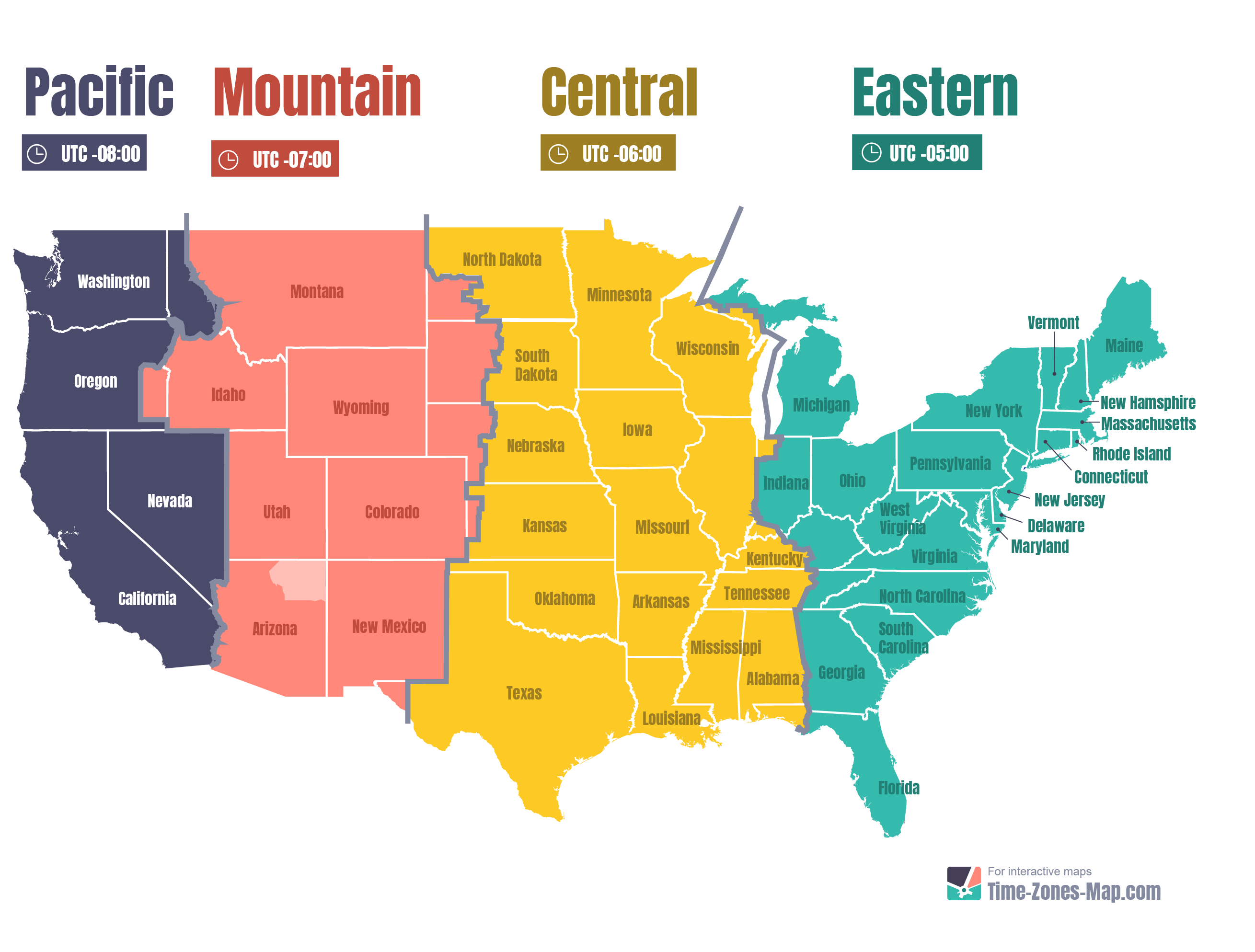
If you’ve ever woken up in a cold sweat in Newark or Trenton wondering if you're late for a meeting in Manhattan, you're not alone. Time is weird here. Officially, the answer to what is New Jersey's time zone is simple: the Garden State sits squarely in the Eastern Time Zone.
But "simple" is a bit of a stretch when you realize that depending on the month, New Jersey is either running on Eastern Standard Time (EST) or Eastern Daylight Time (EDT). It’s a rhythmic, twice-a-year dance that basically everyone in the state loves to complain about.
Honestly, it's more than just moving a little hand on a clock. It's about how the sun hits the Jersey Shore and how millions of commuters sync their watches with New York and Philly.
The Basics: EST vs. EDT in the Garden State
Right now, New Jersey follows the same rules as its neighbors. For most of the year, we are four hours behind Coordinated Universal Time (UTC-4). That’s the "Daylight" part. When the winter chill really sets in and we "fall back," we shift to UTC-5.
Why the distinction matters
- Eastern Standard Time (EST): This is the "natural" time. It’s UTC-5. We use this from the first Sunday in November until the second Sunday in March.
- Eastern Daylight Time (EDT): This is the "summer" time. It’s UTC-4. This kicks in on the second Sunday in March and lasts through most of the year.
The IANA time zone identifier—which is just a fancy way computers track where we are—is actually America/New_York. Even though we have our own pride, our digital clocks basically think we're just an extension of the Big Apple.
The 2026 Schedule: Mark Your Calendars
You don't want to be the person who shows up to Sunday brunch an hour early (or late). In 2026, the transitions are already set in stone unless the federal government finally decides to lose their minds and change the law.
- March 8, 2026: At 2:00 AM, we "Spring Forward." You lose an hour of sleep. It hurts. But suddenly, the sun stays out later while you're grabbing Taylor Ham (or pork roll, let's not fight) after work.
- November 1, 2026: At 2:00 AM, we "Fall Back." You get that extra hour of sleep. The downside? It's pitch black by 4:30 PM, and everyone feels a little bit sadder.
The Fight to Kill the Clock Switch
There is a real movement in Trenton to stop this madness. New Jersey lawmakers have been eyeing a permanent switch for a while. Specifically, Senate Bill S-1510 has been making the rounds. The goal? Make Eastern Daylight Time permanent.
The logic is pretty sound. Studies—and common sense—suggest that shifting our internal biological clocks twice a year is kind of a disaster. We see spikes in heart attacks, more car accidents on the Garden State Parkway because people are groggy, and a general dip in productivity.
Senator Shirley Turner has been a big voice on this. The idea is that more evening light means safer streets and more people spending money at local businesses. But there's a catch. Even if Governor Murphy signs a bill tomorrow, New Jersey can't just go rogue. Under the Uniform Time Act of 1966, states can opt out of Daylight Saving (like Arizona and Hawaii), but they aren't allowed to stay on it year-round without a literal Act of Congress.
So, for now, we wait on Washington.
Commuting Across the "Invisible Line"
New Jersey is the most densely populated state, and a huge chunk of that population lives for the commute. If you're one of the 400,000+ people crossing into New York City, or heading over the bridge to Philadelphia, the time zone is your lifeblood.
The "Tri-State" area functions like one giant organism. Because New York, Pennsylvania, and Delaware all follow the same Eastern Time rules, our lives stay synchronized. Imagine the absolute chaos if Jersey City was an hour ahead of Manhattan. The PATH trains would be a nightmare. The Port Authority would basically collapse.
Actually, that’s one of the main reasons New Jersey is hesitant to jump the gun on permanent time changes unless our neighbors do the same. We are tethered to the regional economy.
How to Handle the "Time Jump" Like a Pro
If you're living in New Jersey, you've gotta be prepared for the shifts. It's not just about the clock on the microwave that you'll probably never fix.
- Check your "dumb" devices: Your iPhone and Tesla will update themselves. Your stove, your old wall clock, and your car's dashboard from 2012 will not.
- The "Monday Effect": The Monday after the spring forward is statistically one of the most dangerous days to be on the road. Take it slow on the Turnpike.
- Sunset chasers: If you’re heading to Cape May or Asbury Park, remember that "Eastern Time" feels very different in July versus January. That 8:30 PM sunset in the summer is the reason we live here.
Basically, New Jersey's time zone is about more than just numbers on a screen; it's the rhythm of the East Coast. We’re in sync with the financial markets of Wall Street and the political pulse of D.C.
Actionable Next Steps
- Sync your analog life: Set a reminder for March 8, 2026, to manually update any non-smart appliances.
- Monitor the Legislation: Keep an eye on the "Sunshine Protection Act" at the federal level. If that passes, New Jersey's S-1510 will likely trigger, and we’ll never have to "fall back" again.
- Adjust your sleep early: Three days before the spring switch, start going to bed 15 minutes earlier each night to minimize the "time zone hangover."