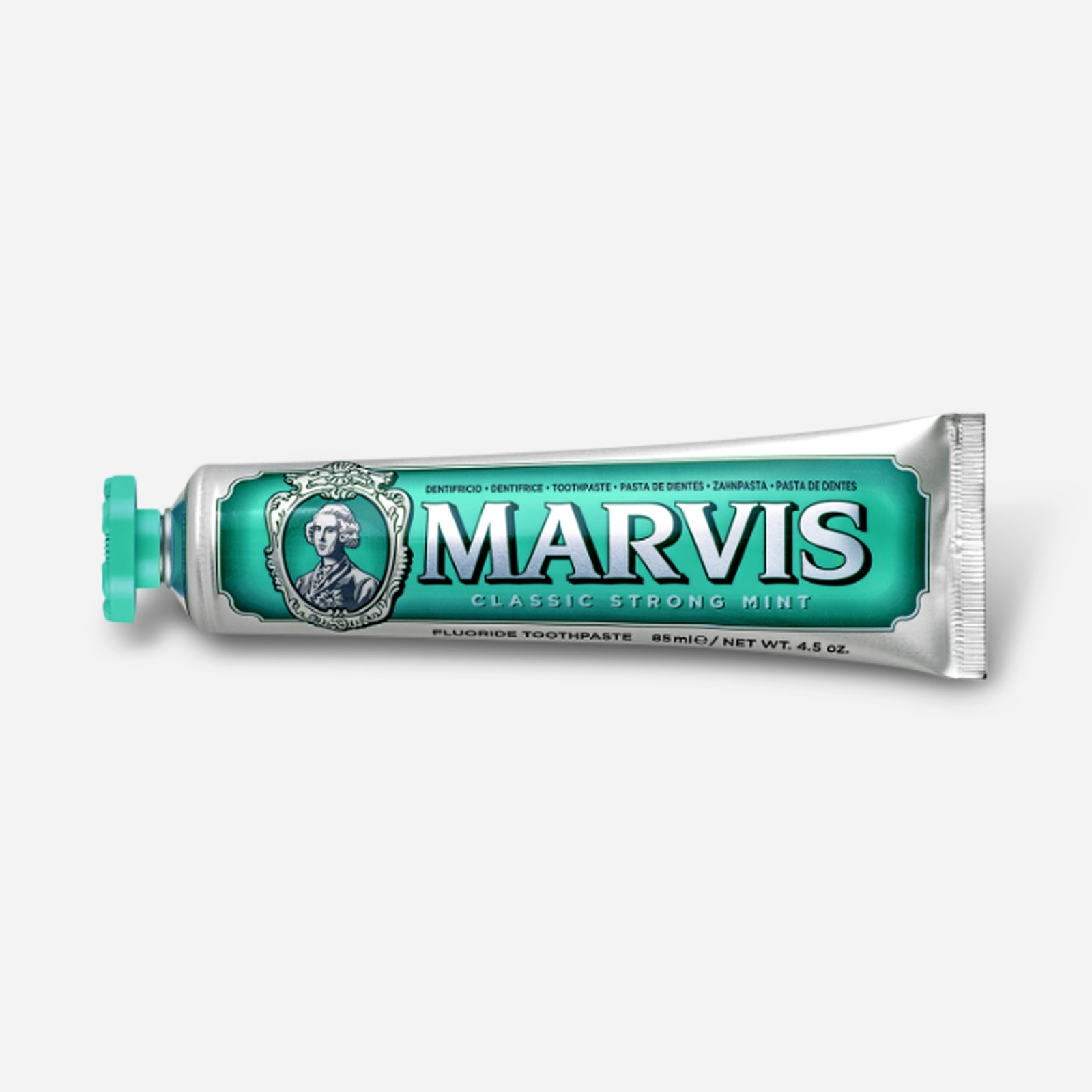
You’ve seen the tubes. They look like something plucked from a 1920s Florentine apothecary or the vanity of a mid-century movie star. Marvis toothpaste isn't just dental hygiene; it’s a status symbol that sits on your bathroom sink like a piece of art. But if you’re looking at your current tube of drugstore paste and wondering if switching to a $10-to-$15 Italian import will actually change your smile, you're asking the right question. People search for marvis toothpaste before and after results because they want to know if the aesthetic matches the efficacy.
Let’s be real. Most of us are used to the bright blue gels or chalky white pastes that taste like "Extreme Blast Mint." Marvis is a different beast entirely. It’s thick. It’s rich. It’s remarkably dense.
What to Expect From Marvis Toothpaste Before and After a Month of Use
If you’re expecting a Hollywood-level chemical transformation where your teeth jump five shades whiter in a week, you might be disappointed. Marvis doesn’t play that game. Unlike many American brands that rely heavily on hydrogen peroxide or high-abrasion silica to scrub away stains, Marvis focuses on a traditional, alum-based formula.
The immediate "after" isn't necessarily a change in color, but a change in texture. Honestly, the first thing people notice is how their teeth feel. The "tongue test" after brushing with Marvis reveals a surface that feels polished, almost like you just walked out of a professional dental cleaning. This is because the paste is formulated to be low-foaming. Without the heavy surfactants like Sodium Lauryl Sulfate (SLS) found in most commercial brands, you aren't fighting a mouth full of bubbles. You’re actually brushing.
The Whitening Mint Reality Check
Marvis Whitening Mint is their bestseller for a reason. It promises to lift stains from coffee, tea, and smoking. However, the "before and after" here is subtle. It’s a mechanical whitening, not a chemical one. By using titanium dioxide and hydrated silica, it gently buffs away surface debris. If you have deep, intrinsic staining—the kind that lives inside the enamel—Marvis won't fix that.
But for the surface-level dullness? It works.
After three weeks, most users report that their teeth look "cleaner" rather than "bleached." There’s a natural luster that returns. It’s the difference between a matte finish and a gloss finish.
The Fluoride Debate: A Critical Factor in Your Results
One of the biggest misconceptions about Marvis is that it's "all-natural." It’s not. But for a long time, the biggest gripe from dentists was the lack of fluoride.
Historically, Marvis was fluoride-free. This meant that while your teeth might look great in a marvis toothpaste before and after photo, the structural integrity of your enamel wasn't getting that remineralization boost. If you are prone to cavities, using the old-school fluoride-free versions was a risky move.
The good news? Marvis listened. Most of the tubes you find now at retailers like Sephora, Nordstrom, or Amazon do contain sodium fluoride ($0.20%$). This is crucial. Without fluoride, you’re basically just polishing a car without putting a clear coat on it. If you’re shopping for results, check the back of the box. Ensure the "active ingredients" list includes fluoride unless you specifically have a medical reason to avoid it. Your long-term "after" results depend on it.
Flavor as a Sensory Experience (And Why It Matters for Consistency)
Why do people spend $12 on toothpaste? It's the flavors.
- Jasmin Mint: It sounds weird, but it’s remarkably sophisticated.
- Ginger Mint: Spicy and warming—great for winter mornings.
- Amarelli Licorice: Created with the legendary Italian licorice firm.
- Anise Mint: If you like Ouzo or Sambuca, this is your holy grail.
You might think flavor doesn't affect the "before and after," but it does—behaviorally. Most people don't brush for the full two minutes. We get bored. We hate the sting of cheap menthol. Marvis makes the process enjoyable. You end up brushing longer because it feels like a treat, not a chore. That extra 45 seconds of mechanical scrubbing is where the real results happen.
The Gums and the SLS Factor
If you struggle with canker sores or gum sensitivity, the Marvis "after" might be a total relief. Many mass-market toothpastes use high concentrations of SLS to create foam. For some people, SLS is a major irritant that sloughs off the delicate skin inside the mouth.
Marvis is much gentler on the soft tissue.
Within a week of switching, people with sensitive mouths often notice a significant reduction in irritation. No more "skin peeling" inside the cheeks. No more stinging sensations. This isn't just about how the teeth look; it's about how the mouth functions as an ecosystem.
Is the Price Tag Justified by the Results?
Let’s talk money. A standard tube of Marvis is about 3.7 ounces. It’s smaller than your jumbo-sized grocery store tube and costs four times as much.
Is it worth it?
If you view toothpaste as a utilitarian soap for your mouth, then no. You can get the same cavity protection from a $3 tube of generic paste. But Marvis is for the person who values the ritual. It’s about the heavy metal-style tube that looks great on a marble countertop. It’s about the fact that the paste is so thick it doesn't fall off your brush.
What the Experts Say
Dentists generally agree that the best toothpaste is the one you will actually use. Dr. Mark Burhenne, a well-known voice in functional dentistry, often emphasizes that the "mechanical action" of brushing is more important than the brand of paste. However, he also notes that ingredients matter. Marvis uses Xylitol, a natural sugar alcohol that helps neutralize pH levels in the mouth and starves cavity-causing bacteria. That’s a huge win for your dental health "after" profile.
How to Get the Best Results
If you want to see a genuine difference in your marvis toothpaste before and after journey, don't just swap the paste. You need a system.
- Use a Dry Brush: Don't soak your toothbrush before putting the paste on. Marvis is dense; let it work in its concentrated form.
- The Two-Minute Rule: Set a timer. The flavors are good enough that you can actually last the full duration.
- Spit, Don't Rinse: This is the golden rule of modern dentistry. After brushing, spit out the excess paste but don't rinse your mouth with water. Let the fluoride and xylitol sit on your enamel.
- Pair with Floss: No toothpaste can clean the 35% of tooth surfaces that touch each other.
Final Verdict on the Marvis Transformation
The "before" is a mundane, minty-sting routine with a plastic tube that gets crinkly and gross. The "after" is a more intentional, luxurious experience that leaves your teeth feeling exceptionally smooth and your breath smelling like something other than a peppermint patty.
You won't get professional bleaching results.
You will, however, get a cleaner-feeling mouth, better gum health if you're sensitive to SLS, and a bathroom aesthetic that makes you feel like you live in a boutique hotel.
Actionable Next Steps
- Check your current sensitivity: If you have chronic canker sores, try the Marvis "Classic Strong Mint" or "Whitening Mint" to see if the lower-foam formula helps.
- Verify the version: Look for the 2026-compliant packaging that explicitly lists fluoride if you are concerned about cavities.
- Start with a Travel Size: Don't commit $15 to Ginger Mint if you aren't sure. Grab the 25ml tube first.
- Monitor your enamel: If you have very thin enamel, consult your dentist before switching to the Whitening Mint, as its abrasive level (RDA) is higher than their regular flavors.