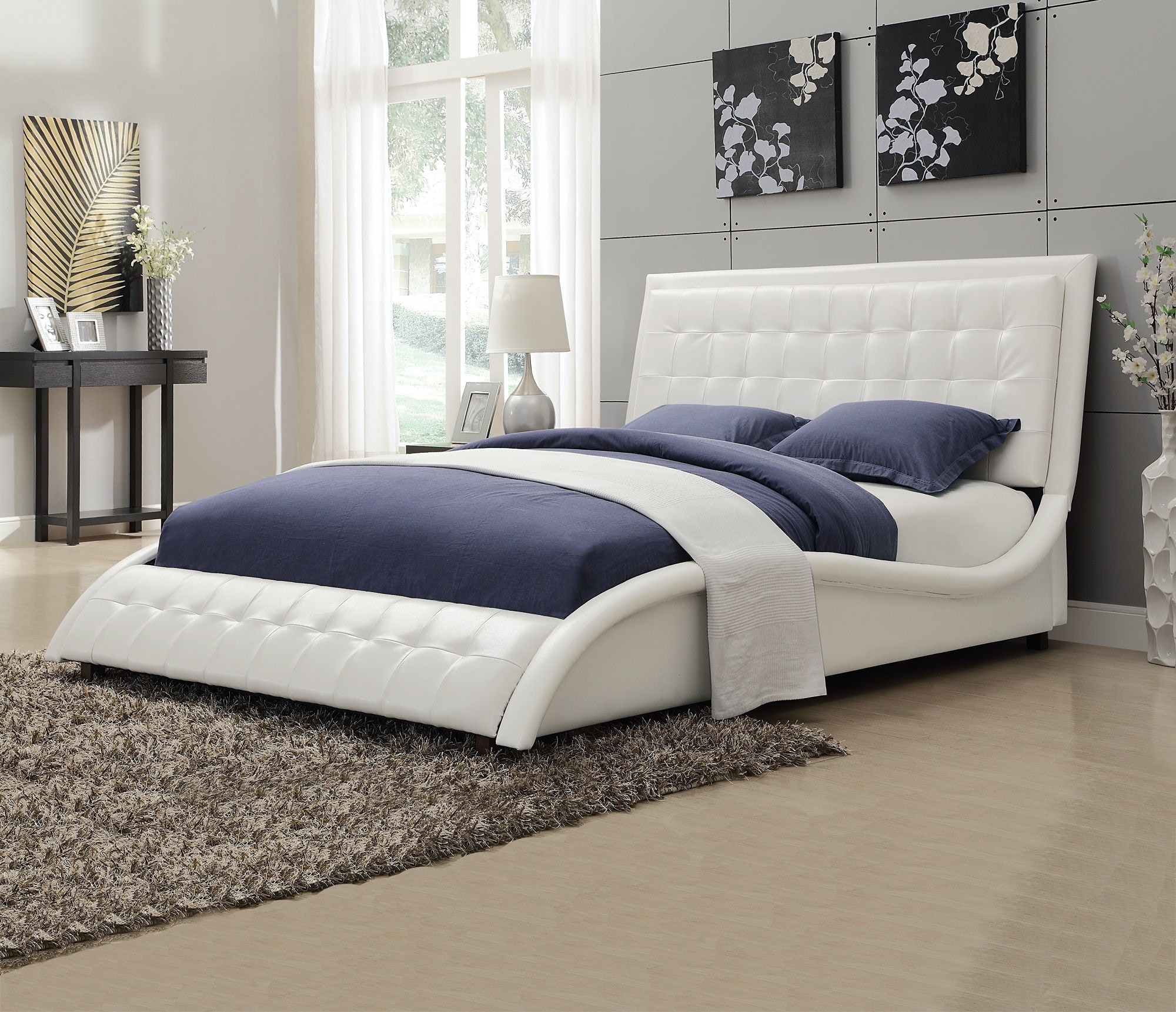
You've probably seen those sleek, ultra-modern bedrooms on Instagram or in high-end design catalogs where the bed seems to almost hover just inches off the floor. It looks cool. Minimalist. But there's a practical side to the low profile bed frame queen that most people don't realize until they actually try to move a massive, traditional box spring up a narrow flight of stairs.
Honestly, the "low profile" movement isn't just a trend for people who like Scandinavian design. It’s a functional shift.
Standard bed frames usually sit about 12 to 16 inches off the ground. When you add a 10-inch box spring and a 12-inch mattress, you’re basically climbing a mountain just to take a nap. A low profile frame drops that base height down to anywhere from 5 to 9 inches. It changes the entire scale of the room. Suddenly, your ceilings look ten feet high even if they aren't.
The Real Physics of Why Lower is Often Better
Space matters. If you’re living in a studio apartment or a house with those awkward slanted attic ceilings, a tall bed is your enemy. It eats the visual volume of the room. A low profile bed frame queen creates what designers call "negative space." By keeping the bulk of the furniture close to the floor, the air above it stays open. This makes a cramped 12x12 bedroom feel like a suite.
There's also the stability factor.
Lower centers of gravity mean less wobbling. If you’ve ever had a cheap, tall metal frame that shimmies every time you roll over, you know the struggle. Most low-slung frames, like the Japanese-inspired platform styles or the mid-century modern wooden bases, use wider slats and integrated legs. They are solid. They don't creak as much because there’s less leverage for the frame to move against the floor.
But let’s be real for a second: if you have bad knees or a recurring back injury, this might not be for you. Getting out of a low bed requires a bit more core strength and a "squat" motion. It’s worth considering if you want to struggle with that at 6:00 AM.
What Actually Defines "Low Profile"?
Usually, we're talking about a total height of less than 10 inches from the floor to where the mattress sits.
Some go even lower.
The "Tatami" style frames often sit just 2 or 3 inches off the ground. These are basically just a finished perimeter to keep the mattress from sliding around on the hardwood. Brands like Thuma or Floyd have popularized the "platform" look which removes the need for a box spring entirely. That’s the big secret: you save about $200 to $300 right off the bat because you aren't buying a secondary foundation. You just put the mattress directly on the slats.
Material Matters: Wood vs. Metal vs. Upholstered
Don't just buy the first thing you see on a flash sale site. The material dictates how long that low profile bed frame queen is going to last before it starts screaming every time you move.
Solid Wood is the gold standard.
Acacia, rubberwood, or walnut frames are heavy. That’s good. Weight equals stays-in-place-ness. Look for "joined" corners rather than just screws. If it uses "Japanese Joinery" (like the Thuma Pilot), it means the pieces lock together like a puzzle. No tools. No squeaking. It’s brilliant, frankly.
Metal frames are the budget-friendly go-to.
They are easy to ship and easy to assemble. However, metal-on-metal contact points are notorious for noise. If you go metal, look for frames that include foam padding tape to place between the slats and the frame. Brands like Zinus or Amazon Basics do this well enough for a guest room, but for a primary bed, the thin metal legs can sometimes scratch up your floor if you don't use felt pads.
Upholstered frames add a bit of softness.
If you’re a "shins-first" kind of person who constantly walks into the corners of the bed in the dark, upholstery is a lifesaver. It’s basically a padded bumper for your bed. The downside? Dust. Fabric attracts it. If you have allergies, a low upholstered frame is a giant Swiffer sitting on your floor. You'll need to vacuum the base of the bed as often as you vacuum the rug.
The Box Spring Myth
You do not need a box spring for a low profile platform frame. In fact, if you put a box spring on a low profile frame, you've just made a regular-height bed and defeated the whole purpose.
Modern mattresses—especially memory foam, hybrid, and latex—need a flat, rigid surface. Most low profile frames use wooden slats spaced about 2 to 3 inches apart. This provides the support the mattress needs while allowing air to circulate. If you trap a mattress on a solid flat board without airflow, you can actually get mold growth underneath. Not fun. Stick to slats.
How to Style a Low Room Without It Looking Like a Dorm
The biggest fear people have is that a low bed looks "temporary" or like they just threw a mattress on the floor because they couldn't afford furniture.
To avoid the "college grad" aesthetic, you have to play with layers.
- Over-sized Bedding: Buy a King-sized duvet for your Queen bed. Let it drape. If the duvet hits the floor, it creates a luxurious, "cloud-like" effect that masks the frame.
- The Headboard Rule: A low profile bed doesn't necessarily mean no headboard. An extra-wide, low-slung headboard that extends past the sides of the mattress makes the bed look like a custom architectural piece.
- Low-Profile Nightstands: This is the mistake everyone makes. If your bed is 8 inches off the floor and your nightstand is a standard 24 inches, you’re going to be reaching up to hit your alarm. It looks weird. You need nightstands that are roughly the same height as the top of your mattress.
Think about lighting, too. Sconces mounted lower on the wall or floor lamps with a downward glow complement the low center of gravity. It keeps the "vibe" consistent.
Real World Durability: The Weight Limit Conversation
Check the static weight capacity. A lot of these minimalist frames look airy and light, but they need to support the mattress (which can be 100+ lbs) plus two adults.
A high-quality low profile bed frame queen should be rated for at least 600 to 800 pounds. Some of the cheaper reinforced steel frames go up to 1,500 pounds. If the manufacturer doesn't list a weight limit, move on. It’s likely made of particle board or thin "matchstick" slats that will snap the first time someone jumps on the bed.
Also, look at the center support leg. In a Queen size, you must have a center rail with at least one or two legs touching the floor in the middle of the span. Without that, the mattress will sag in the middle, and you’ll wake up with a backache that no amount of coffee can fix.
Making the Final Call
Is a low profile bed frame queen right for you? It depends on your room's DNA.
If you have huge, sprawling ceilings and a massive master bedroom, a low bed might get "lost" in the space, making the room feel empty and cold. In those cases, you need a canopy or a very tall headboard to balance the scale.
But if you’re in an urban apartment, a mid-century home, or a space where you want to emphasize a clean, Zen-like atmosphere, it’s a game-changer. It forces you to declutter. You can't really hide a bunch of plastic bins under a 5-inch frame (unless you get very specific under-bed storage drawers), which honestly, might be the kick in the pants you need to get organized.
Actionable Next Steps
- Measure your mattress height: If your mattress is already 14-16 inches thick (a "pillow-top" monster), even a low profile frame will result in a standard sitting height. If you want the "low look," you might need a thinner 8-10 inch mattress.
- Check your floor type: Low profile frames often have more contact points with the floor. If you have soft hardwood, buy a pack of heavy-duty felt pads before the bed arrives.
- Evaluate your nightstands: If you’re switching from a tall bed to a low one, your current nightstands will likely be too tall. Budget for new, lower side tables or consider a frame with "floating" nightstands built-in.
- Test the "Get Up" test: Go to a furniture store and sit on a low display bed. See how it feels to stand up from that height. Your knees will tell you everything you need to know within five seconds.
Choosing a bed frame is usually an afterthought, but it's the foundation of your sleep. Going low isn't just about looks; it's about changing the way the room breathes. Take the measurements, check the slat spacing, and stop overpaying for box springs you don't actually need.