You’re sitting in an English 101 class or maybe just settling a bet with a friend who thinks they’re a linguistic genius. The question pops up: is she a noun? It sounds like a "yes or no" type of deal. Most people would just shrug and say, "Yeah, sure, it refers to a person, right?" But if you ask a linguist or a hardcore grammarian, they’re going to give you that look. You know the one. The "it’s more complicated than that" look.
The short answer is no. Technically. She is not a noun.
It’s a pronoun. I know, I know—it feels like splitting hairs. But in the world of syntax and parts of speech, that distinction is the difference between a functional sentence and a word salad. Let’s get into the weeds of why this matters and how English actually functions when we talk about people.
The Real Deal: Why "She" Isn't a Noun
If you look at the broad category of "substantives," nouns and pronouns live in the same neighborhood. They both do the heavy lifting. They act as subjects. They act as objects. But a noun is a naming word. A noun is Sarah, the doctor, or the woman. These words have what linguists call "lexical content." They tell you exactly who or what you’re dealing with without needing a map.
She is different. It’s a placeholder. It’s a grammatical shortcut.
Think about it this way. If I walk up to a total stranger and say, "She is late," they have no idea who I’m talking about. The word has no meaning without a context—what we call an antecedent. A noun like "The bus" has a physical reality you can point to. She is a ghost word that takes the shape of whatever noun came before it.
The Pronoun Power Trip
Grammatically, she is a third-person, singular, feminine, subjective case pronoun. That’s a mouthful. Basically, it means it’s the word you use when you’re talking about a female or feminine-identifying entity who is the one doing the action in the sentence.
- The Subjective Case: You use "she" when she’s the boss of the verb. "She ran." You don't say "Her ran." That's the case system at work.
- The Gender Variable: English is weirdly sparse with gender. Unlike Spanish or French, where even a toaster has a gender, English reserves "she" mostly for humans, beloved pets, and—for some reason—ships and countries.
Where the Confusion Starts
Why do so many people search for is she a noun anyway? It usually stems from how we’re taught in elementary school. We learn that a noun is a person, place, or thing. Since "she" represents a person, the logic seems airtight. But grammar isn't just about what a word represents; it's about how the word behaves in a sentence.
Nouns can take articles. You can say "The woman." You can’t say "The she."
Nouns can be pluralized. You can have "Two women." You don't have "Two shes" (unless you're being very poetic or weirdly experimental with your prose).
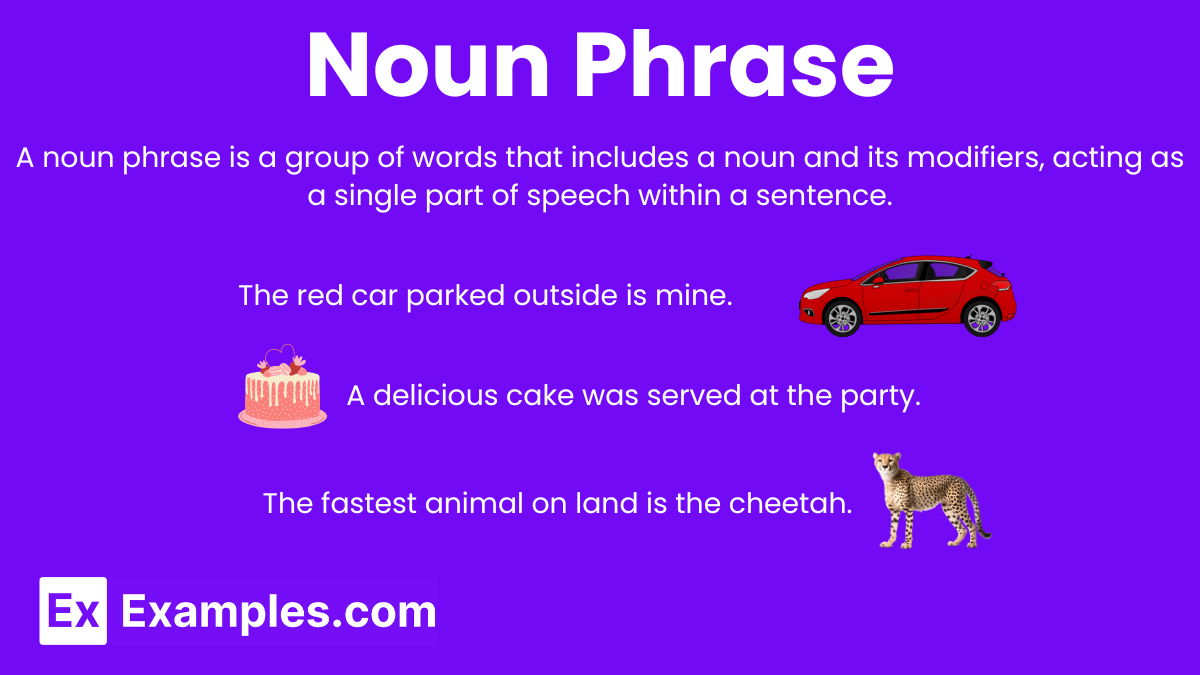
Linguist Noam Chomsky might point out that our internal "universal grammar" handles these distinctions effortlessly, even if we can't name the rules. We instinctively know that "she" functions as a pro-form. It stands in for a whole noun phrase. If the noun phrase is "The girl with the dragon tattoo," the word she replaces that entire chunk of text. It's an efficiency tool. Without it, our stories would be repetitive and exhausting.
The Evolution of "She"
Language isn't static. It’s a messy, living thing. Historically, the word "she" hasn't always been there. In Old English, the word was hēo. Over time, through a series of phonetic shifts and probably a lot of confusion with the masculine hē, we landed on "she" around the 12th century.
Some researchers, like those featured in The Cambridge History of the English Language, suggest that "she" might have evolved from the demonstrative "seo" (meaning "that one"). If that’s true, is she a noun becomes even more clearly a "no," because it started its life more as a "pointer" word than a "naming" word.
Modern Usage and the Gender Neutrality Shift
We can't talk about feminine pronouns in 2026 without acknowledging how the landscape has shifted. For a long time, "she" was strictly binary. Today, its usage is broader, often used by non-binary individuals who feel a connection to femininity, or in the "she/they" configuration.
This doesn't change the part of speech—it’s still a pronoun—but it does change the "lexical scope." We are seeing "she" used more fluidly. However, from a strictly SEO and grammatical standpoint, the mechanics remain the same. It’s a closed-class word. You can’t just invent a new noun and expect everyone to know it, but pronouns are a very small, exclusive club that rarely accepts new members.
Practical Examples of the Difference
Let’s look at some sentences to see the mechanics in action. This helps solidify why the "noun" label doesn't stick.
- Noun: The architect finished the blueprints. (Specific, naming, takes an article).
- Pronoun: She finished them. (General, replacing, cannot take an article).
If you try to treat "she" like a noun, the sentence breaks. "The she finished the blueprints." It sounds like a bad sci-fi novel.
Wait. There is one tiny exception.
Sometimes, we "nominalize" pronouns. This is when we force a pronoun to act like a noun. If a person says, "Is the baby a he or a she?" in that specific, narrow context, she is acting as a noun. It’s naming a category. But this is a secondary use. It’s a linguistic trick, not the word’s primary identity. It’s like using a screwdriver to pry open a paint can; it works, but the tool is still technically a screwdriver.
Is This Just Pedantry?
You might think, "Who cares? Noun, pronoun, it's all the same."
Actually, it matters for things like AI processing and machine learning. When developers at OpenAI or Google train models, the distinction between a noun and a pronoun is vital for "co-reference resolution." This is the tech that allows a computer to understand that in the sentences "Alice went to the store. She bought milk," the "she" refers to Alice. If the AI thought is she a noun, it might struggle to link the two entities correctly.
For students of English as a Second Language (ESL), this distinction is a major hurdle. Many languages don't have gendered pronouns, or they use them differently. Understanding that "she" is a specialized tool—a pronoun—helps learners realize they can't just drop it into a sentence without establishing who "she" is first.
Actionable Takeaways for Your Writing
If you're writing or editing, don't get hung up on the labels, but do respect the rules.
- Clear Antecedents: Never start a paragraph with "She" unless the noun it replaces was mentioned very recently. Readers hate "floating pronouns."
- Variety: Don't lean too hard on pronouns. If every sentence starts with "She," your writing feels thin. Mix in proper nouns and descriptive noun phrases to give the text meat.
- Context is King: Remember that "she" carries a lot of social weight. Be intentional with its use, especially in professional or sensitive contexts.
Basically, the next time someone asks you is she a noun, you can confidently tell them no. It’s a pronoun. It’s a placeholder. It’s a linguistic ghost. It does the work of a noun without the burden of a permanent name.
To keep your grammar sharp, practice identifying the "antecedent" in everything you read. If you find a "she" and can't immediately find the noun it's replacing, that's a sign of a weak sentence. Clean it up by reintroducing the actual noun. This makes your communication clearer and prevents the "who are we talking about?" confusion that plagues messy drafts.