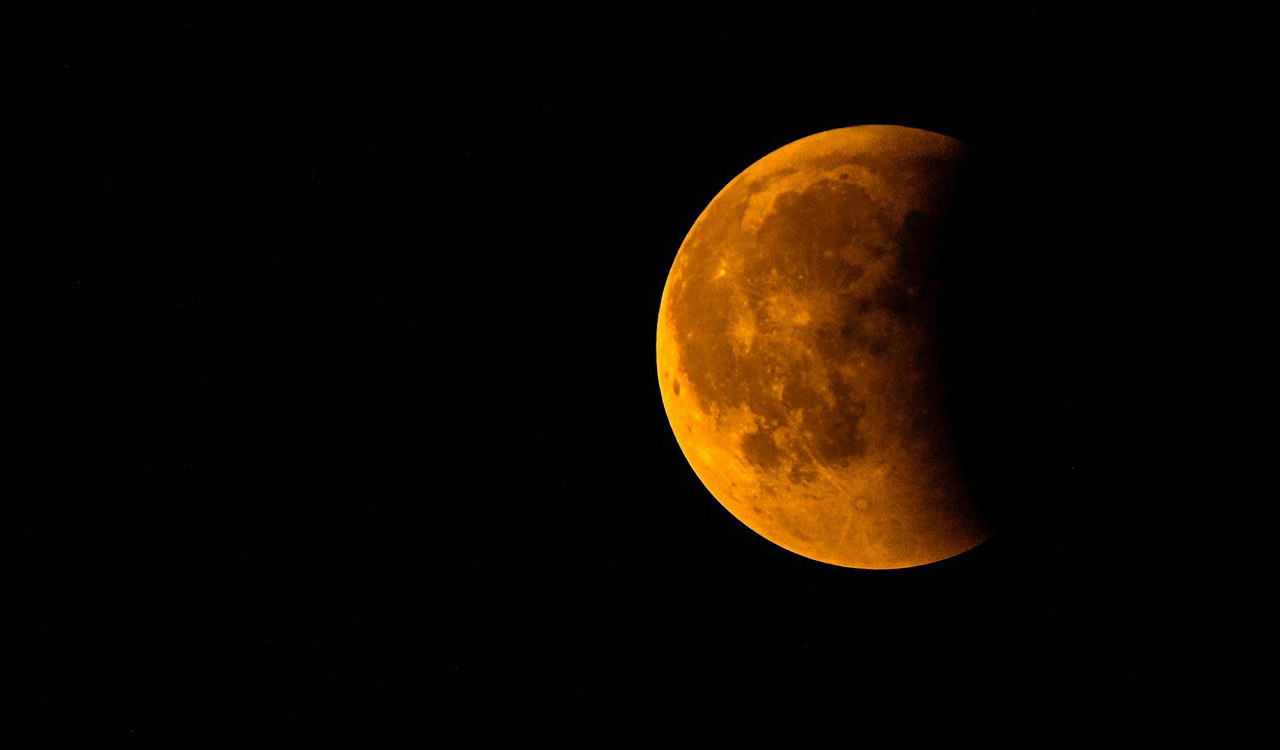
Honestly, you've probably seen the headlines or the TikToks buzzing about a "Blood Moon" and wondered if you should be setting your alarm for 3:00 AM. It’s a fair question. The short answer? No, it isn't a lunar eclipse today, January 14, 2026.
The moon you're looking at tonight is actually a waning crescent. It's only about 16% illuminated. If you're an early bird, you might catch it hanging near the bright star Antares in the southeastern sky just before sunrise, but it won't be turning red or disappearing into Earth's shadow.
Why everyone thinks there's an eclipse
We live in an era of "eclipse fever." Ever since the 2024 total solar eclipse crossed North America, people have been hyper-vigilant about the sky. Combine that with some confusing social media algorithms that recycle old videos, and you get a lot of people asking "is it lunar eclipse today" on perfectly normal Tuesdays.
Actually, the next time the moon really puts on a show is only a few weeks away. We are currently in a bit of a celestial "waiting room" before a massive year for astronomy kicks off.
The Real 2026 Eclipse Schedule
If you’re looking to mark your calendar for the real deal, 2026 is actually a "golden year" for skywatchers. We have two lunar eclipses and two solar eclipses on the way. Here is the actual breakdown of what's coming up:
- March 3, 2026: The Total Lunar Eclipse. This is the big one. It’s a "Blood Moon" where the moon will fully enter Earth's darkest shadow (the umbra) and turn a deep, copper red.
- August 28, 2026: The Partial Lunar Eclipse. This one is "deep," meaning about 93% of the moon will be covered. It’ll look like a bite was taken out of it, and for those in the right spot, the bottom edge might still get that reddish glow.
What happens on March 3rd?
The March eclipse is going to be a global event, though your view depends entirely on where you’re standing. According to NASA's tracking data, the total phase—the part where the moon is completely red—will last about 58 minutes.
If you are in Western North America, Australia, or East Asia, you get the best seats in the house. In places like New York, the moon will actually be setting right as the eclipse reaches its peak, which creates a "Selenehelion"—a rare moment where you might see the eclipsed moon and the rising sun at the same time on opposite horizons. Basically, it’s a photographer's dream.
Breaking Down the "Blood Moon" Myth
You’ve heard the term. It sounds spooky, but the science is actually kinda beautiful. When the Earth blocks the sun, our atmosphere acts like a lens. It bends the sunlight and filters out the blue and violet light. Only the red wavelengths pass through, which then project onto the moon.
Think of it this way: a lunar eclipse is just the moon reflecting every single sunrise and sunset happening on Earth at that exact moment.
Why isn't there an eclipse every month?
If the moon orbits Earth every month, why don't we see this constantly? It’s because the moon’s orbit is tilted about 5 degrees relative to Earth's orbit around the sun.
Most of the time, the full moon passes just above or just below the Earth's shadow. It misses. It’s only when the "nodes"—the points where the orbits cross—line up with a full moon that we get the eclipse.
How to prepare for the March eclipse
Since it’s not happening today, you have plenty of time to get ready for the March 3rd event. Unlike solar eclipses, you don't need special glasses. You can stare at a lunar eclipse with your naked eyes for as long as you want.
- Check your local moonset time. For the March eclipse, timing is everything. If you’re on the East Coast of the US, the moon will be very low in the West. You’ll need a clear view of the horizon—no buildings or trees in the way.
- Grab binoculars. You don't need a high-end telescope, but a simple pair of binoculars will let you see the "crater crawl" as the shadow moves across the lunar surface.
- Watch the weather. Obviously, clouds are the enemy. Have a backup plan to watch a livestream if your local sky is gray.
Don't forget the "Ring of Fire"
While we are talking about eclipses, it's worth noting that February 17, 2026, features an annular solar eclipse. This is the "Ring of Fire" where the moon is too far from Earth to fully cover the sun. Unfortunately, this one is mostly for the penguins—it’s primarily visible over Antarctica and the southern oceans.
Actionable Steps for Skywatchers
Since there is no eclipse today, use this time to set yourself up for success later this year.
- Download a tracking app. Use something like SkySafari or Stellarium. These apps let you "time travel" to March 3, 2026, so you can see exactly where the moon will be in your specific backyard.
- Scope out a viewing spot. Find a park or a beach with a clear western horizon if you're in the Americas.
- Check your gear. If you plan on photographing the Blood Moon in March, you'll need a tripod. Long exposures of the moon are impossible to do handheld without it looking like a blurry smudge.
The moon might be just a regular crescent tonight, but the countdown to the total lunar eclipse in March is officially on.