Plumbing is scary. Honestly, there is something uniquely terrifying about the sound of rushing water when you’re halfway through a repair and realize you might have just stripped a thread or forgotten a gasket. For years, if you wanted to fix a pipe, you had to learn how to sweat copper with a propane torch or mess around with messy primers and cements for PVC. Then came the push-to-connect revolution. Specifically, SharkBite. If you’re wondering how to install a SharkBite fitting, you’re probably looking for a shortcut. That’s fine. Shortcuts are great, provided they don't lead to a mold problem in three years.
These little brass connectors are basically the LEGOs of the plumbing world. You just push them on, and—click—you’re done. At least, that's what the marketing says. In reality, while they are incredibly reliable, most "failures" reported by homeowners are actually just installation errors. It’s rarely the fitting that fails; it’s the person holding the pipe.
The Anatomy of the Push-Connect
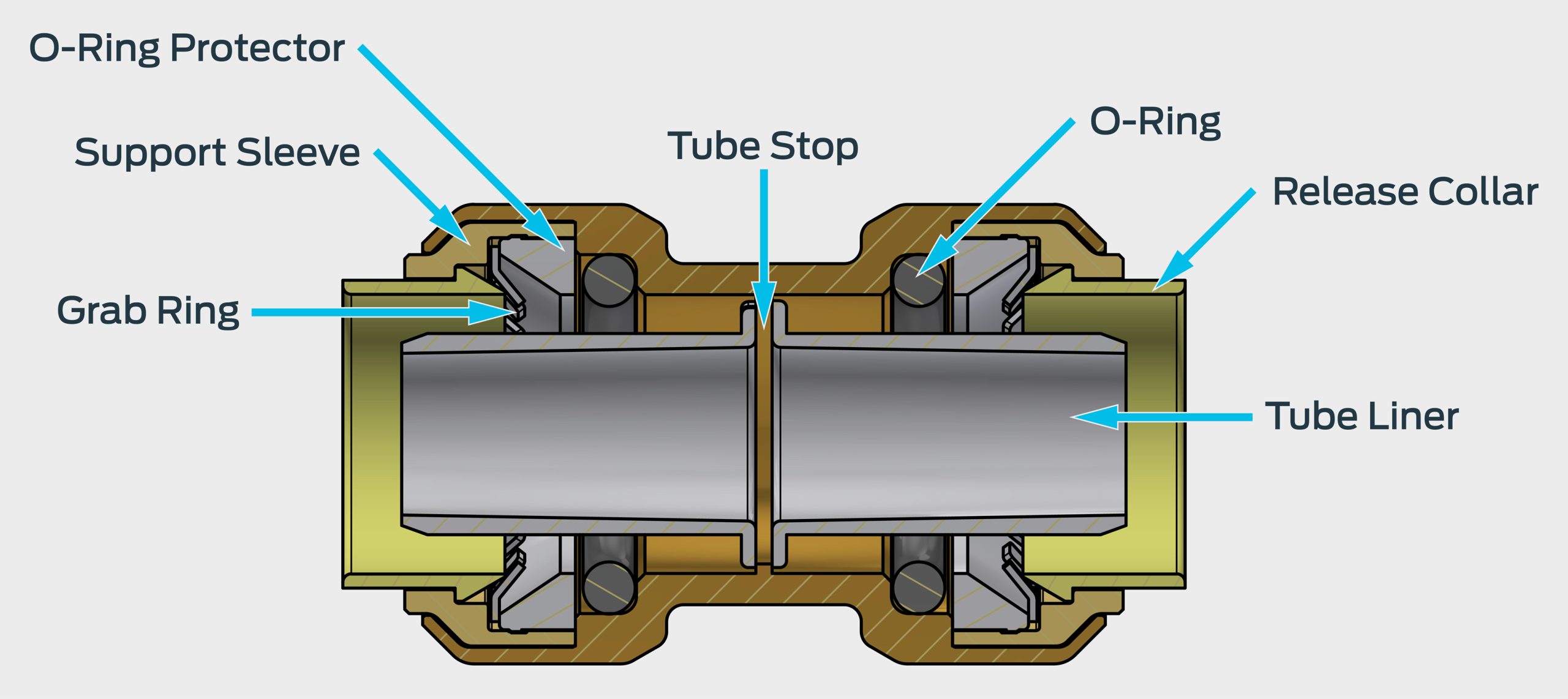
Before you shove a piece of PEX into a $15 piece of brass, you should probably know what’s happening inside that collar. It’s not magic. Inside a SharkBite fitting, there’s a stainless steel grab ring with tiny teeth. These teeth dig into the pipe to keep it from blowing off under pressure. Behind that, there’s an EPDM O-ring. That O-ring is the hero of the story. It creates the actual watertight seal.
If you nick that O-ring, you’re toast.
The fitting also contains a PEX stiffener—a little plastic sleeve. If you’re using copper or CPVC, some people say you should take it out. You don't actually have to. SharkBite’s own technical specs from RWC (Reliance Worldwide Corporation) state the stiffener can stay in for all approved pipe types. It’s just there to keep PEX from collapsing inward because PEX is flexible. Copper doesn’t need the help, but it doesn't hurt it either.
Prepping the Pipe is 90% of the Job
Most people fail because they are lazy with the prep work. If you cut your pipe with a hacksaw and leave a bunch of jagged metal burrs on the end, those burrs will act like tiny saws. When you slide the fitting on, those teeth will shred the O-ring. Boom. Leak.
Get a Clean Square Cut
You need a square cut. Not a "mostly straight" cut. If the pipe enters the fitting at an angle, the O-ring won't seat evenly. For PEX, use a proper scissor-style cutter. For copper, use a rotary tubing cutter. Don't even think about using a saw unless it’s a literal emergency and you have no other choice. Even then, you’ll spend ten minutes cleaning up the mess you made.
The Deburring Phase
This is the part everyone skips. You have to deburr the outside of the pipe. If you feel a sharp edge, it’s too sharp. Use a deburring tool—SharkBite makes a "Safe-Seal" tool that’s orange and plastic and costs about five bucks. It’s worth every penny. You spin it around the end of the pipe to smooth out the edges and remove any "flash" from the cutting process.
How to Install a SharkBite Fitting the Right Way
Now we get to the actual installation. First, mark your depth. This is the single biggest mistake DIYers make. They push the pipe in, it hits the grab ring, they feel some resistance, and they stop. They think it's seated. It isn't.
The pipe has to go past the grab ring and through the O-ring.
- Measure and Mark: Use a depth gauge or a ruler. For a standard 1/2-inch fitting, the insertion depth is roughly 15/16 of an inch. For 3/4-inch, it’s about 1-1/8 inches. Draw a line on the pipe with a permanent marker at that exact measurement.
- The Push: Shove the pipe into the fitting. You’ll feel a bit of resistance as it hits the grab ring. Keep going. You should hear or feel a "thunk" as it bottoms out.
- Check the Line: Your marker line should be flush against the plastic collar of the fitting. If there is a gap between your line and the fitting, you haven't pushed it in far enough. Push harder. Sometimes it takes a surprising amount of force, especially on larger 3/4-inch or 1-inch lines.
Can You Really Put These Behind a Wall?
This is the "hot take" of the plumbing world. If you ask an old-school plumber who’s been soldering copper since 1982, they’ll tell you that SharkBites are "temporary fixes" and putting one behind drywall is asking for a lawsuit.
However, the International Plumbing Code (IPC) and Uniform Plumbing Code (UPC) actually allow SharkBite Universal fittings to be used in concealed spaces. They are certified to ASSE 1061 standards. This means, legally and technically, they are permanent.
But—and this is a big "but"—you have to be honest with yourself. If you didn't deburr the pipe or mark your depth, that fitting is a ticking time bomb. I generally tell people: if you can access it (like under a sink or in a basement), go for it. If you're burying it behind a tiled shower wall? Maybe take the extra time to learn how to crimp PEX or sweat a joint. It’s about peace of mind.
Common Blunders and "Gotchas"
Let’s talk about the stuff that actually goes wrong in the field.
Paint and Gunk: If you’re tapping into an old copper line in a basement, it might be covered in 20 years of white latex paint. The O-ring cannot seal against paint. It needs a smooth, mirror-finish surface. You have to sand that pipe down to the bare, shiny metal before you even think about installing the fitting. Use emery cloth or fine-grit sandpaper.
The "Disconnected" Problem: SharkBites are removable. You use a little plastic disconnect clip or a set of tongs to press down on the collar, which releases the teeth. This is great for mistakes. But be careful—if you remove a fitting and then try to reuse it, inspect the O-ring. If you see a tear, throw the whole fitting away. A $15 loss is better than a $5,000 floor repair.
Compatibility Issues: They work on Copper, PEX, CPVC, PE-RT, and even HDPE. They do not work on old galvanized pipes or PEX-AL-PEX (the stuff with the aluminum layer). If you try to shove a SharkBite onto a galvanized nipple, you’re going to have a bad Saturday.
When to Walk Away
Sometimes, a push-to-connect isn't the answer. If the pipe is out of round—meaning it's more of an oval than a circle—the O-ring won't seal. This happens a lot with old copper that’s been frozen or squeezed too hard with pliers. If the pipe isn't a perfect circle, the SharkBite will leak. Period.
Also, watch out for "lateral load." If your pipes are pulling hard in one direction and the fitting is being forced to hold that tension, the O-ring can eventually deform. You want your pipes to be supported by hangers so the fitting isn't doing the structural work of holding up the plumbing system.
Actionable Steps for Your Project
If you’re standing in the plumbing aisle right now, here is exactly what you need to do to ensure this thing doesn't leak:
- Buy the Orange Tool: Don't try to "eye it." Buy the $5 SharkBite deburr and gauge tool. It has holes that show you exactly how deep the mark should be for every pipe size.
- Clean the Pipe Like Your Life Depends on It: Use a green Scotch-Brite pad or emery cloth. The pipe should be so clean you could eat off it. No burrs, no scratches, no paint.
- The "Twist" Technique: When you're pushing the fitting on, give it a slight twist. This helps the O-ring slide over the pipe end without catching or bunching up.
- Pressure Test Immediately: Don't close the wall or walk away as soon as the water is back on. Wipe the fitting bone dry with a paper towel. Wait ten minutes. Wipe it again. If the towel is even slightly damp, you have a problem. Usually, it just needs a harder push to seat fully.
- Check for Grounding: If you are replacing a large section of metal pipe with PEX and using SharkBites, you might be breaking the electrical ground of your house’s plumbing. Check if your electrical panel is grounded to your water lines. If it is, you may need to install a jumper wire around your repair to maintain that safety ground.
Plumbing doesn't have to be a nightmare of specialized tools and burnt fingers. The push-to-connect system is a legitimate, code-approved way to manage repairs, provided you respect the prep work. Mark your depth, clean your ends, and push until it clicks.