You’re standing in the kitchen, flour dusting your favorite apron, and the recipe suddenly demands a pound of sugar. You look at your measuring cups. You look at the bag. Then you realize the math isn't mathing.
How many cups equal pound measurements? It depends.
Honestly, the answer isn't a single number. If you’re measuring water, it’s two cups. If you’re measuring feathers, it’s a bathtub full. If it’s lead, it’s a thimble. Most home cooks get frustrated because they want a universal constant that doesn't exist in the world of volume versus weight.
The Weighty Truth About Volume
Volume is about space. Weight is about gravity. When you ask how many cups are in a pound, you are trying to bridge two different dimensions. It’s like asking how many minutes are in a mile.
Standard U.S. measuring cups hold 8 fluid ounces. But "fluid ounces" are not the same as "avoirdupois ounces" (weight). This is where the old saying "a pint's a pound the world around" comes from. A pint is 16 fluid ounces (two cups), and for water-based liquids, that weighs roughly 16 ounces (one pound).
But flour is sneaky.
Flour is fluffy. You can pack it down. You can sift it so it’s full of air. Depending on how you scoop it, a pound of all-purpose flour could be anywhere from 3.3 cups to nearly 4 cups. If you’re baking a delicate souffle or a precise sourdough, that discrepancy is the difference between a masterpiece and a doorstop. King Arthur Baking, one of the most respected authorities in the industry, specifies that their all-purpose flour weighs 120 grams per cup. Since a pound is approximately 453.59 grams, a quick calculation ($453.59 / 120$) tells us a pound of flour is roughly 3.78 cups.
Let's Talk Sugar and Fats
Sugar is heavier than flour because the granules are dense. They don't trap as much air.
For granulated white sugar, you’re looking at about 2.25 cups per pound. It’s consistent. It’s reliable. But then you hit brown sugar. Brown sugar is the rebel of the pantry. If you pack it tight—the way most recipes intend—you’ll get about 2 cups per pound. If it’s loose and crumbly because the bag stayed open too long and it’s turning into a brick, all bets are off.
Powdered sugar is even worse. It’s basically sugar dust. Un-sifted, a pound is about 3.5 cups. Sifted? It expands. You might end up with 4 or 4.5 cups. This is why professional pastry chefs like Dominique Ansel or Stella Parks (of BraveTart fame) almost exclusively use metric weights. It’s just safer.
Butter is the easiest one.
Two cups.
One pound of butter is exactly four sticks. Each stick is a half-cup. It’s the one thing in the kitchen that actually makes sense.
The Density Problem: Why Your Cake Is Dry
Imagine two jars. One is filled with golf balls. The other is filled with sand. Both jars are the same size (same volume). Which one weighs more? The sand, obviously. It fills the gaps.
In your kitchen, the "golf balls" are things like elbow macaroni or chopped walnuts. There is a lot of "dead space" in the cup. Because of this, it takes more cups to reach a pound.
- Chopped Walnuts: You'll need about 4 cups to hit 1 pound.
- Whole Almonds: Usually around 3 to 3.5 cups.
- Uncooked Rice: About 2.25 cups.
If you use a cup measurement for a pound of walnuts but the recipe writer used a different "scoop and level" technique, your ratios will be skewed. This is exactly why American home bakers often struggle with European recipes, which have used grams for decades.
A Quick Reference for Common Ingredients
Since you probably just want to get dinner on the table, here is the breakdown of how many cups equal pound for the stuff actually sitting in your cupboard right now.
The 2-Cup Club (Heavy Hitters)
Granulated sugar, butter, water, milk, and oils generally hover right around the 2-cup mark. These are dense materials. They don't have much air between the molecules. If you're in a rush and guessing, 2 cups is a "safe-ish" bet for liquids and heavy grains.
The 3-to-4-Cup Club (The Fluffies)
All-purpose flour, cake flour, and powdered sugar live here. You need more volume to get the same weight. If you're measuring oats, specifically rolled oats, you're looking at about 5 cups to get to a pound because they are so light and airy.
The Wildcards
Cheese is a nightmare to convert. A pound of block cheddar might look small, but once you grate it, it expands. Generally, 1 pound of shredded cheese is about 4 cups. But if you grate it on the fine holes of the grater versus the large holes? The volume changes. The weight stays the same.
Does the Type of Cup Matter?
Yes. It really does.
There is a massive difference between a liquid measuring cup (the glass one with the spout) and dry measuring cups (the nesting metal or plastic ones).
Liquid cups are designed to be filled to a line, leaving room at the top so you don't spill while moving it to the bowl. Dry cups are designed to be overfilled and leveled off with a flat edge. If you try to measure a pound of flour using a liquid measuring cup, you’ll almost certainly compress the flour or under-fill it. You’ll be off by 10% or more.
In a 2014 study by Cook’s Illustrated, they found that different people scooping the same flour could vary by as much as 20% in weight. That’s huge. It’s the difference between a chewy cookie and a crumbly mess.
Why Scale Is King
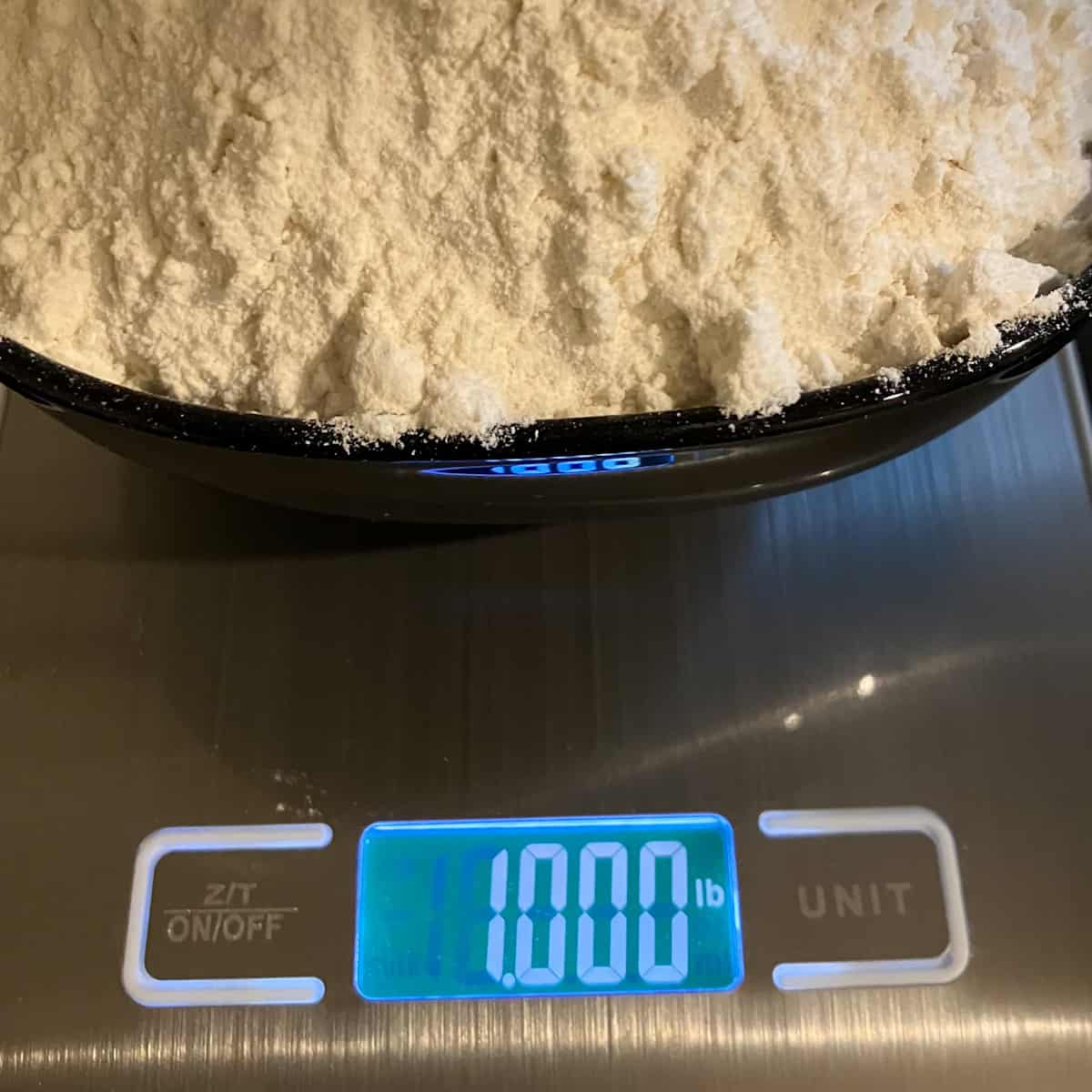
If you really want to stop worrying about how many cups equal pound, buy a digital scale. They cost twenty bucks. It’ll change your life.
When you use a scale, you don't care about the volume. You don't care if the flour is sifted, packed, or humid. 16 ounces is 16 ounces. 454 grams is 454 grams. It’s the only way to ensure that the loaf of bread you make today tastes exactly like the loaf you make next month.
Common Conversion Mistakes to Avoid
- Ignoring Humidity: Flour absorbs moisture from the air. On a rainy day in Seattle, a cup of flour will actually weigh more than the same cup of flour in the Arizona desert.
- The "Pack": Never pack flour unless the recipe specifically says "packed." Brown sugar is the only thing that usually wants the "packing" treatment.
- Sifting Timing: If a recipe says "1 pound flour, sifted," weigh it first. If it says "4 cups sifted flour," sift it into the cups. The order of operations changes the weight.
Actionable Steps for Your Kitchen
Stop guessing. If you are working on a recipe that requires precision—like macarons, bread, or souffles—use these specific conversions to keep your sanity:
- For All-Purpose Flour: Use 3.75 cups per pound.
- For Granulated Sugar: Use 2.25 cups per pound.
- For Brown Sugar (Packed): Use 2 cups per pound.
- For Confectioners' Sugar: Use 3.5 cups per pound (unsifted).
- For Butter: Use 2 cups (4 sticks).
- For Rice (Long Grain): Use 2.25 cups per pound.
The next time you’re halfway through a recipe and realize your scale is dead, use these numbers as your North Star. But seriously, go buy some extra AAA batteries for that scale. Accuracy is the secret ingredient that separate "okay" cooks from "great" ones.
Start by weighing your most used ingredients once. Write the weight on the lid of the container with a Sharpie. "1 Cup = 125g." You've just personalized your kitchen for your specific brand of flour and your specific scooping style. That is how you master the art of the conversion.