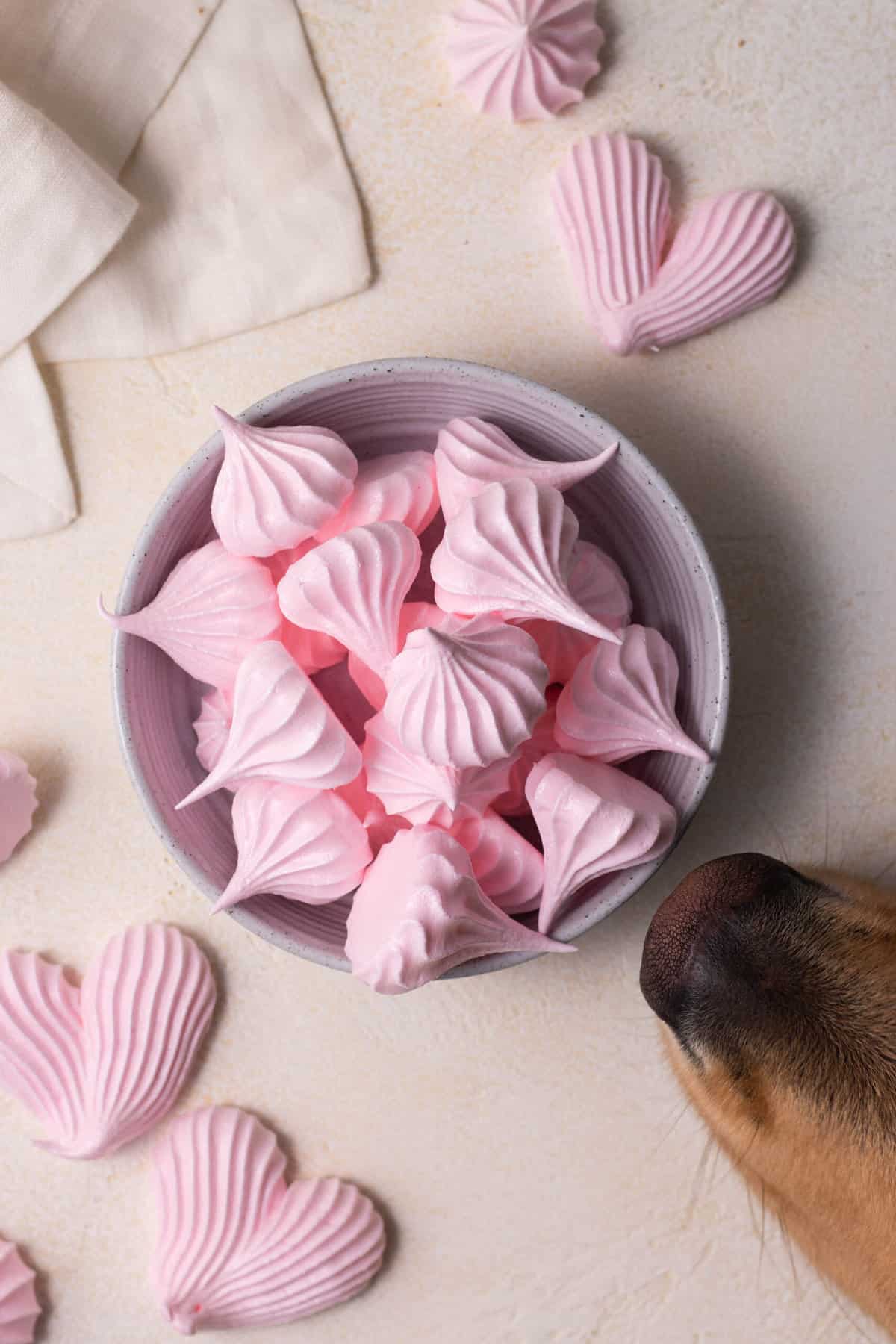
You're standing in your kitchen, staring at a bowl of transparent goo, wondering: how do i make meringue that actually looks like those stiff, glossy peaks on Instagram? It's frustrating. One minute it’s fluffy, the next it’s a puddle of sugary soup. Honestly, meringue is basically edible chemistry. If you don't respect the science, the eggs will rebel.
Most people think it’s just about whisking hard. It isn't.
If a single molecule of fat touches those egg whites, you’re done. Game over. I’ve seen professional chefs lose their minds over a tiny speck of yolk that slipped into the bowl. That fat prevents the protein bonds from forming the structure needed to trap air. You need a clean bowl. Not "I just washed this" clean, but "I wiped this down with lemon juice to kill every trace of grease" clean.
The Science of Why Your Whites Won't Whip
When you start beating egg whites, you're physically unraveling proteins. It’s like untangling a ball of yarn and then weaving it into a giant, airy net.
Air gets trapped. The net tightens.
If you add sugar too fast, you weigh down the net before it’s strong enough to hold the weight. The result? A grainy, flat mess. You have to be patient. I’m talking one tablespoon at a time. It’s tedious, but skipping this step is why most home cooks fail. You want the sugar to dissolve completely. If you can feel grit when you rub the foam between your fingers, keep whisking.
Sugar isn't just for sweetness here. It acts as a stabilizer. According to Harold McGee in On Food and Cooking, sugar delays the coagulation of the egg proteins, which actually allows you to whip more air into them without the bubbles popping prematurely. But there's a limit. Too much sugar too early prevents the proteins from bonding at all.
Temperature actually matters more than you think
Cold eggs are easier to separate. The yolk is firmer and less likely to break. However, room-temperature whites whip up much faster and with more volume.
Here is what I do: separate them straight out of the fridge, then let the whites sit on the counter for 30 minutes. If you’re in a rush, set the bowl of whites inside a larger bowl of warm water. Just don't cook them.
How Do I Make Meringue: The Three Main Styles
Not all meringues are created equal. Depending on what you’re making—a pie topper, a macaron, or a crispy pavlova—you need a different technique.
French Meringue is the easiest but the least stable. You just whip raw whites and slowly rain in the sugar. It’s great for soufflés or things that are going to be baked immediately. It’s delicate. If you let it sit on the counter for ten minutes, it’ll start to weep liquid.
Swiss Meringue is the workhorse. You whisk the sugar and whites together over a double boiler (a pot of simmering water) until the sugar dissolves and the mixture is warm to the touch—around 160°F (71°C). Then you whip it until it’s cool. This is the secret to those silky-smooth buttercreams that don't melt the second they hit room temperature. It feels denser, like marshmallow fluff.
Italian Meringue is the final boss. You make a boiling sugar syrup ($240^\circ F$ or $115^\circ C$) and slowly pour it into whipping egg whites. It’s terrifying because you’re dealing with molten sugar, but it results in the most stable, glossy meringue possible. You don't even have to bake it to make it safe to eat because the hot syrup "cooks" the eggs.
The Cream of Tartar Secret
If you aren't using an acid, you're playing on hard mode.
A pinch of cream of tartar (which is just tartaric acid) or a چند drops of lemon juice changes the pH of the whites. This helps the proteins bond more tightly. It’s like adding structural steel to a skyscraper. It makes the foam less likely to "overbeat" and turn into dry, clumpy Styrofoam.
Common Mistakes That Ruin Your Batch
- The Plastic Bowl Trap: Never use plastic. Plastic is porous. It holds onto oils even after a trip through the dishwasher. Use stainless steel or glass. Copper is the "gold standard" because a chemical reaction between the copper and the egg whites creates a super-stable foam, but it’s expensive and unnecessary for most people.
- Humidity is the Enemy: If it’s raining outside, maybe don't make meringue. Sugar is hygroscopic, meaning it sucks moisture out of the air. On a humid day, your beautiful crispy pavlova will turn into a sticky, chewy sponge within an hour.
- Overbeating: Yes, you can go too far. If your meringue looks chunky, dull, or starts to leak water, you’ve overbeaten it. The protein net has tightened so much that it squeezed the water out. You can't really fix this. You just have to start over.
Step-by-Step Breakdown for Success
- Prep the Gear: Wipe your whisk and bowl with a paper towel dipped in white vinegar.
- Separate with Care: Use three bowls. One for the yolks, one to crack the white into, and one "master bowl" for the clean whites. This way, if you break the fourth yolk, you don't ruin the whole batch.
- Start Slow: Begin whisking on low speed until the whites are foamy, like the top of a beer.
- Add Acid: Toss in that pinch of cream of tartar.
- Increase Speed: Move to medium-high. Once you see "soft peaks"—where the foam curls over like a wave when you lift the whisk—start adding sugar.
- The Slow Pour: One tablespoon. Count to ten. Another tablespoon.
- Check for Grit: Rub a bit of the foam between your thumb and forefinger. Smooth? You’re golden. Grainy? Keep going.
- The Stiff Peak Test: You want peaks that stand straight up like a mountain. Some people hold the bowl over their head to prove it won't fall out. I don't recommend this if you value your hair, but it’s a classic test.
Making it Last
If you’re baking meringue cookies or a pavlova, the "low and slow" method is king. 200°F ($93^\circ C$) for two hours. Then—and this is the most important part—turn the oven off and walk away. Leave the door closed. Let them cool completely inside the oven. This prevents the sudden temperature change from cracking the delicate shells.
Real-World Troubleshooting
"Why is my meringue sweating?"
This usually happens with lemon meringue pie. The "weeping" is actually moisture escaping from the egg whites because they weren't cooked properly or the sugar wasn't fully dissolved. A pro tip: spread the meringue over the lemon curd while the curd is still hot. The heat from the filling starts cooking the bottom of the meringue immediately, creating a bond that prevents sliding and weeping.
"It's grainy and brown."
Your oven is too hot. Meringue isn't really "baked" in the traditional sense; it's dried out. If the sugar starts to caramelize, your oven is likely hovering above 250°F ($121^\circ C$). Get an oven thermometer. Most home ovens are notoriously inaccurate.
Actionable Next Steps for Your Kitchen
To master the art of the egg white, start with a simple French Meringue to get a feel for the "soft peak" versus "stiff peak" stages. It’s the best way to learn the visual cues without the stress of boiling sugar.
- Acquire a stainless steel bowl: If you only have plastic, go buy a cheap metal one today.
- Practice separation: Use the "three-bowl method" to ensure zero yolk contamination.
- Buy cream of tartar: It’s in the spice aisle and lasts forever.
- Check the weather: Pick a dry, clear day for your first attempt at baked meringue cookies.
- Slow down the sugar: Use a timer if you have to, ensuring at least 15-20 seconds between each tablespoon addition.
Once you nail the basic stiff peak, you can move on to the Swiss method for the best frosting you've ever tasted in your life. It's a game-changer for cakes. Just remember: no fat, slow sugar, and a lot of patience.