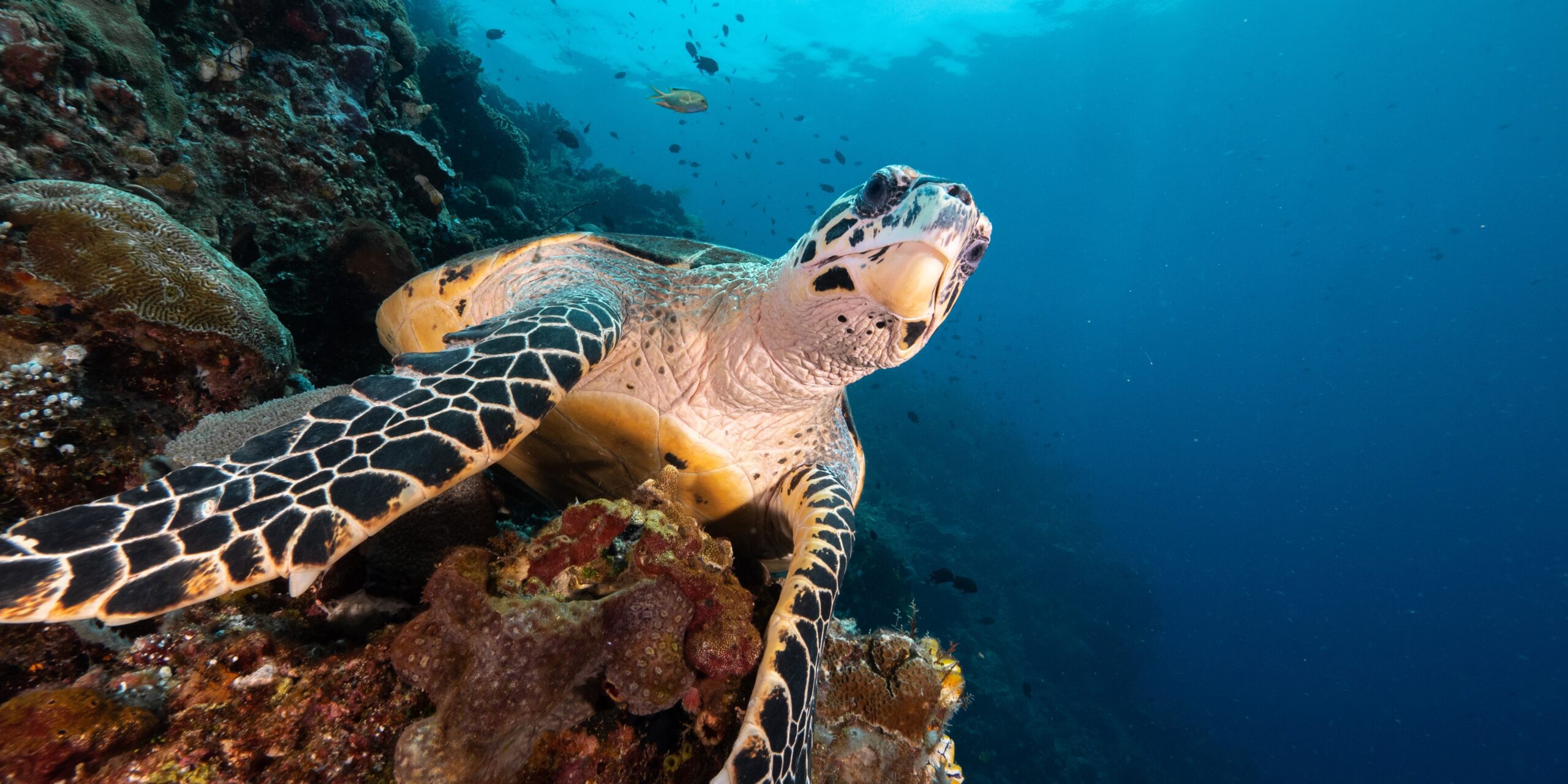
You’ve probably seen the pictures. A stunning sea turtle with a shell so intricate and colorful it looks like a piece of high-end jewelry. That’s the hawksbill. But honestly, most of the stuff you read about them online just scratches the surface. People call them "pretty" and "endangered" and move on.
That’s a mistake. These animals are weird.
Actually, they’re borderline alien. From their "glass-eating" habits to a secret glow-in-the-dark ability that scientists only stumbled upon recently, the hawksbill is easily the most eccentric member of the turtle family.
The Glass-Eating Specialist
Imagine sitting down for dinner and tucking into a plate of fiberglass and toxic sponges. That is basically a Tuesday for a hawksbill. While most marine life treats sea sponges like a "do not eat" sign because they are filled with siliceous spicules—literally tiny needles of glass—the hawksbill dives right in.
They are one of the only vertebrates on Earth that specialize in this. It’s a brutal way to live.
Anne Meylan, a renowned turtle researcher, famously described their diet as a "diet of glass." When scientists look at their stomach contents, they don't just find food; they find masses of these needle-like shards. Some of these spicules are up to 5mm long. Somehow, the hawksbill’s digestive tract handles it without being shredded from the inside out.
Why bother? Because it makes them the "gardeners" of the reef.
Sponges are aggressive. They grow fast and can easily smother a coral reef if left unchecked. By munching on the sponges that other animals can’t touch, hawksbills keep the ecosystem balanced. They literally create space for the coral to breathe and for other fish to find homes.
Why you should never, ever eat one
Here is a fun fact that is actually quite terrifying: hawksbill meat can be lethal. Because they eat so many toxic sponges and certain types of cyanobacteria, their flesh can become a vessel for chelonitoxism.
There are documented cases where people have eaten hawksbill meat and ended up with severe poisoning, or worse. It’s a chemical cocktail that’s perfectly fine for the turtle but a nightmare for us.
The Glowing Turtle Nobody Knew About
Back in 2015, David Gruber, a marine biologist and National Geographic Explorer, was diving off the Solomon Islands. He was looking for biofluorescent sharks. Suddenly, out of the darkness, a neon green and red "spaceship" swam past his camera.
It was a hawksbill.
This was the first time anyone had ever seen a biofluorescent reptile. Biofluorescence is different from bioluminescence. The turtle isn't making its own light like a firefly; instead, it absorbs blue light from the ocean and re-emits it as a different color.
The hawksbill glows a brilliant, neon green.
The red glow? That’s usually just algae hitched a ride on the shell. But the green is all turtle. Scientists are still scratching their heads over why they do it. Is it camouflage against a glowing reef? Is it a way to talk to other turtles? Honestly, we still don't know for sure.
That "Tortoiseshell" Name is a Lie
If you’ve ever seen a "tortoiseshell" comb or a pair of vintage glasses, you’re looking at the reason this species is in so much trouble. Despite the name, "tortoiseshell" doesn't come from a tortoise. It comes from the hawksbill sea turtle.
Their scutes (the plates on their shell) overlap like shingles on a roof. This is a unique trait—the scientific name Eretmochelys imbricata actually refers to this overlapping pattern.
For centuries, these turtles were hunted specifically for these plates. They were heated up, pressed, and molded into jewelry. Even though international trade has been banned under CITES since the 1970s, an illegal market still persists.
A Few More Weird Hawksbill Realities
- The Raptor Beak: Their head is narrow and tapers into a sharp point. It looks exactly like a hawk’s beak, which is how they get their name. This isn't for show; it’s a precision tool for reaching into tiny crevices in the coral to pull out those glass-filled sponges.
- Slow Burners: They take forever to grow up. Depending on the region, a hawksbill might not reach sexual maturity until it's 20 to 30 years old.
- The Heart-Shaped Phase: When they are tiny hatchlings, their shells are actually heart-shaped. As they grow, the shell elongates and the back edge becomes serrated, like a saw blade.
- The Agility Factor: Because they are smaller than green turtles or leatherbacks (usually topping out around 150 lbs), they are incredibly nimble. They can squeeze into reef tunnels where other turtles would get stuck.
What Really Matters for the Future
Hawksbills are currently listed as Critically Endangered.
Their biggest threat isn't just the illegal shell trade anymore; it's the loss of the reefs. Since they are so specialized in what they eat, they can't just "move house" if a reef dies. When the coral goes, the sponges change, and the hawksbill loses its kitchen.
If you're looking to actually help or learn more about where these guys are being tracked right now, I highly recommend checking out the Sea Turtle Conservancy or the Olive Ridley Project. They do real-time satellite tracking that shows just how far these "homebody" turtles actually travel.
To make a real difference in your own life, the best thing you can do is be an informed consumer. Avoid anything labeled "tortoiseshell" unless you are 100% sure it is synthetic plastic. Most modern stuff is, but vintage items in markets can still be the real deal, and buying them keeps the demand alive. Supporting reef conservation projects is the second-best move, as protecting the habitat is the only way to ensure the "glass-eaters" have a place to live.