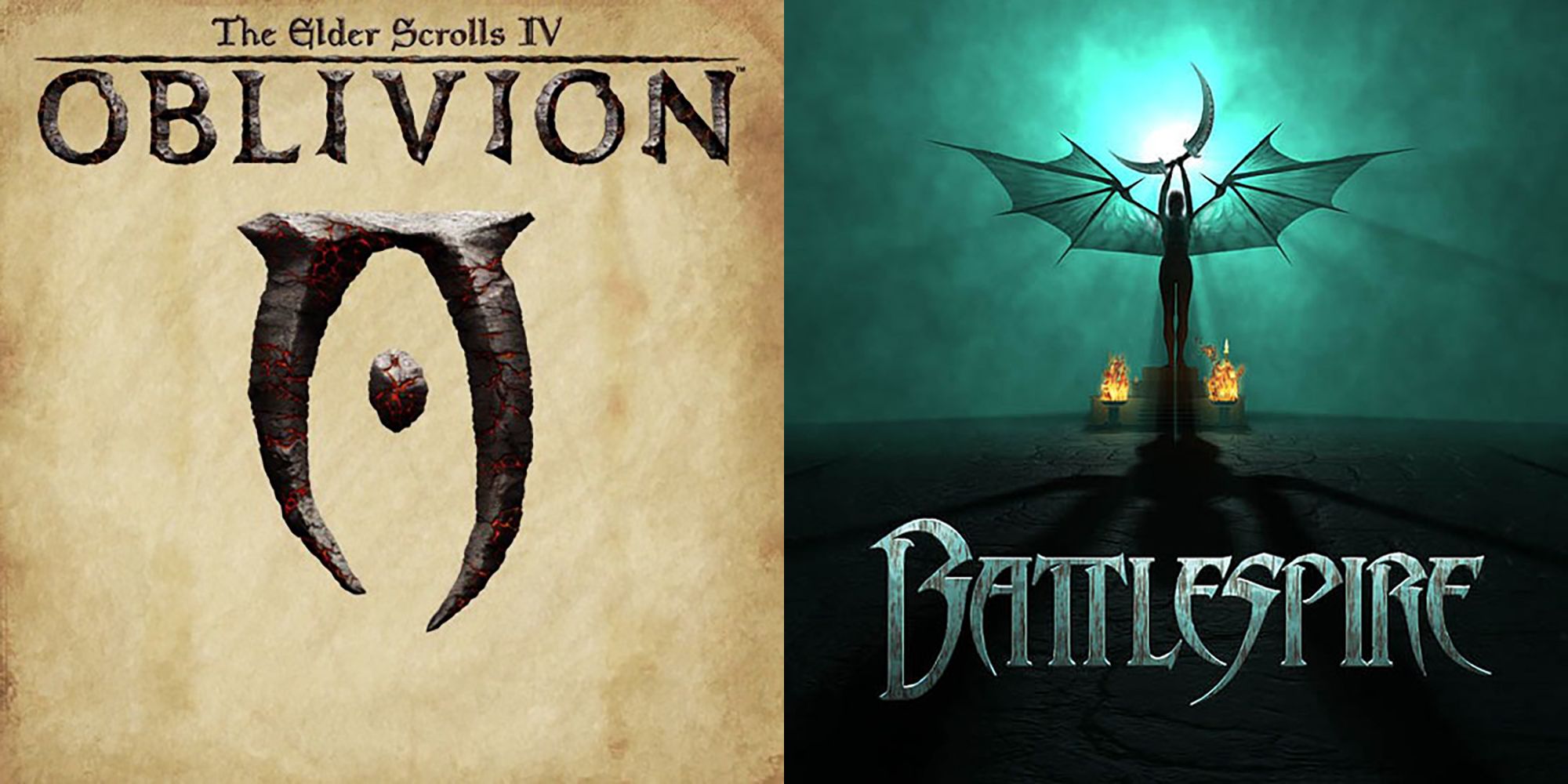
You've spent three hundred hours in Skyrim. Maybe you’ve climbed High Hrothgar so many times you know every stone by name, or you’ve spent weeks just picking flowers in the Jerall Mountains of Cyrodiil. Eventually, the magic fades. You start looking for games like Elder Scrolls, thinking you just want another big map with dragons. But honestly? Most people aren't actually looking for a clone. They’re looking for a specific feeling of "unsupervised breathing room" that Bethesda perfected back in 2002 with Morrowind and refined until the world became a household name.
The problem is that most "clones" miss the point. They give you a quest marker and a skill tree, but they forget the part where you can walk into a random shop, steal a platter, and accidentally trigger a three-hour tangential adventure.
The DNA of the Elder Scrolls Experience
What are we actually talking about when we say we want something like Skyrim or Oblivion? It’s not just the fantasy setting. If it were just about elves and swords, you’d play Dragon Age and call it a day. But Dragon Age is curated. It’s a series of hallways and arenas.
True games like Elder Scrolls require three specific pillars. First, there's the "First-Person Immersion." You aren't watching a character; you are the camera. Second, the "Object Permanence." If you drop a sweetroll in the middle of a forest, it should—in theory—stay there until the cell resets. Third, and most importantly, is the "Do-Anything Progression." You get better at jumping by jumping. You don't just "level up" and put points into a stat; the world reacts to your specific physical actions.
Very few developers try this. It’s expensive. It’s buggy. It’s a nightmare to code.
Why Kingdom Come: Deliverance is the Closest You'll Get
If you can handle the lack of magic, Kingdom Come: Deliverance is the closest thing to a modern Elder Scrolls game currently on the market. Developed by Warhorse Studios, it’s basically "Medieval Life Simulator."
You play as Henry. Henry is a loser. He can’t read. He can’t hold a sword. If he tries to fight two bandits at once, he dies in about four seconds. It captures that early-game Morrowind struggle where you feel like a genuine nobody. The game uses a skill system that mirrors Bethesda’s—you get better at maintenance by sharpening your sword at a grindstone. You get better at drinking by, well, getting hammered at the local tavern.
It’s janky. Oh, it’s so janky. But that’s part of the charm. It has that "Euro-jank" soul that reminds me of playing Oblivion for the first time on an Xbox 360 that sounded like a jet engine.
The "Immersive Sim" Connection
Most people stay within the RPG genre when looking for games like Elder Scrolls, but that’s a mistake. You should be looking at Immersive Sims.
Take Arkane Studios. They made Dishonored and Prey, but their first big game was Arx Fatalis. It was literally intended to be Ultima Underworld III. It’s a first-person, subterranean RPG where you draw runes in the air with your mouse to cast spells. If you want that feeling of "I am physically in this dungeon and I have to manually solve my problems," Arx Fatalis is the hidden gem. It’s old, yeah. But there are mods like Arx Libertatis that make it run perfectly on modern hardware.
Avowed is the new kid on the block here. Developed by Obsidian—the folks who did New Vegas—it’s explicitly trying to hit that Elder Scrolls itch. But early reports and gameplay reveal it’s more contained. It’s "The Outer Worlds" but with wands. That isn't a bad thing. Sometimes a smaller, more polished world is better than a thousand miles of procedurally generated nothingness.
The Gothic and ELEX Rabbit Hole
We have to talk about Piranha Bytes. They are the kings of the "Difficult Elder Scrolls" niche. The Gothic series and more recently ELEX are polarizing.
In Gothic, if you walk into the wrong part of the woods at level one, a scavenger bird will peck your eyes out. There is no hand-holding. There are no quest markers. You have to listen to the NPCs’ directions. "Go past the big rock, turn left at the burnt tree." It forces you to actually look at the world instead of a compass.
ELEX is even weirder. It’s fantasy, post-apocalypse, and sci-fi all mashed together. You have a jetpack. You have a sword. You have a laser rifle. It feels like a fever dream, but the DNA of "go anywhere, join a faction, ruin the world" is 100% there. It’s the ultimate "love it or hate it" recommendation.
What About the "Vibe" Over the Mechanics?
Sometimes people say they want games like Elder Scrolls, but what they actually want is the atmosphere. They want to wander.
- The Witcher 3: Wild Hunt: People always suggest this. Honestly? It’s not like Elder Scrolls. Geralt is a pre-defined character. You can’t be a stealth archer or a heavy-armor mage. But the world feels alive in a way that Skyrim only dreams of.
- Tainted Grail: The Fall of Avalon: This is a weird one. It’s an indie title currently in Early Access. It looks like a grimdark version of Skyrim. It’s got that first-person combat and a massive, depressing island to explore. It’s rough around the edges, but the passion is visible.
- The Wayward Realms: This is the "Grandfather" project. Ted Peterson and Julian Lefay—the guys who basically created Arena and Daggerfall—are making this. They’re calling it a "Grand RPG." They want to bring back the scale of Daggerfall, where cities actually felt like cities and not just a collection of ten houses.
The Survival Game Pivot
Surprisingly, some of the best games like Elder Scrolls aren't even RPGs. They're survival games.
Valheim captures the exploration aspect perfectly. You build your own hearth. You sail. You find a distant shore and think, "I wonder what’s over that hill?" That’s the core loop of Skyrim.
Then there’s Mortal Online 2. It’s a hardcore MMO, which usually scares people off. But it’s first-person, it has a massive seamless world, and the crafting is incredibly deep. It’s brutal, though. You will lose your gear. You will get frustrated. But if you want a world that feels "real" and unscripted, it’s worth a look.
The Modding Reality
Let’s be real. The reason we keep playing Skyrim is the mods. If you’re looking for a new experience, you might not need a new game. You might need Enderal: Forgotten Stories.
Enderal is a total conversion mod for Skyrim. It’s a completely different world. New lore, new voice acting, new mechanics. It’s actually—dare I say it—better written than the base game. It’s darker. The stakes feel more personal. It’s free if you own Skyrim. It’s the best "Elder Scrolls game" that isn't actually an Elder Scrolls game.
Actionable Insights for Your Next Adventure
Stop looking for a perfect 1:1 replacement. It doesn't exist because Bethesda's Creation Engine is a weird, unique beast that handles physics and persistence in a way other engines don't. Instead, choose your "focus" for your next game based on what you miss most:
- If you miss the progression and world-interaction: Play Kingdom Come: Deliverance. Be prepared to suck at everything for the first five hours. It's rewarding because it's hard.
- If you miss the weird lore and first-person magic: Play Arx Fatalis with the Libertatis mod. It’s claustrophobic and brilliant.
- If you miss the sheer scale and sense of discovery: Try Valheim or Enderal. One gives you mechanical freedom; the other gives you a narrative masterpiece.
- If you want to see where it all started: Go back to Morrowind with the OpenMW engine. It removes the crashes and adds modern resolutions while keeping the "weird" intact.
The "Elder Scrolls" formula is really just about the freedom to be a person in another world. Whether that world has dragons or just really aggressive Bohemian bandits is secondary to how much the world lets you mess with it. Start with Kingdom Come if you want realism, or Enderal if you want a new story. Both will respect your time more than another "Infinite Radiant Quest" in a lesser clone.
.png)