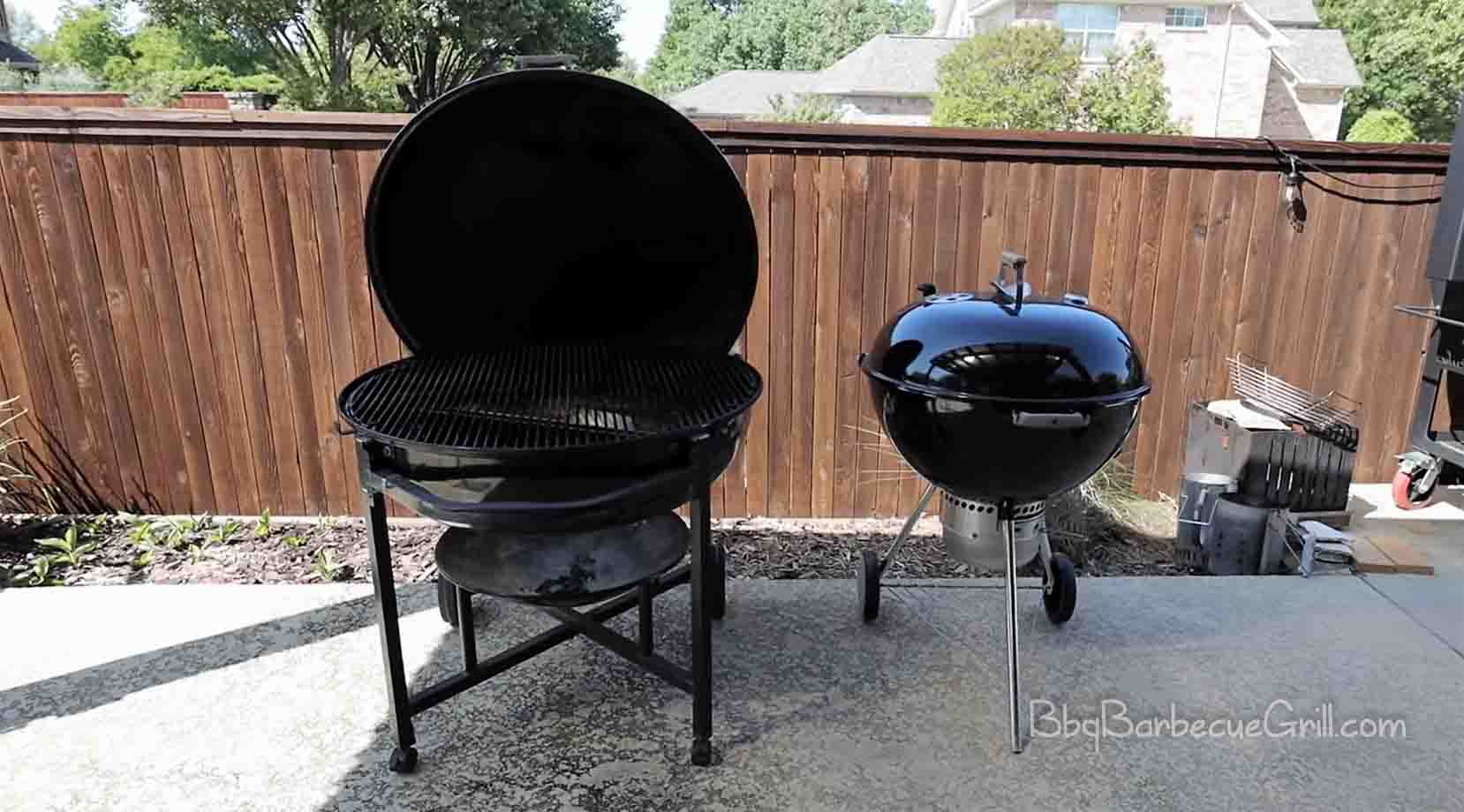
You’ve seen them. Those massive, sprawling steel behemoths that look like they belong in the kitchen of a Texas steakhouse rather than a suburban patio. We're talking about the extra large bbq grill, a piece of equipment that is frequently misunderstood by the weekend warrior and the seasoned pitmaster alike. Honestly, most people buy these things for the wrong reasons. They see 1,000 square inches of cooking space and think "party time," without realizing that managing a fire that big is basically a full-time job for the duration of the cook.
Size matters. But it isn't just about how many burgers you can flip at once.
If you’re looking at a Weber Summit, a Traeger Ironwood XL, or maybe a custom-built offset smoker, you aren't just buying a grill. You're buying a thermal mass. Big grills behave differently. They hold heat longer, they require more fuel to get up to temp, and they have "cold spots" that could fit an entire rack of ribs. Most people don't get that. They treat a giant grill like a small one, just scaled up. That's a mistake.
The Brutal Reality of Managing an Extra Large BBQ Grill
Let's be real: cleaning an extra large bbq grill is a nightmare. You’ve got more grates to scrub, a massive grease tray that weighs a ton when full, and if it’s a charcoal unit, enough ash to start a small volcano. People forget the logistics. You need a dedicated space. You need heavy-duty casters if you ever plan on moving it.
The heat zones are where things get tricky. On a standard three-burner gas grill, you have left, middle, right. Simple. On an XL model with six or eight burners, you’re managing a complex topographical map of heat. Steven Raichlen, the guy who basically wrote the book on modern grilling (The Barbecue Bible), often talks about the importance of "three-zone grilling." On a massive surface, those zones become even more distinct. You might have a searing station on the far right that’s hitting 700 degrees, while the far left is barely hovering at 225 for a slow roast.
It’s about volume. Not just meat volume, but airflow volume. A larger cookbox means more air, and more air means more oxygen for the fire. If you don't know how to throttle your intake vents on a giant charcoal grill, you’ll incinerate $200 worth of brisket in three hours. It happens. I've seen it.
Why Surface Area Isn't Everything
People obsess over square inches. "This one has 1,200 square inches!" Great. But how much of that is "primary" cooking space versus a warming rack that’s six inches above the flame? Manufacturers love to pad those numbers. When you're shopping, look for the dimensions of the main grate. If the main grate isn't at least 36 to 40 inches wide, it’s not truly an extra large bbq grill; it’s just a medium grill with a really big shelf.
Think about the "spatchcocked chicken test." A standard grill can hold maybe two. An XL should comfortably fit four or five without them touching. If the meat touches, the air doesn't circulate. If the air doesn't circulate, you get "steamed" meat instead of roasted meat. Gross.
Fuel Consumption: The Hidden Cost of Going Big
You’re going to burn through propane or charcoal like crazy. It’s simple physics. To heat a larger cavity, you need more BTUs (British Thermal Units). A high-end extra large bbq grill might pump out 60,000 to 100,000 BTUs. For context, your kitchen stove probably does 15,000 at most.
If you're using a pellet grill like the Traeger Timberline XL, you’re looking at a hopper that holds 20+ pounds of pellets. On a cold day, a big grill will chew through half that bag just to maintain a steady 225 degrees. It’s an expensive hobby. You have to be okay with that. The payoff is the bark, the smoke ring, and the ability to feed thirty people without anyone waiting for their food. But the "cost per burger" definitely goes up.
The Thermal Mass Advantage
Here is the secret: heavy grills are better. Most cheap XL grills use thin-gauge steel. Avoid them. Thin steel loses heat the second you open the lid. You want something with thick walls—ideally 3/16-inch or 1/4-inch steel if you’re going the smoker route. Brands like Lang or Horizon are famous for this.
Once that much steel gets hot, it stays hot. It’s like a freight train; hard to start, but impossible to stop. This stability is why professionals use big rigs. Even if a gust of wind hits or the ambient temperature drops ten degrees, the internal temp of a heavy extra large bbq grill won't budge. That's the dream. Consistent heat equals consistent meat.
Material Choices: Stainless vs. Cast Iron
Most XL grills come with either stainless steel rod grates or porcelain-coated cast iron. This is a massive debate in the BBQ world.
Stainless is easier to clean. It won't rust if you leave it out in the rain once by accident. But it doesn't hold heat as well as cast iron. Cast iron gives those thick, dark sear marks that look like a commercial. However, cast iron in an extra large bbq grill is incredibly heavy. We're talking thirty or forty pounds just for the grates. If you need to lift them to move coals around, you'd better have been hitting the gym.
Honestly, for most people, high-quality 304-grade stainless steel is the way to go. It’s durable. It’s shiny. It doesn't require the "seasoning" ritual that cast iron demands. Just make sure the rods are thick—at least 9mm. Thin wire grates will warp under the intense heat of a large-scale fire.
Don't Forget the "Zone of Regret"
This is the space in your yard where the grill sits unused because it's too much of a hassle to start up for just two steaks. That's the danger of the extra large bbq grill. If you buy one, you almost need a "daily driver"—a small Weber Kettle or a portable gas grill—for the quick Tuesday night dinners. Using a 48-inch grill to cook two hot dogs is like using a semi-truck to go get a gallon of milk. It’s overkill.
Common Misconceptions About Big Rigs
- "They take forever to heat up." Not necessarily. If you have a high-quality gas XL grill with dedicated infrared burners, you can be at searing temps in ten minutes. Charcoal takes longer, sure, but that’s true regardless of size.
- "Bigger means more flare-ups." Actually, usually the opposite. Because you have more surface area, you can move meat away from the flames. You have "safe zones." In a small grill, the whole thing is a flame zone.
- "You need a professional gas line." Usually, yes. Most XL gas grills can run on a 20lb propane tank, but they’ll drain it in a few long sessions. If you're going big, consider plumbing in a natural gas line. It’s a game changer. No more "tank anxiety."
Making the Leap: What to Check Before You Buy
- Measure your door. Seriously. I know a guy who bought a massive offset smoker and realized it wouldn't fit through his side gate. He had to hire a crane to lift it over his house. Don't be that guy.
- Check the warranty. A big grill has more parts that can fail. More igniters, more burners, more lid hinges. Look for a brand that offers at least 10 years on the burners.
- Stability test. Go to a showroom. Grab the handle of the extra large bbq grill and give it a good shake. Does it wobble? Does the lid feel flimsy? If it feels light, it’s cheap. You want something that feels like a tank.
- Airflow control. Look at the dampers. Are they tight? If air can leak in through the seams, you’ll never be able to keep the temperature low for "low and slow" cooking.
The Lifestyle Shift
Owning a massive grill changes how you entertain. Suddenly, you're the "Thanksgiving house" because you can fit three turkeys at once. You become the guy who hosts the neighborhood Fourth of July bash. It’s a commitment to a certain kind of lifestyle. It’s about hospitality on a grand scale.
If you're the type who loves the process—the prep, the fire management, the big reveal—then an extra large bbq grill is the best investment you'll ever make for your backyard. If you just want a burger, stick to the small stuff.
Practical Steps for Your First Big Cook
Start with something forgiving. Don't try a $150 Wagyu brisket on day one. Do a "fridge cleanout" cook. Throw on some chicken thighs, some sausages, maybe some corn on the cob. Use the extra space to practice moving food between heat zones.
Learn where the hot spots are. Every grill has them. Usually, it's the back corners. Map it out by laying slices of white bread across the entire grill surface and turning it on high for two minutes. Flip the bread. The char patterns will show you exactly where your extra large bbq grill is the hottest. This "toast test" is the most valuable ten minutes you'll spend with your new machine.
Once you know the map, you're the master of the flame. Get a good cover—a real one, not a cheap plastic tarp—and keep that steel protected. A grill this size is an heirloom if you treat it right.
Invest in a high-quality, multi-probe wireless thermometer. When you're cooking on a massive scale, you can't rely on the built-in lid thermometer. Those things are notoriously inaccurate, often off by 50 degrees because they’re measuring the air at the top of the dome, not where the meat is sitting. Get a system that lets you monitor four different pieces of meat from your phone. That’s how you handle the pressure of an XL cook without losing your mind.
Now, go measure your patio. See if you actually have the three feet of clearance required from any combustible walls. Safety first, brisket second. If the space is there, and the budget allows, stop looking at the small stuff. The world of large-scale outdoor cooking is waiting, and honestly, it's a lot more fun than flipping one burger at a time.