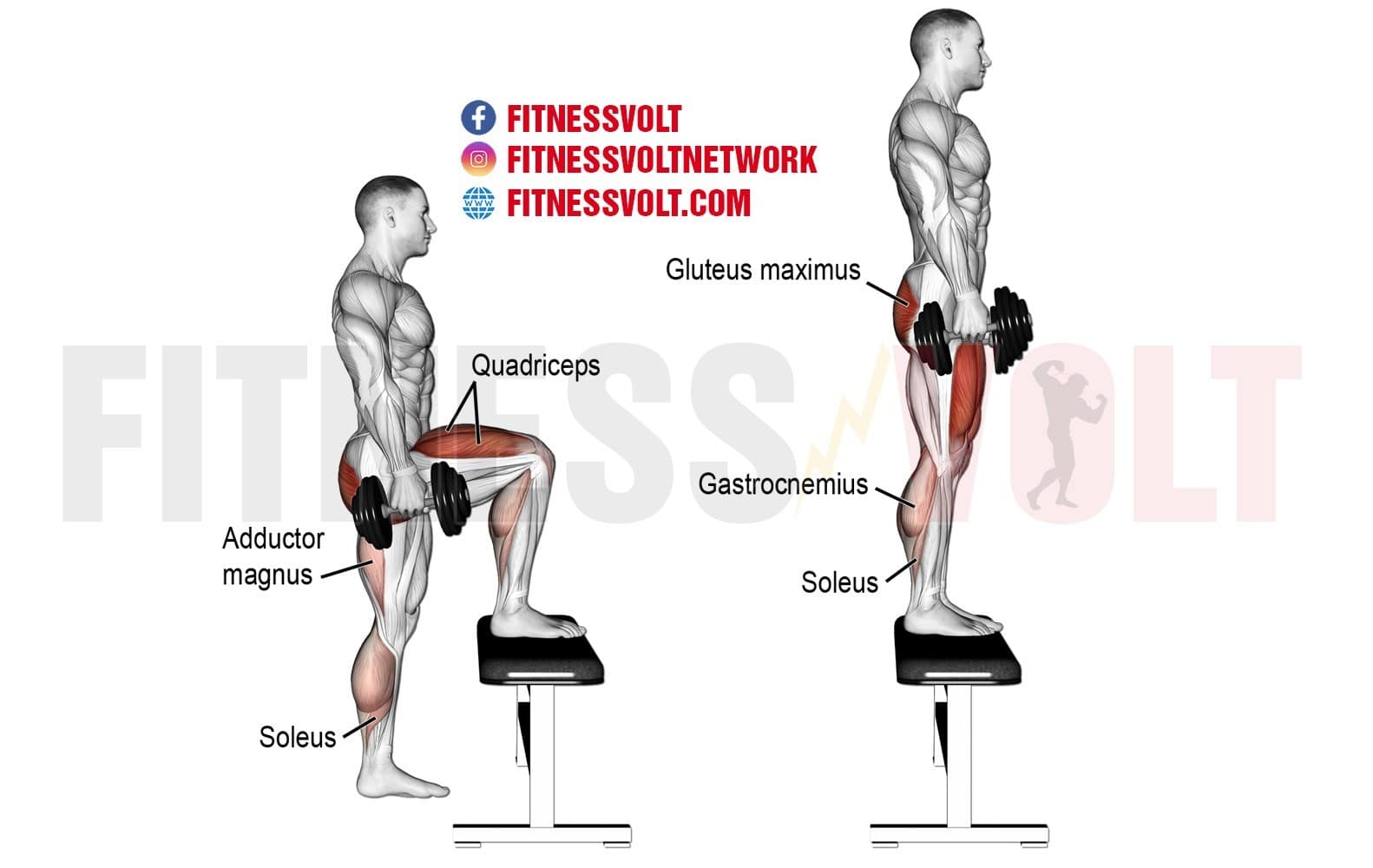
You've seen it. That wooden or plastic cube sitting in the corner of the gym, usually gathering dust or serving as a temporary shelf for someone's hydroflask. Most people look at the exercise step up box and see a simple platform for mindless cardio. They’re wrong.
Actually, they’re really wrong.
The step-up is one of the most butchered movements in the fitness world. We treat it like a staircase. We use momentum. We bounce off the trailing foot like we’re on a pogo stick. But if you actually understand the mechanics of the exercise step up box, you realize it’s potentially the most potent tool for fixing glute amnesia and saving your knees from the scrap heap.
Let’s get into why this basic box is actually a high-performance machine when used correctly. Additional reporting by Psychology Today delves into similar views on this issue.
The Secret Physics of the Exercise Step Up Box
Gravity is a jerk. When you’re doing a squat, the load is distributed across two pillars—your legs. It’s stable. It’s comfortable. But the exercise step up box forces you into unilateral loading. This means one leg does 100% of the work while the other is just along for the ride.
Most people cheat. They "cheat-step."
You know the move: you put one foot on the box, and then you use the calf muscle of the foot on the floor to launch yourself upward. You aren't training your glutes; you're just jumping. To fix this, you have to keep the trailing toes pulled up. Or, as some elite coaches like Mike Boyle suggest, keep the trailing leg completely straight so you can't "spring" off the floor.
It's harder. Way harder.
When you eliminate that bounce, the exercise step up box forces the lead leg’s gluteus maximus and medius to stabilize the pelvis. This isn't just about looking good in jeans. It’s about preventing the "trendelenburg gait," where your hip drops every time you take a step. If you’ve ever had unexplained lower back pain, your inability to stabilize on a box might be the culprit.
Why Box Height Actually Matters (And Most Get It Wrong)
Stop picking the tallest box in the gym just to look cool.
If the exercise step up box is so high that your hip creases significantly below your knee, you’re probably going to compensate by rounding your lower back. This shifts the tension from the muscles to the spinal discs. Not a great trade.
Ideally, you want a height where your femur is parallel to the floor. For most people, that’s somewhere between 12 to 20 inches. If you’re using a 24-inch or 30-inch plyo box and you have to lean your chest forward until it touches your knee just to get up, you’ve lost the plot.
Lower the height. Increase the control.
Different Materials for Different Goals
- Wooden Boxes: These are the gold standard for heavy lifting. They don't wobble. They provide a "hard" surface that allows for maximum force production. However, if you miss a jump or slip, your shins are going to pay a heavy price. I’ve seen scars that look like shark bites from wooden boxes.
- Soft Foam Boxes: These are the "shin savers." They are great for high-intensity interval training (HIIT) or for beginners who are terrified of falling. The downside? They are less stable. If you’re trying to do a heavy weighted step-up, the foam might compress unevenly, which feels like trying to squat on a marshmallow.
- Adjustable Metal Steps: Often found in aerobic classes. They’re fine for cardio, but they usually lack the surface area for a truly "heavy" strength session.
The Glute-Maximus Connection
Science back it up. A 2020 study published in the Journal of Sports Science and Medicine compared various lower-body exercises. They found that the step-up produced higher levels of gluteus maximus activation than the squat or even the hip thrust.
Read that again.
Better than the hip thrust.
The reason is the "closed kinetic chain" nature of the movement combined with the vertical displacement. You are literally lifting your entire body weight against gravity using one hip. If you add dumbbells or a barbell to your exercise step up box routine, the demand on the posterior chain becomes massive.
But you have to lean. Just a little bit.
If you stay perfectly vertical, you put more stress on the quadriceps and the knee joint. If you lean slightly forward at the hips (maintaining a flat back!), you shift that center of mass over the mid-foot. Suddenly, the glutes fire like crazy. It’s a nuance that separates the pros from the casuals.
Variations That Actually Work
Don't just go up and down. That's boring. And it limits your gains.
The Lateral Step-Up
Instead of facing the exercise step up box, stand sideways to it. Step up with the leg closest to the box. This hits the adductors (inner thighs) and the glute medius in a way that standard forward steps never will. It’s the "missing link" for runners who deal with IT band syndrome.
The Poliquin Step-Up
Named after the legendary strength coach Charles Poliquin, this uses a very low box or even just a slant board. The goal is to keep the heel of the working leg elevated and tap the floor with the other heel. This is a "knee rehab" godsend. It targets the VMO (vastus medialis oblique), that teardrop-shaped muscle near your knee that keeps the kneecap tracking correctly.
Weighted Goblet Step-Ups
Hold a kettlebell or dumbbell at your chest. This forces your core to stay engaged so you don't tip forward. It’s basically a full-body workout disguised as a leg exercise.
Safety and Common Blunders
We need to talk about the "descending phase."
Most people treat the way down like they’re falling off a cliff. They just gravity-drop. This is a wasted opportunity. The "eccentric" or lowering phase of the movement is where most of the muscle damage (the good kind!) and strength building happens.
Control the descent. Take three full seconds to return your foot to the floor. Your quads will scream, but your joints will thank you later.
Also, watch your knee tracking. If your knee caves inward (valgus collapse) when you push off the exercise step up box, you’re begging for an ACL tear or meniscus issues. Think about "screwing" your foot into the box to create external rotation torque. Keep that knee in line with your second toe.
Equipment Maintenance: Don't Be That Person
If you’re using a wooden box at home, check the screws. Seriously. Wood expands and contracts. A loose screw can turn a workout into a trip to the ER. If you’re at a commercial gym, check the "grip" tape on top. If it’s worn smooth, you’re going to slip once you start sweating.
Always place your exercise step up box on a non-slip surface like rubber matting. Never, ever use one on a polished hardwood floor or slick tile unless you want to see how fast you can slide into a wall.
Actionable Steps for Your Next Workout
To get the most out of the exercise step up box, follow this protocol for your next leg day:
- Test Your Height: Find a box that allows you to keep your foot flat and your hips level. If you have to "hitch" your hip to get your foot up, the box is too high.
- The "No-Toe" Rule: When you step up, don't let the toes of your floor-foot touch the ground. Try to keep them pulled up toward your shin. This ensures 100% of the drive comes from the leg on the box.
- Lean and Drive: Lean your torso forward about 15 degrees. Drive through the mid-foot of the lead leg. Do not let your heel lift off the box.
- The 3-Second Rule: On the way down, count "one-one-thousand, two-one-thousand, three-one-thousand" before your foot touches the floor.
- Program It Right: Do 3 sets of 8-12 reps per leg. High reps (15+) are okay for cardio, but if you want to change the shape and strength of your legs, stick to the 8-12 range with some added weight.
The exercise step up box isn't just a piece of wood. It's a diagnostic tool. If you can't do a controlled step-up, you probably shouldn't be doing heavy squats or lunges yet. Master the box, and the rest of your lifting career will follow suit.