Let's be honest. Your kitchen counters are probably a mess of mail, half-empty cereal boxes, and that one air fryer you bought during a 2 AM scrolling spree but never actually used. We’ve all been there. You want that Pinterest-perfect look, but you also need to, you know, actually cook a meal without knocking over a ceramic bust of a French bulldog. It’s a delicate balance. Decorating your kitchen counters shouldn't feel like a chore or a museum curation project. It’s about making the heart of your home feel intentional rather than accidental.
The problem is most people think "decorating" means adding more stuff. Wrong. Usually, it means being smarter about the stuff you already have. Look at your countertop right now. Is it cluttered? Probably. But is it functional? Maybe not. That’s where the disconnect happens.
The "Rule of Three" and Why It’s Not a Law
You’ve likely heard interior designers like Joanna Gaines or Nate Berkus talk about the "Rule of Three." It’s basically the idea that items arranged in odd numbers are more appealing, memorable, and effective than even-numbered groupings. It works. But it’s also kinda boring if you follow it like a robot.
Instead of just grabbing three random objects, think about scale. Pair a tall wooden pepper mill with a medium-sized salt cellar and a tiny little pinch bowl. That variation in height is what actually catches the eye, not the magic number three itself. If you put three things of the exact same height together, it looks like a retail display at a discount home store. Don't do that. Vary it up.
Sometimes, a single, massive statement piece is better than a cluster of small junk. A giant vintage dough bowl filled with lemons? Classic. It takes up space, but it looks purposeful. It says, "I meant for this to be here," rather than "I didn't have anywhere else to put these citrus fruits."
Decorating your kitchen counters without losing your sanity (or prep space)
Your kitchen is a workspace. Never forget that. If you decorate it so much that you can't find a spot to chop an onion, you've failed. Interior designer Kelly Wearstler often emphasizes the marriage of function and form. In the kitchen, this means your "decor" should ideally be things you use.
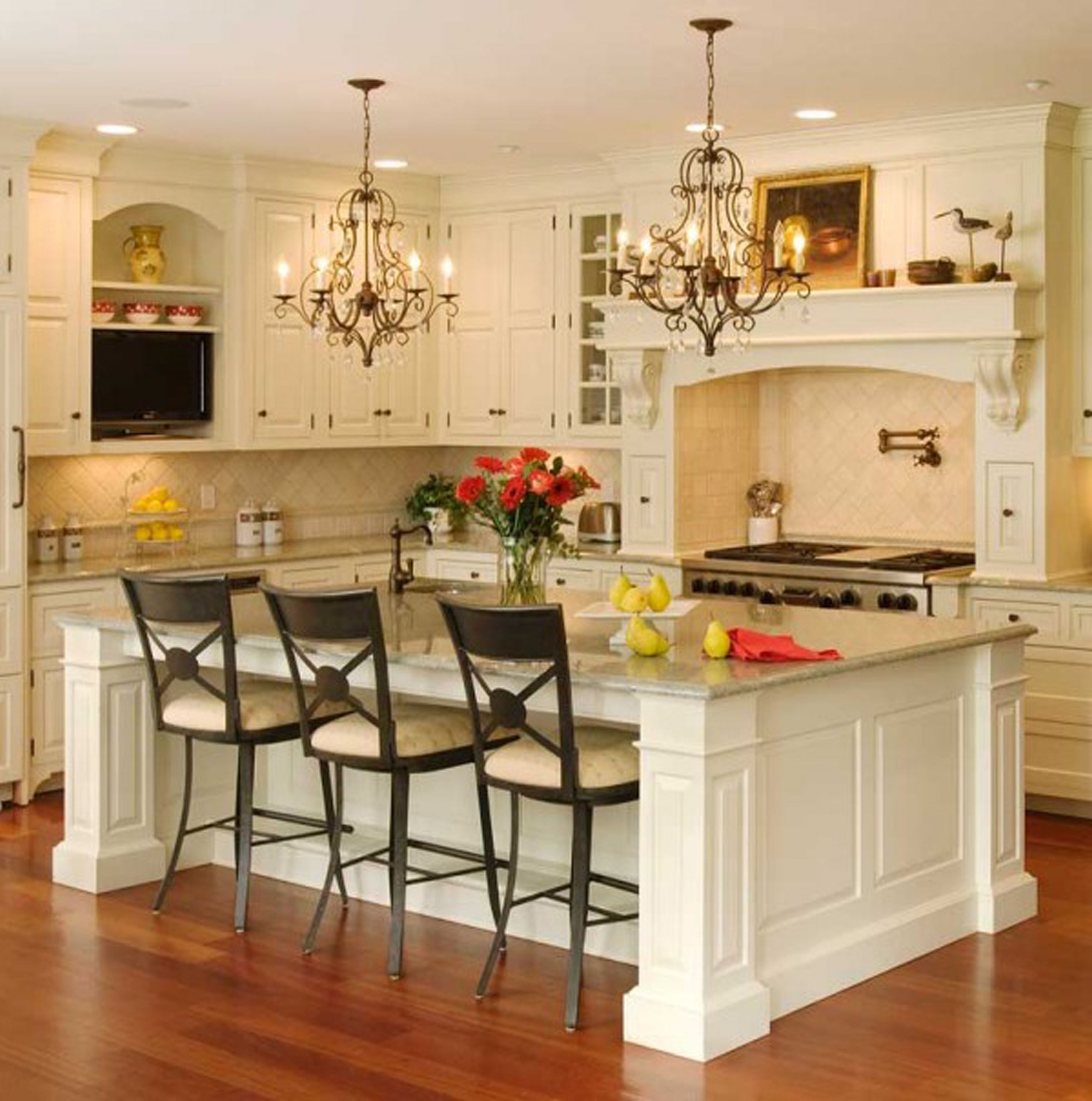
Think about your oils and vinegars. Don't keep them in the plastic bottles they came in from the grocery store. Pour them into glass cruets. Suddenly, your cooking essentials are part of the aesthetic. Put them on a small marble plinth or a vintage silver tray. This does two things: it corrals the mess and makes it look like a curated "station." Trays are the secret weapon of counter decorating. They turn chaos into a collection.
Texture is the ingredient you're missing
Most kitchens are full of "cold" surfaces. Stainless steel, quartz, tile, glass. It can feel a bit clinical, right? You need to inject some warmth. This is where wood comes in. Lean a few oversized wooden cutting boards against your backsplash. Don't stack them flat; stand them up. It adds height and hides outlets—which are notoriously ugly.
Marble is another big one. Even if your counters aren't marble, adding a marble pastry slab or a heavy mortar and pestle adds a sense of "weight" and luxury. Mix your materials. Put a rough, handmade ceramic crock next to a shiny chrome espresso machine. That contrast is what makes a room feel "lived in" rather than "staged."
The Greenery Trap
We need to talk about plants. Everyone tells you to put plants in the kitchen. And they’re right! Plants breathe life into a room. But a tiny succulent on a 10-foot island looks lonely. It looks like a mistake.
If you have the light for it, go big. A potted olive tree in a terracotta pot in the corner of a counter adds incredible drama. If you don't have the light (or the thumb) for a tree, go with herbs. But skip the plastic supermarket pots. Re-pot your basil and mint into aged clay pots or sleek black ceramic. It’s a small change that makes a massive difference in the "high-end" feel of the space.
Avoid the "Theme" Pitfall
Please, for the love of all things holy, stay away from themes. You don't need a "farmhouse" kitchen or a "nautical" kitchen. You need your kitchen. When you lean too hard into a theme—like those "EAT" signs or "Wine O'Clock" clocks—it feels dated the second you hang it up.
Instead, look for pieces with history. A vintage copper pot found at a flea market tells a story. A hand-thrown bowl from a local potter adds soul. These items don't go out of style because they aren't following a trend. They are authentic.
Lighting and the "Vibe" Factor
Most people forget that decorating involves light. Those harsh overhead LEDs are great for seeing if your chicken is cooked, but they’re terrible for "vibes."
Small, plug-in lamps on kitchen counters are a massive trend right now for a reason. They provide a soft, warm glow that makes the kitchen feel like a cozy room rather than a laboratory. Put a tiny lamp with a pleated shade in a dark corner. It’s a game-changer for those late-night snack runs.
Real Talk: The Stuff You Should Hide
Decorating is just as much about what you hide as what you show.
- The Toaster: Unless it’s a design icon like a Smeg or a Dualit, put it in a cabinet.
- The Paper Towels: Get an under-cabinet mount or a really beautiful heavy-duty holder.
- Dish Soap: Stop leaving the bright blue Dawn bottle on the sink edge. Decant it into a glass pump.
- The Sponge: Get a small ceramic dish to tuck it away.
These are tiny details. Honestly, most people won't consciously notice them. But they will notice the feeling of the space being cleaner and more organized. It’s about removing visual "noise."
Actionable Steps for a Better Kitchen
Ready to actually do this? Don't go out and buy a bunch of new stuff yet. Start by clearing everything—and I mean everything—off your counters. Give them a good scrub. Now, look at the blank canvas.
- Identify your "dead" zones. These are the corners where nothing happens. This is where your tall items (cutting boards, large crocks, or plants) should live.
- Group by activity. Create a "coffee station" or a "baking nook." Use a tray to keep these items together. It makes the counter feel less cluttered because the eye reads the tray as one single "unit" rather than five separate bottles.
- Choose a hero piece. Pick one thing you absolutely love. Maybe it's a vibrant Dutch oven or a sculptural fruit bowl. Give it a place of honor.
- Edit ruthlessly. If you haven't used that blender in six months, it doesn't deserve a spot on the prime real estate of your countertop. Move it to the pantry or a lower cabinet.
- Add something organic. Whether it’s a bowl of walnuts, a bunch of eucalyptus, or just some fresh lemons, adding something from nature softens the hard edges of the cabinetry.
The goal isn't perfection. It’s about creating a space that feels curated but still handles the chaos of real life. Decorating your kitchen counters is a process of trial and error. Move things around. See how it feels to cook in the space. If something is in your way, move it. Your kitchen should serve you, not the other way around.
Keep your most-used items within arm's reach but find ways to make them look beautiful. A stack of your most-used cookbooks? Use them as a base for a small bowl of garlic. A heavy wooden bowl? Use it for your daily mail until you’re ready to sort it. Style meets reality. That’s the sweet spot.