You're standing in the kitchen, flour on your apron, looking at a recipe that asks for 50 grams of something. You grab a measuring cup. Then you pause. How many cups is in 50 grams, anyway?
It’s a trick question.
Honestly, the answer depends entirely on what you're weighing. A cup of lead weights isn't the same as a cup of feathers, right? That’s density at work. If you’re trying to convert 50 grams to cups, you have to know the specific gravity of your ingredient.
The Density Problem with 50 Grams
Volume and mass are different beasts. Grams measure weight (or mass, if we're being nerdy about physics). Cups measure space. When you ask how many cups is in 50 grams, you are essentially asking how much space 50 grams of a specific substance occupies.
Take water. Water is the gold standard for conversions because its density is basically $1g/ml$. In the culinary world, one US cup is roughly 236.59 milliliters. So, for water, 50 grams is about 0.21 cups, which is just a hair under a quarter cup.
But you probably aren't measuring water. You're probably measuring flour. Or sugar. Or maybe cocoa powder.
Flour is the worst offender. It’s "fluffy." If you sift it, 50 grams might take up a lot of space. If you pack it down into the bag, those same 50 grams occupy way less room. This is why professional bakers like King Arthur Baking or the late, great Julia Child insisted on scales. Using a cup for 50 grams of flour is basically a guessing game where your cake is the loser.
Flour vs. Sugar: A Massive Difference
Let’s look at the heavy hitters in your pantry.
For All-Purpose Flour, 50 grams is roughly 0.4 cups. That’s a bit less than half a cup. However, if you use the "scoop and level" method versus the "spoon and level" method, that 50 grams could look like a 1/3 cup or a 1/2 cup depending on your mood.
Granulated Sugar is denser. 50 grams of white sugar is roughly 0.25 cups. Exactly a quarter cup. Sugar grains settle consistently, making it way more reliable to measure by volume than flour, though still not perfect.
Then there’s Powdered Sugar. It’s basically edible air. 50 grams of unsifted confectioners' sugar is about 0.42 cups. If you sift it first? It could expand to over half a cup. This is where recipes go to die. You think you're following the instructions, but your frosting ends up like soup because your "cup" wasn't actually 50 grams.
Why 50 Grams to Cups Varies by Ingredient
Weight stays the same. Space changes. It's a fundamental law of the kitchen.
Imagine 50 grams of lead shot. It would barely cover the bottom of a measuring cup. Now imagine 50 grams of puffed rice cereal. It would probably overflow the cup entirely.
Here is how 50 grams looks for common items:
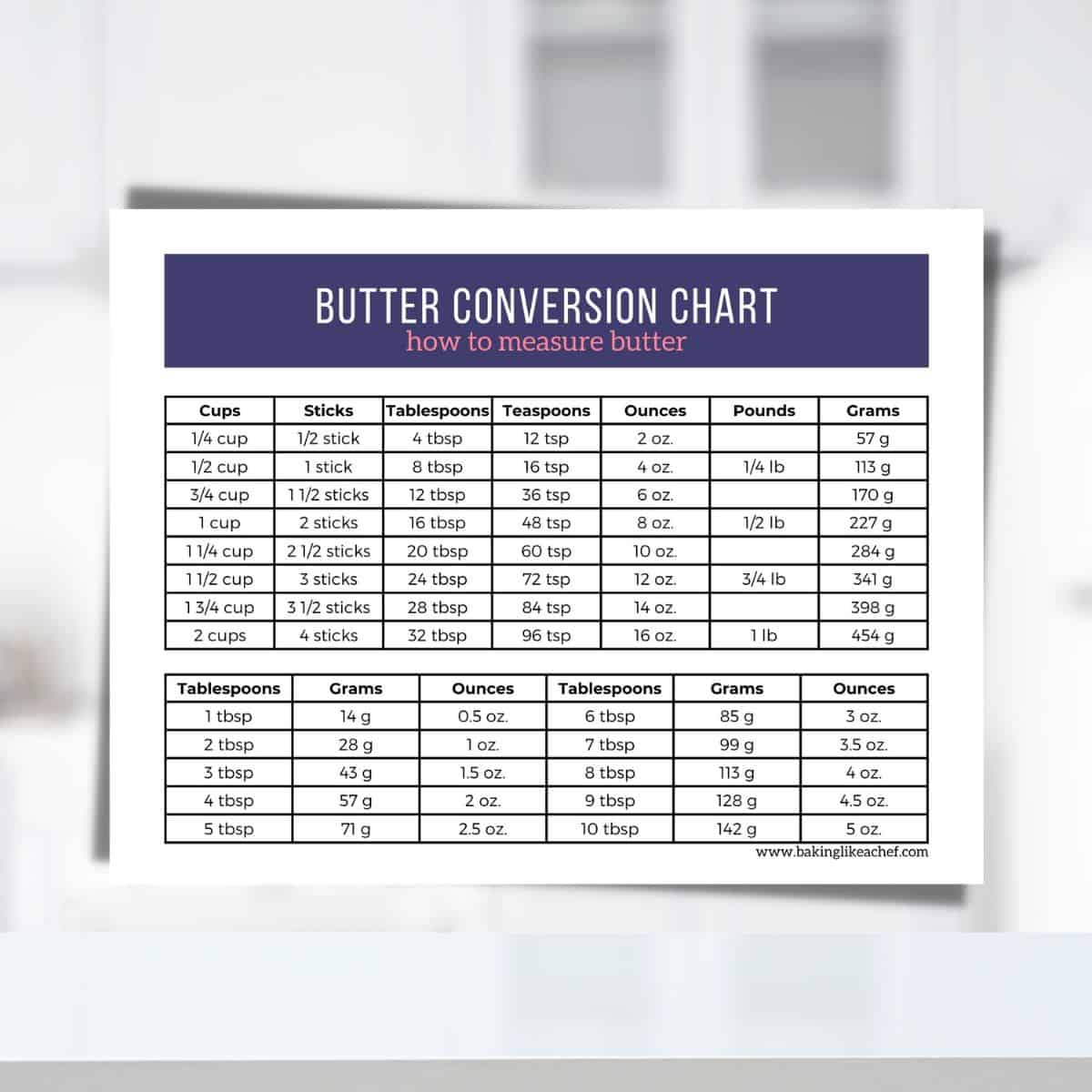
- Butter: 50 grams is about 3.5 tablespoons, or 0.22 cups. Since a stick of butter is usually 113 grams (half a cup), 50 grams is just under half a stick.
- Cocoa Powder: This stuff is incredibly light. 50 grams is roughly 0.56 cups. If you only use a half cup, you're missing out on a lot of chocolate flavor.
- Uncooked Rice: 50 grams of long-grain white rice is about 0.25 cups.
- Rolled Oats: Very light. 50 grams is nearly 0.6 cups.
The Metric vs. Imperial Headache
To make matters more annoying, not all "cups" are created equal. In the United States, a legal cup is 240ml. A standard customary cup is 236.59ml. In the UK, Australia, and Canada, a metric cup is 250ml.
If you are using a British recipe that calls for 50 grams of milk, and you use an American measuring cup, you’re already off. It’s a tiny margin, sure. But in pastry work, tiny margins result in sunken centers and tough crusts.
Real-World Examples of the 50-Gram Conversion
Let's say you're making a small batch of macarons. These cookies are notorious. They demand precision. If the recipe calls for 50 grams of almond flour and you just eyeball "about half a cup," your macarons will likely fail.
Almond flour is oily and heavy. 50 grams of it is usually about 0.52 cups. If you use a standard 1/2 cup measure and don't pack it, you might only be getting 45 grams. That 5-gram difference is the difference between a smooth shell and a cracked mess.
What about honey or maple syrup?
Liquid sweeteners are heavy. 50 grams of honey is only about 2.3 tablespoons. That's less than 0.15 cups. If you poured honey into a quarter-cup measuring tool until it looked "about right," you'd likely end up with 70 or 80 grams of sugar, throwing the entire moisture balance of your bake out the window.
How to Get 50 Grams Without a Scale
If you absolutely don't have a scale and need to know how many cups is in 50 grams, you have to use the "Spoon and Level" method.
Don't ever scoop the cup directly into the bag. That packs the ingredient down. Instead, use a large spoon to fluff up the ingredient. Gently spoon it into your measuring cup until it overfills. Use the back of a knife to scrape the excess off.
For 50 grams of All-Purpose Flour using this method:
- Fill a 1/2 cup measure about 80% full.
- Or, more accurately, use 6 level tablespoons plus 1 level teaspoon.
For 50 grams of White Sugar:
- Use 4 level tablespoons. That’s exactly a quarter cup.
For 50 grams of Butter:
- Look at the wrapper. Most butter sticks have tablespoon markings.
- Cut at the 3.5 tablespoon mark.
The Science of Settle
One thing people rarely talk about is "settling." When a bag of flour sits in your pantry for three weeks, gravity does its thing. The particles at the bottom get crushed. The density increases.
If you measure 50 grams from the top of a fresh bag, it might fill 0.45 cups. If you measure it from the bottom of an old, packed bag, it might only fill 0.35 cups. This is the "hidden" variable that ruins Sunday morning pancakes.
Temperature matters too. Cold butter is denser than room temperature, slightly aerated butter. While 50 grams is always 50 grams on a scale, 50 grams of "whipped" butter will take up significantly more space in a cup than a solid cold chunk.
Actionable Steps for Perfect Measurements
Stop guessing. If you're tired of wondering how many cups is in 50 grams, do these three things:
- Buy a Digital Scale: You can get a decent one for fifteen bucks. It eliminates the "cup" conversation entirely. Switch it to grams, pour until it hits 50, and move on with your life.
- Use Tablespoons for Small Amounts: Since 50 grams is a relatively small amount (usually under half a cup), it’s often more accurate to measure in tablespoons. There are 16 tablespoons in a cup.
- Check the Label: Almost every food package has a "Serving Size" in both household measures (cups) and grams. If the label says "1/4 cup (30g)," then you know 50 grams is roughly 1 and 2/3 of that serving.
Quick Reference for 50 Grams
- Water/Milk: 0.21 Cups
- White Sugar: 0.25 Cups
- All-Purpose Flour: 0.40 Cups
- Bread Flour: 0.38 Cups
- Cocoa Powder: 0.56 Cups
- Coconut Oil (Solid): 0.24 Cups
Accuracy in the kitchen isn't about being a perfectionist for the sake of it. It’s about repeatability. When you know exactly how many cups is in 50 grams for your specific brand of flour, you can make that perfect loaf of bread every single time.
The most reliable path forward is to treat volume measurements as "suggestions" and mass measurements as "facts." If a recipe gives you grams, use them. If it only gives you cups, spoon your ingredients lightly to avoid over-packing.
Start by calibrating your own tools. Weigh what you think is a "half cup" of flour on a scale today. If it's more than 65 grams, you're packing too hard. If it's less than 55 grams, you're measuring too light. Adjust your technique accordingly to ensure your 50-gram conversions are as precise as possible.