Honestly, the way we talk about the cities with biggest population in US usually misses the point. We look at a list, see New York at the top, and assume everything is static. It isn't. People are moving. In fact, they are moving so fast that by the time a Census Bureau report is printed, the numbers are already shifting under our feet.
It's not just about who has the most people; it's about who is gaining them and why.
Take a look at the skyline of New York City. It’s still the undisputed heavyweight. With a population estimated at over 8.4 million in early 2026, it dwarfs everything else. But if you look closer at the 2024 and 2025 growth data, you’ll see a "turnaround" story. After a massive dip during the pandemic years, NYC actually started gaining people again, largely driven by international migration.
The Heavy Hitters: Where Everyone is Living Right Now
When we talk about pure scale, the top of the list remains predictable, yet the internal dynamics of these cities are wild.
New York City, NY
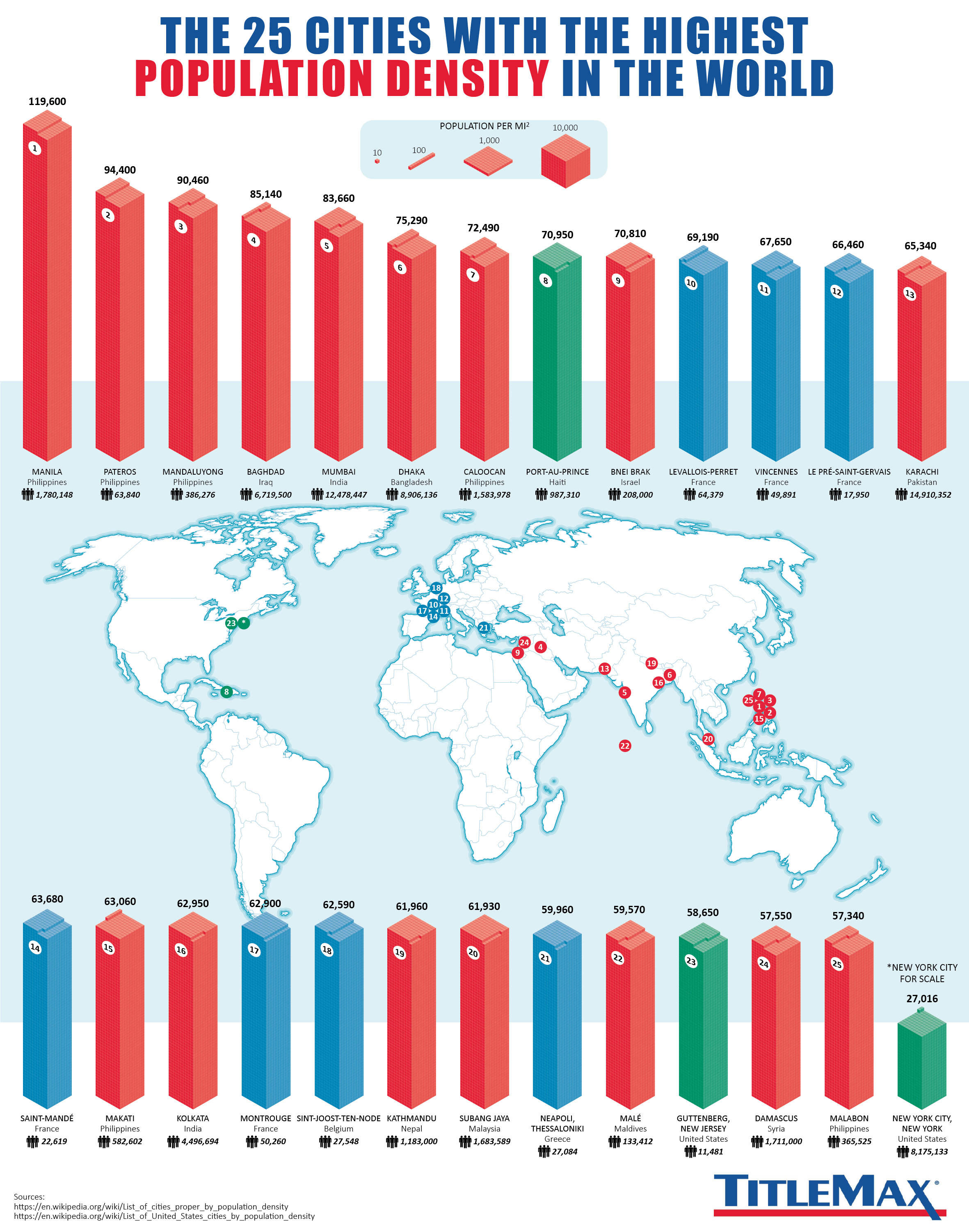
The big one. It’s the only U.S. city that feels like a country unto itself. It has roughly 8,478,072 residents according to the latest 2024-2025 benchmarks. The density is staggering—over 28,000 people per square mile. In places like Manhattan, that number triples.
Los Angeles, CA
Coming in second with about 3.8 million people. Unlike New York’s vertical climb, LA is a horizontal sprawl. It’s a "constellation city." You don't just live in LA; you live in Santa Monica, or Silver Lake, or the Valley. Interestingly, LA returned to the "top gainers" list in 2025 for the first time in nearly a decade, adding over 31,000 residents in a single year.
Chicago, IL
The Third City. It holds steady at around 2.7 million. While it faced some high-profile exits in recent years, 2025 data showed a significant rebound. Chicago added roughly 71,000 residents between 2023 and 2024, proving that the "Midwest exodus" narrative might be a bit overblown.
Houston, TX
This is where the list gets interesting. Houston is sitting at roughly 2.3 million people. It’s the energy capital, sure, but it’s also arguably the most diverse city in the country. It doesn't have the natural boundaries of water or mountains, so it just keeps growing outward.
The Rise of the Sunbelt and the "Million-Person" Club
Something happened in 2024 and 2025 that changed the "Top 10" landscape forever. Two new cities officially crossed the 1 million resident threshold.
Jacksonville, Florida and Fort Worth, Texas both joined the club.
Think about that. Jacksonville is now a bigger city, in terms of municipal population, than San Jose, California. Fort Worth is no longer just "the place next to Dallas." It is a powerhouse in its own right, fueled by a 2.2% year-over-year growth rate.
Why the Cities with Biggest Population in US are Shifting South
If you want to know where the future is, look at the "Sunbelt." This is the strip of the country running from the Carolinas down through Florida and across to Arizona.
- Phoenix, Arizona: Currently the 5th largest city with 1.67 million people. It’s growing so fast that it’s putting massive pressure on the local water supply and housing market.
- San Antonio, Texas: Sitting at 1.52 million. It’s often overshadowed by Austin’s tech hype, but San Antonio is actually the faster-growing giant.
- Charlotte, North Carolina: While not in the top 10 yet (it’s around #14 with 943,000 people), it’s the banking hub that won’t stop.
The move isn't just about the weather. It's about "pro-growth" housing policies. According to the Bush Institute-SMU analysis, cities in the Southeast and Texas are simply building more homes. When you build, people can afford to move there.
The Mid-Size Explosion
You've probably never heard of Princeton, Texas.
It’s a suburb of Dallas. In 2024, it was the fastest-growing city in the entire United States, with a 30.6% growth rate in a single year. Its population doubled in less than four years. This is a "lifestyle" shift. People want the amenities of the cities with biggest population in US but they want the backyard and the lower price tag of the suburbs.
What Most People Get Wrong About "Big" Cities
We often confuse "City Population" with "Metro Population." This is a huge mistake.
If you look at the city limits of Miami, it only has about 450,000 people. It looks small on a list. But the Miami Metropolitan Area? That has over 6 million people.
Similarly, Atlanta only has about 500,000 people within the city lines. But the metro area is home to 6.3 million. When you search for the cities with biggest population in US, you have to decide if you care about who pays taxes to the mayor, or who actually lives in the sprawl.
- Largest Metro: New York-Newark-Jersey City (19.9 million)
- Second Largest Metro: Los Angeles-Long Beach-Anaheim (12.7 million)
- Third Largest Metro: Chicago-Naperville-Elgin (9.1 million)
- The Challenger: Dallas-Fort Worth-Arlington (8.1 million and closing the gap fast)
The Reality of 2026: Density vs. Space
The data from the last two years shows a tug-of-war.
On one side, you have the "Gateway Cities" like New York and San Francisco. They are rebounding because they have "international cachet." If you are a high-level tech worker or an immigrant starting a new life, these cities offer networks you can't find in a suburb.
On the other side, you have the "High-Growth" cities like Austin and Raleigh. These cities are seeing a surge in housing inventory—Raleigh's listings jumped over 50% in 2025. This makes them more "attainable" for families.
The Austin Paradox
Austin reached the top 10 list recently but has seen its growth "decelerate" slightly compared to the wild peaks of 2021. Why? Because it got expensive. People who moved to Austin for "cheap living" suddenly found themselves in a mini-Silicon Valley with California prices.
Actionable Insights for Moving or Investing
If you are looking at these population trends to decide where to live or where to put your money, here is the ground truth:
- Look for Infrastructure: Cities like Phoenix and Houston are huge, but they are struggling with "urban heat islands" and water management. A city’s population is only a benefit if the city can actually support those people.
- Follow the Jobs: Tech is moving. While San Jose saw an 8% decline in its tech workforce over five years, places like Albuquerque and Oklahoma City are seeing the highest growth rates in tech job postings as of 2026.
- Don't Ignore the "Northeast Turnaround": The narrative that the Northeast is "dying" is officially dead. Cities in the Northeast with 50,000+ people grew five times faster in 2024-2025 than they did the year before.
The cities with biggest population in US aren't just points on a map. They are living, breathing organisms. Whether it's the sheer vertical power of Manhattan or the relentless horizontal expansion of Fort Worth, the American landscape is being reshaped by a simple truth: people go where the opportunity meets the ability to actually afford a roof over their head.
To make an informed decision on your next move, track the "New Residential Construction" permits in these cities. A city with a high population but low permit numbers (like many in coastal California) will always have a cost-of-living crisis. A city that is growing its population and its housing supply simultaneously (like those in the Texas Triangle) is where you’ll find the most sustainable long-term value.