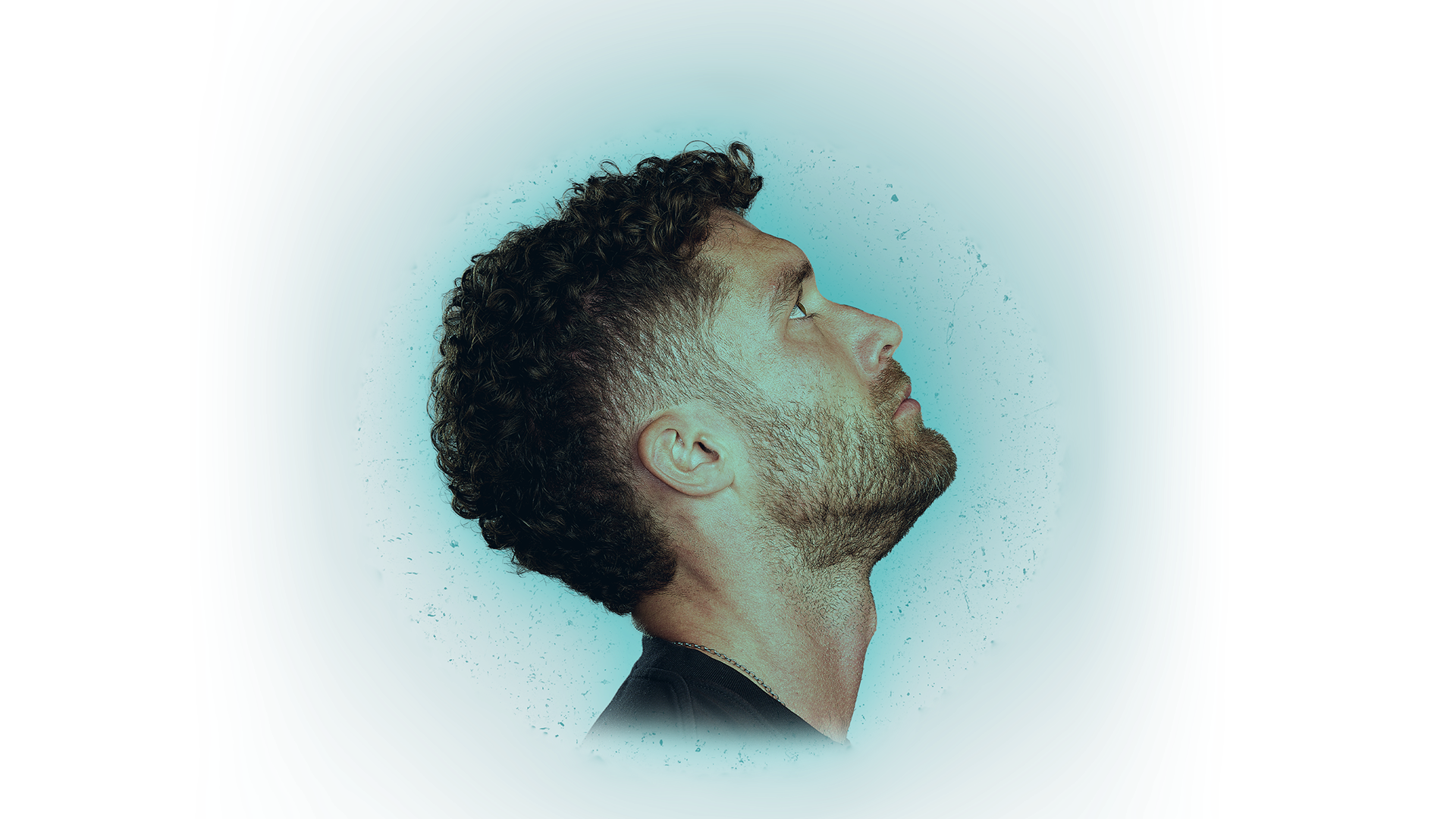
You've probably seen him on your YouTube feed. That tall, articulate guy with the Newcastle accent who seems to have a direct line to every world-class psychologist, biologist, and Navy SEAL on the planet. Chris Williamson has basically become the internet’s librarian for high-performance living. But here is the thing: most people treat the chris williamson reading list like a grocery list. They grab the first few titles, skim through some "Atomic Habits" summaries, and wonder why their life hasn't fundamentally shifted.
Honestly? It's because the list isn't just a collection of self-help books. It is a map of a very specific, curiosity-driven mind.
If you are looking for the actual titles he’s championed over 700+ episodes of Modern Wisdom, you need to look past the "top 10" viral clips. We are talking about a massive, evolving syllabus that spans evolutionary psychology, stoic philosophy, and the brutal reality of human history. Let’s get into what’s actually on the shelves of the man who reads more than almost anyone else in your social circle.
The Core Pillars of the Chris Williamson Reading List
When you dive into Chris’s recommendations, you realize he’s obsessed with three main themes: Why we are the way we are (evolution), how to do more with less (essentialism), and how to survive when things get dark.
One of his absolute "must-reads" is The Ape That Understood the Universe by Steve Stewart-Williams. If you want to understand why humans act so weirdly in modern dating or why we crave social status so desperately, this is the manual. It’s evolutionary psychology without the dry, academic fluff. Chris often mentions how this book changed his entire lens for viewing human interaction.
Then there is the productivity side. You’ve likely heard of Essentialism by Greg McKeown. Chris doesn't just recommend it; he treats it like a Bible for the "distraction age." It’s about the disciplined pursuit of less. In a world where we’re all trying to do everything, McKeown’s book is a cold bucket of water to the face.
But it’s not all "hacks" and "optimizing."
The Survival and Grit Factor
Chris has a weirdly specific talent for finding harrowing survival stories. Take The Forgotten Highlander by Alistair Urquhart. It’s the true story of a soldier who survived Japanese prisoner-of-war camps, the bridge on the River Kwai, and even a shipwreck. When Chris talks about this book, he usually emphasizes how it puts our "modern problems"—like a slow Wi-Fi connection or a rude email—into perspective.
Similarly, Endurance by Alfred Lansing is a permanent fixture on his list. It chronicles Ernest Shackleton’s failed (but miraculously survived) Antarctic expedition. It’s the ultimate study in leadership under pressure. If you can't get through a Monday morning without complaining, reading about men living on ice floes for months might be the ego check you need.
The Evolutionary Psychology Obsession
You can’t talk about a chris williamson reading list without mentioning The Moral Animal by Robert Wright. This is foundational. It’s the book that explains the "new" science of evolutionary psychology.
Why do we feel guilt? Why are we prone to infidelity? Wright argues that our modern brains are essentially running 10,000-year-old software in a high-tech world. Chris is constantly pulling from this during his podcast interviews. It’s the "source code" for a lot of the topics covered on Modern Wisdom.
The Mating and Status Game
Since Chris came from a background in club promoting and reality TV (Love Island fans, we see you), he’s uniquely interested in the science of attraction. The Evolution of Desire by David Buss is another heavy hitter. It’s not a "pickup artist" book. It’s a rigorous, data-backed look at how men and women have evolved different mating strategies over millions of years.
If you want something a bit more practical for modern dating, he frequently cites Models by Mark Manson. Unlike Manson's more famous "Subtle Art" book, Models focuses on "non-needy" attraction and honesty. It’s basically the "anti-PUA" manual for guys who want to be better men without being manipulative.
The Books on Suffering and Meaning
Man's search for something deeper is a recurring theme. Naturally, Man’s Search for Meaning by Viktor Frankl is on the list. Frankl, a psychiatrist and Holocaust survivor, argues that we can endure almost any "how" if we have a "why."
Chris often pairs this with The Happiness Hypothesis by Jonathan Haidt. Haidt looks at ancient wisdom—Buddha, Marcus Aurelius, Jesus—and tests it against modern psychology. It’s a brilliant bridge between the "woo-woo" spiritual world and hard science.
- The War of Art by Steven Pressfield: This is the definitive book on "resistance." If you are a creator who can't seem to start your project, Pressfield is the drill sergeant you need.
- Why We Sleep by Matthew Walker: Chris is a self-confessed sleep nerd. This book is the reason he (and half his audience) now wears an Oura ring and sleeps in a blackout room.
- The Precipice by Toby Ord: This one is a bit more existential. It’s about the risks to humanity’s future—AI, nuclear war, pandemics. It’s heavy, but Chris considers it vital for understanding the "big picture."
Why Your Reading Strategy Is Probably Failing
The biggest mistake people make with the chris williamson reading list is trying to read everything at once. Chris has mentioned that he reads for utility. He doesn't just read to finish a book; he reads to solve a problem or answer a question that’s currently bothering him.
If you’re feeling overwhelmed, don’t start with the 500-page biology tomes. Start with Lying by Sam Harris. It’s a tiny book—barely a long essay—that argues why you should never tell even "white lies." It’s a quick read that will fundamentally change how you talk to your boss, your partner, and yourself.
Another underrated gem is Same as Ever by Morgan Housel. While everyone is trying to predict what will change in the future (AI! Crypto! Mars!), Housel focuses on what never changes. Human greed, fear, and the way we respond to incentives remain constant. It’s a calming read for a chaotic world.
Actionable Steps to Actually Learn Something
Reading is useless if it’s just "mental masturbation"—a term Chris and his guests use for consuming content without taking action. To actually get the most out of these books, you sort of have to treat it like a student.
- Pick one "Lens" book. Start with The Ape That Understood the Universe. It gives you the framework to understand almost everything else.
- Read for "Resistance." If you're procrastinating, read The War of Art tonight. Don't wait for the weekend.
- Use the "Anti-Fragile" approach. Read a survival story like Endurance when you're feeling sorry for yourself. It’s an instant perspective shift.
- Take notes. Chris is a big advocate for using tools like Readwise or simply highlighting physical books. If you don't capture the ideas, they'll evaporate.
The real power of the chris williamson reading list isn't in the number of books you own. It’s in the way these ideas begin to stitch together. You start seeing the "evolutionary mismatch" in your diet, the "resistance" in your career, and the "essentialism" in your schedule.
Don't treat this as a list to be completed. Treat it as a toolkit for building a better version of yourself. Pick one title that addresses your biggest current struggle, buy it, and actually read the first chapter today. Forget the "100 books a year" goals—one book that you actually implement is worth more than a thousand on your shelf.