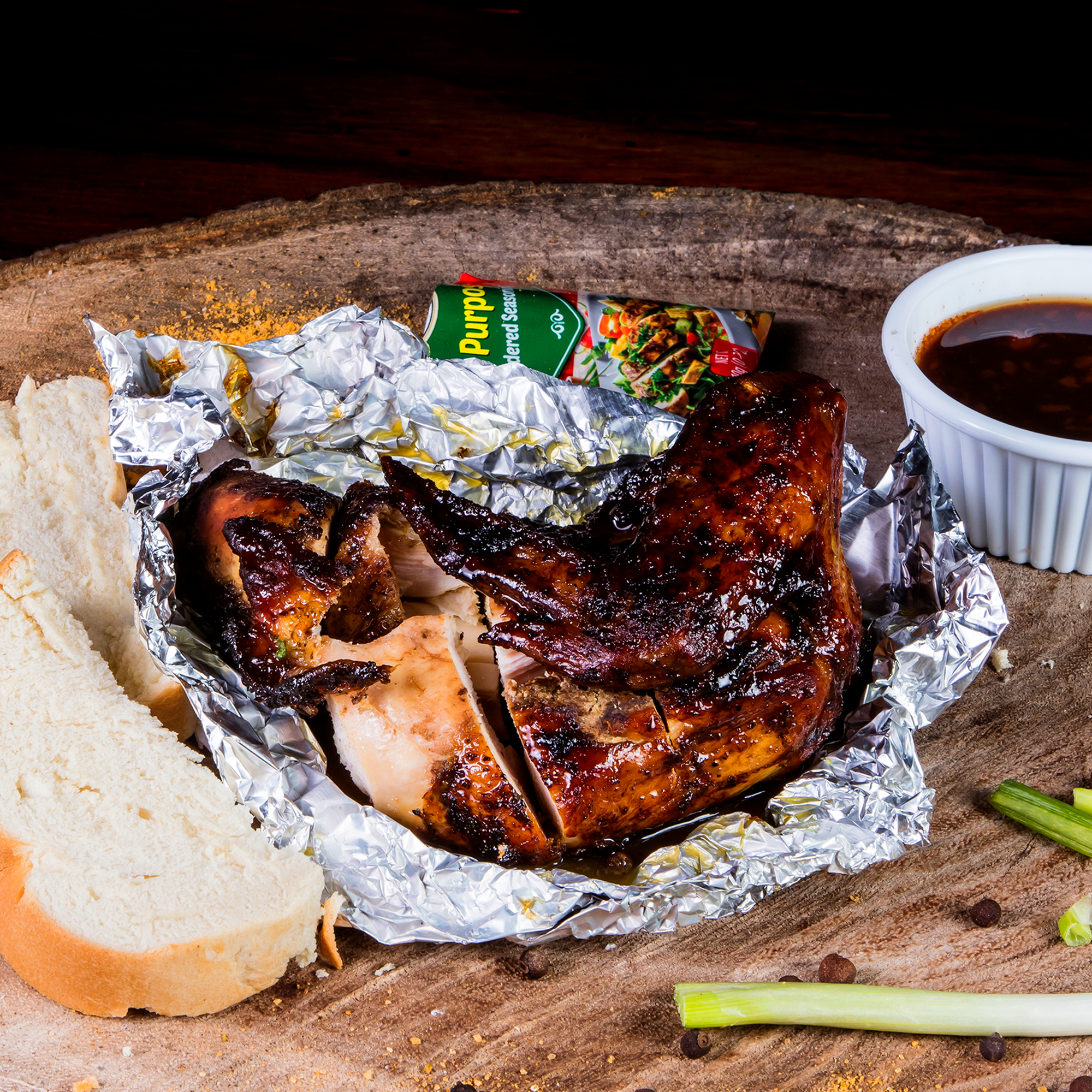
You’ve probably seen those "jerk" seasonings in the grocery store aisle. You know the ones—dusty plastic jars filled with way too much salt and not nearly enough soul. If you’ve been rubbing that on a chicken breast and calling it a day, we need to talk. Real jerk isn't just a spice blend. It’s a process, a history, and honestly, a bit of an obsession for anyone who grew up eating it. A basic jerk chicken recipe shouldn't be complicated, but it has to be right. If you skip the pimento or swap the scotch bonnets for jalapeños, you aren’t making jerk; you’re making spicy grilled chicken. There's a difference.
The roots of this dish go back to the Maroons in Jamaica. These were Africans who escaped slavery and lived in the mountainous interior of the island. They had to cook meat in a way that wouldn't give away their position with smoke, so they used pits and covered them with pimento wood. They used what was available: scotch bonnet peppers, wild allspice (pimento), and thyme. It was survival food that turned into a global icon. Today, you don't need a hole in your backyard to get it right, but you do need to respect the ingredients.
The Holy Trinity of Jerk
If you’re looking for a basic jerk chicken recipe, you have to start with the aromatics. Forget the dried powders for a second. You need fresh stuff. Specifically, you need scallions, ginger, and garlic. Lots of it.
The heat comes from the Scotch Bonnet pepper. This isn't just about burning your tongue off. Scotch bonnets have a specific, fruity, almost tropical flavor profile that you just don't get from a habanero, even though they look similar. Habaneros are fine in a pinch, but they're more "searing heat" and less "floral sweetness." Use two if you’re a coward, four if you’re brave, and six if you want to see through time. Related insight on this trend has been published by ELLE.
Don't Skip the Pimento
Pimento berries—what most Americans call allspice—are the literal backbone of the flavor. In Jamaica, the wood of the pimento tree is used to smoke the meat. Since most of us can't easily source pimento wood chunks for the grill, we have to lean heavily on the berries. Don't use the pre-ground stuff that’s been sitting in your cabinet since the last time you made pumpkin pie. Get the whole berries. Toast them in a pan until they smell like heaven, then crush them. It makes a massive difference.
A Basic Jerk Chicken Recipe That Actually Works
Let's get into the weeds of how to actually put this together. You aren't just making a marinade; you're building a flavor base that needs to penetrate the bone.
The Ingredient List
Grab about 3 pounds of chicken. Thighs and drumsticks are better than breasts. Why? Because jerk is a long, slow-ish cook, and breasts dry out like a desert if you look at them wrong. Keep the skin on. Always.
For the wet marinade, you'll need:
- 6 to 8 scallions (the whole thing, green and white parts).
- A 2-inch knob of fresh ginger, peeled and hacked into bits.
- 5 or 6 cloves of garlic.
- 3 Scotch Bonnet peppers (remove seeds if you're worried, but keep them if you're real).
- 1 tablespoon of whole pimento berries, crushed.
- A palmful of fresh thyme leaves (strip them off the woody stems).
- 1 teaspoon of cinnamon and a pinch of nutmeg.
- A splash of soy sauce and a tablespoon of brown sugar for that Maillard reaction.
- The juice of two limes and a bit of oil to help it emulsify.
The Blitz
Stick everything except the chicken into a food processor. Pulse it. You don't want a smooth puree; you want a thick, chunky paste. It should look a bit green and smell incredibly potent. This is where the magic happens.
Smear that paste all over the chicken. Get under the skin. Massage it in like you're at a high-end spa. Now—and this is the part where most people fail—let it sit. At least six hours. Overnight is better. If you throw it on the grill after twenty minutes, the flavor stays on the surface. You want that spice to hit the bone.
Smoking vs. Grilling
Here is a truth many people don't want to hear: jerk is supposed to be smoked. In Jamaica, jerk centers use large metal drums (pimento pans) where the meat sits on a bed of pimento wood sticks.
If you have a charcoal grill, use it. Gas is fine, I guess, but you’ll miss that charred, smoky depth. Set up a two-zone fire. Put the chicken on the cool side first. This lets the fat render and the spices cook without burning the sugar in the marinade. Toss some soaked wood chips on the coals—allspice berries or pimento chips if you can find them, but oak or pecan works too.
Once the internal temperature hits about 150°F ($65°C$), move the pieces over to the hot side. This is where you get the "jerk" look. You want some char. You want those little black bits. That’s where the flavor lives. Pull them off when they hit 165°F ($74°C$), but honestly, thighs are forgiving; if they go to 175°F ($79°C$), they’re even better.
What People Get Wrong (The "Authenticity" Trap)
Everyone has an opinion on what makes a basic jerk chicken recipe "authentic." Some people swear by adding vinegar. Others say soy sauce is a modern addition that shouldn't be there. According to culinary historians like Jessica B. Harris, the dish has always evolved based on what was available.
One big mistake is overcomplicating the spices. You don't need twenty different ingredients. If you have the scallions, the pimento, and the peppers, you’re 90% of the way there. Also, please stop using "jerk seasoning" as a dry rub only. Dry rubs are for ribs. Jerk needs that wet, aromatic moisture to steam the meat while it smokes.
Side Dish Strategy
Don't serve this with mashed potatoes. Please.
Rice and peas (made with kidney beans or pigeon peas and coconut milk) is the classic move. The creaminess of the coconut milk cuts through the fire of the Scotch Bonnet. Or, if you want to be truly traditional, make some "festival"—a slightly sweet, fried dumpling that acts as a fire extinguisher for your mouth. Plain old white rice works too, especially if it can soak up the juices from the chicken.
Practical Steps to Master the Flame
You've read the theory. Now do the work. Start by sourcing real Scotch Bonnets. If your local grocer doesn't have them, check a Caribbean or international market. It's worth the trip.
- Prep the berries: Buy whole pimento berries. Grind them yourself. The smell alone will tell you why this matters.
- The long soak: Plan ahead. Marinate the chicken the night before.
- The "Low and Slow" start: Don't blast the chicken with high heat immediately. You'll end up with raw meat and burnt skin. Start away from the coals.
- The Rest: Let the chicken rest for 10 minutes before hacking into it. This keeps the juices inside.
Jerk is a feeling. It's about the smoke in your eyes and the heat on your lips. Once you move past the store-bought jars and start making your own paste, there is no going back. You'll realize that the basic jerk chicken recipe you thought you knew was just a shadow of the real thing. Get some charcoal, find some peppers, and get to work.